Type
Tools and Templates
Year
Topic
HIV/AIDS

Objectives:
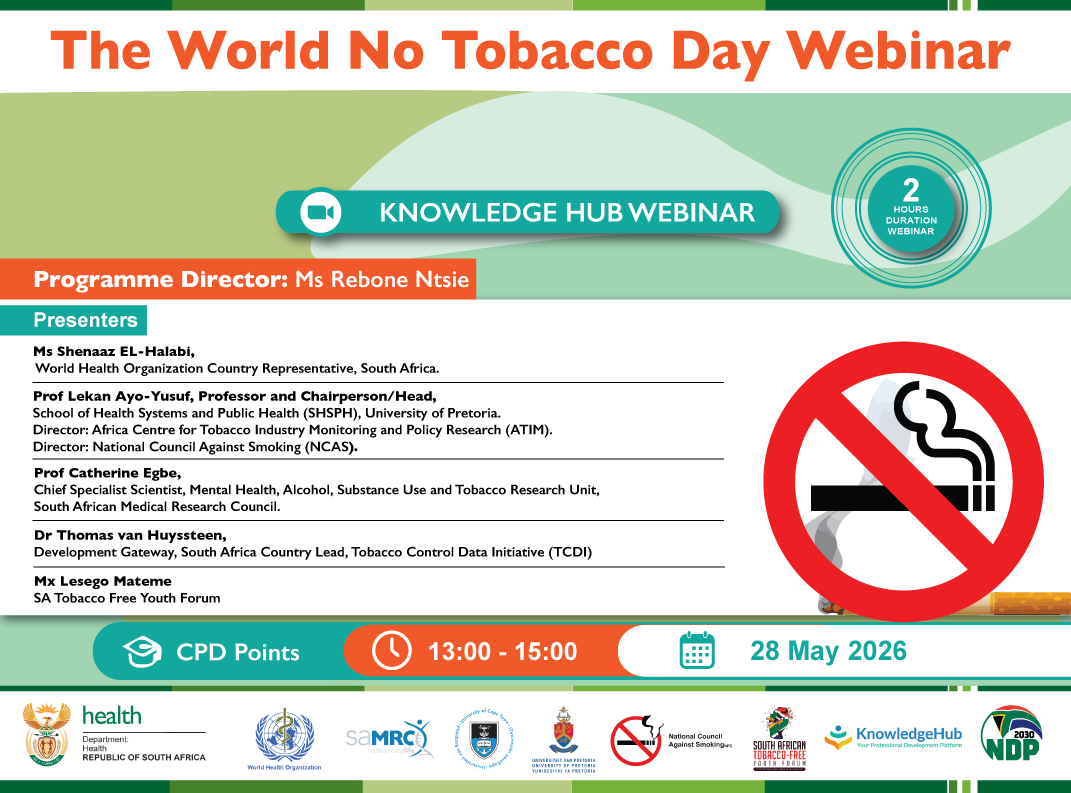
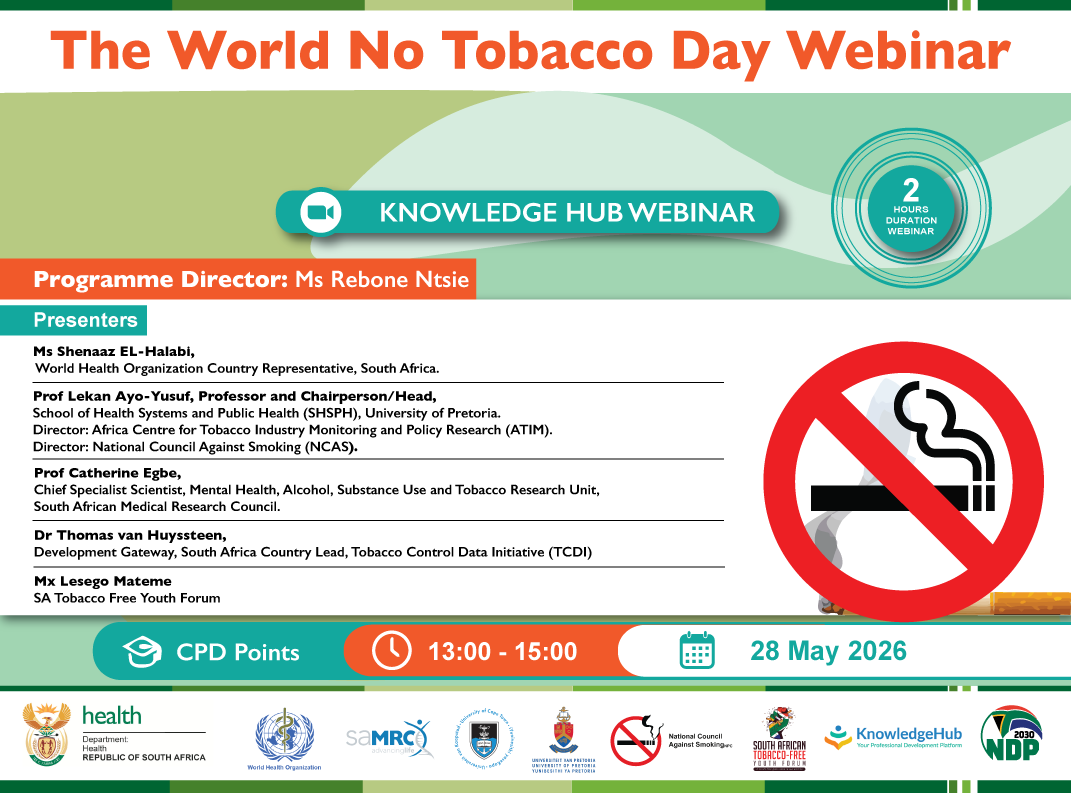
Commemorate World No Tobacco Day 2026 in alignment with the global theme, “Unmasking the Appeal- countering nicotine and tobacco addiction.”
Highlight the wide range of tobacco and nicotine products, including the emergence of new products designed to sustain nicotine addiction.
Questions/key issues to be covered:
Raise awareness of the scientific mechanisms behind these products and the associated health risks.
Examine the marketing strategies employed by the tobacco industry, with particular emphasis on how youth are targeted.
Clarify the roles and responsibilities of relevant government departments in tobacco control and regulatory frameworks.
Speakers:
Ms Rebone Ntsie,
Chief Director: Health Promotion, Nutrition and Oral Health
Khosi. ṊeSongozwi MuDzanani,
Director: Health Promotion, NDoH
Ms Lungile Mavundla,
Policy Advocacy Officer, the National Council Against Smoking, South Africa.
Mx Lesego Mateme
Project Coordinator, South African Tobacco Free Youth Forum
Prof. Catherine Egbe,
Chief Specialist Scientist: Mental health, Alcohol, Substance use and Tobacco Research Unit, South African Medical Research Council.
Prof Lekan Ayo-Yusuf,
Professor and Chairperson/Head: School of Health Systems and Public Health (SHSPH), University of Pretoria, and Public Health Professor: Behaviour and Health Management Sciences
Director: Africa Centre for Tobacco Industry Monitoring and Policy Research (ATIM).
Director: National Council Against Smoking (NCAS).
Mr Thomas van Huyssteen,
Country Lead, Development Gateway, South Africa, and the Tobacco Control Data Initiative (TCDI)
Ms Lorato Mahura,
Deputy Director: Health Promotion and WHO FCTC Focal Person for Tobacco Control
Video:
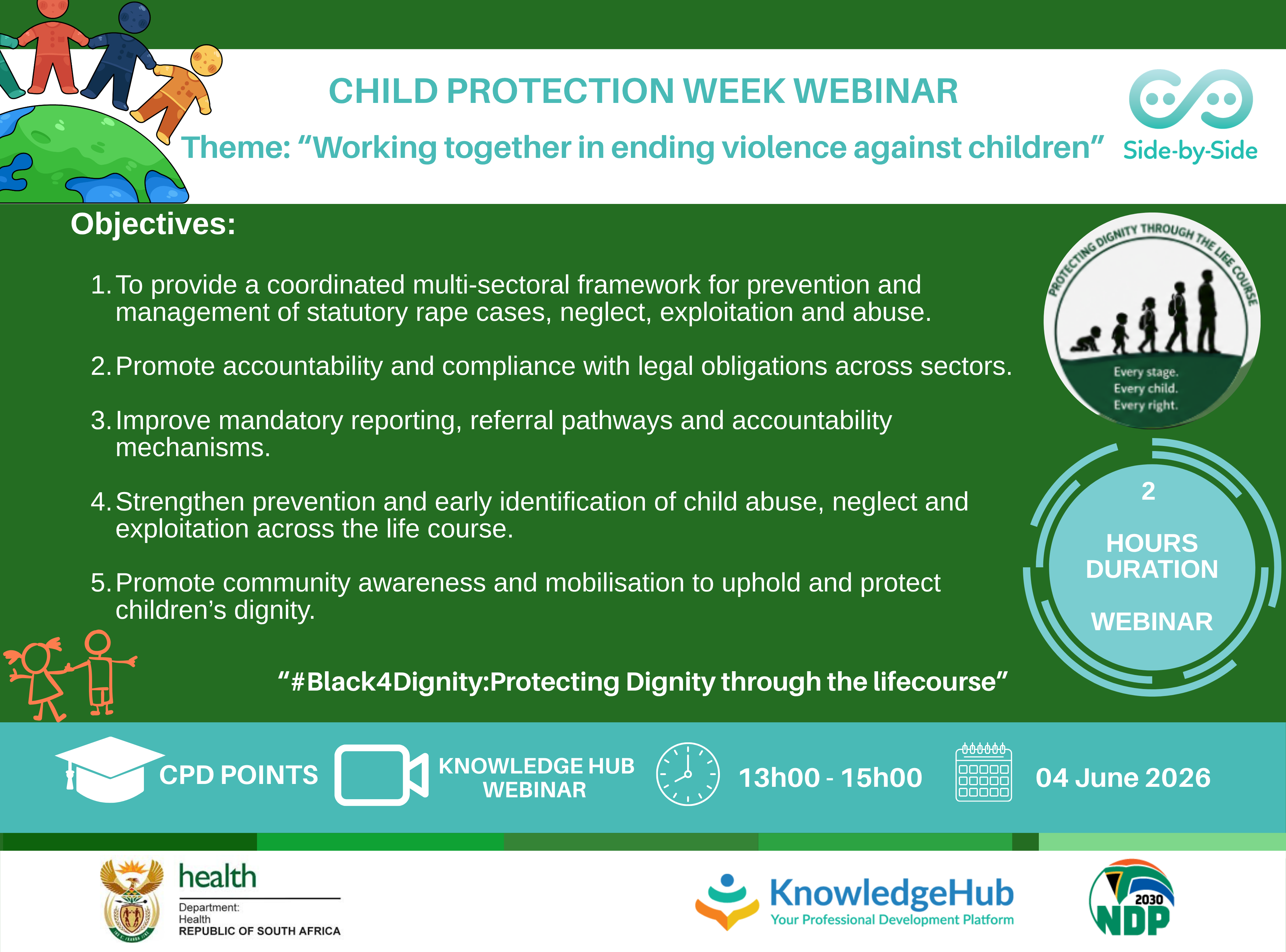
Objectives:
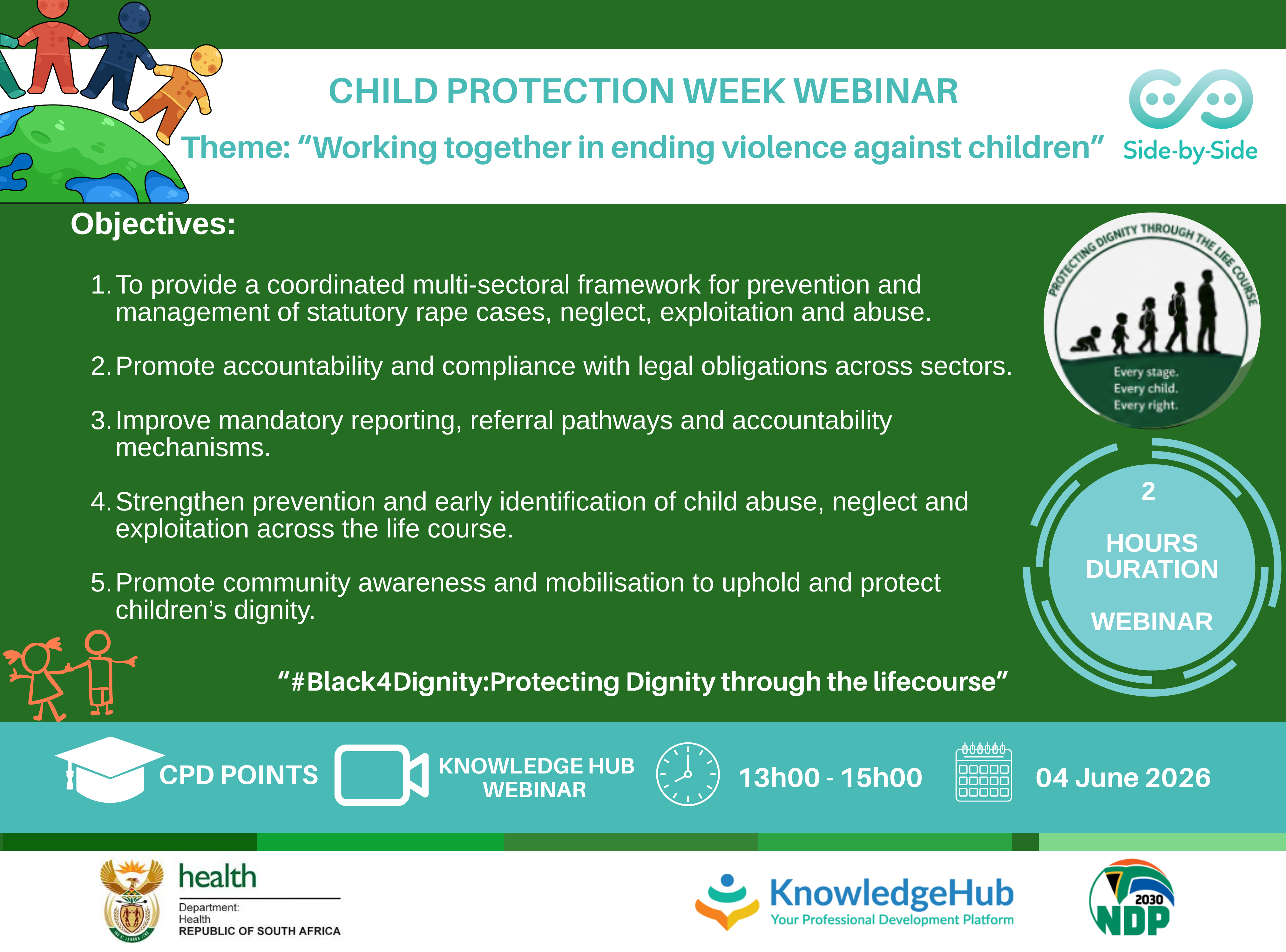
To provide a coordinated multi-sectoral framework for prevention and management of statutory rape cases, neglect, exploitation and abuse.
Promote accountability and compliance with legal obligations across sectors.
Improve mandatory reporting, referral pathways and accountability mechanisms.
Strengthening prevention and early identification of child abuse, neglect and exploitation across the life course
Promote community awareness and mobilization to uphold and protect children’s dignity.
Questions/key issues to be covered:
Prevention of statutory rape cases, neglect, exploitation and abuse.
How referral pathways work
Speakers:
Dr Nonhlanhla Ignatia Ndlovu
Deputy Director-General for HIV, AIDS, TB, and MCWH, National Department of Health, South Africa.
Mr Nkatane Matshomane
Child protection specialist – National Department of Social Development
Dr Sithembile Dlamini-Nqeketo
Reproductive, Maternal, Neonatal Child & Adolescent Health (RMNCAH) World Health Organization (WHO) South Africa
Ms Hlamalani Queen Nenzhelele
Assistant Director for Adolescent and Youth Health at the National Department of Health.
Dr Chantell Witten
Health Systems Director Ilifa Labantwana
Ms Jane Sebidi
Deputy Director for Mom Connect at the National Department of Health
Mr Mogodi Masenya
Deputy Director: Department of Labour
Video
.png)
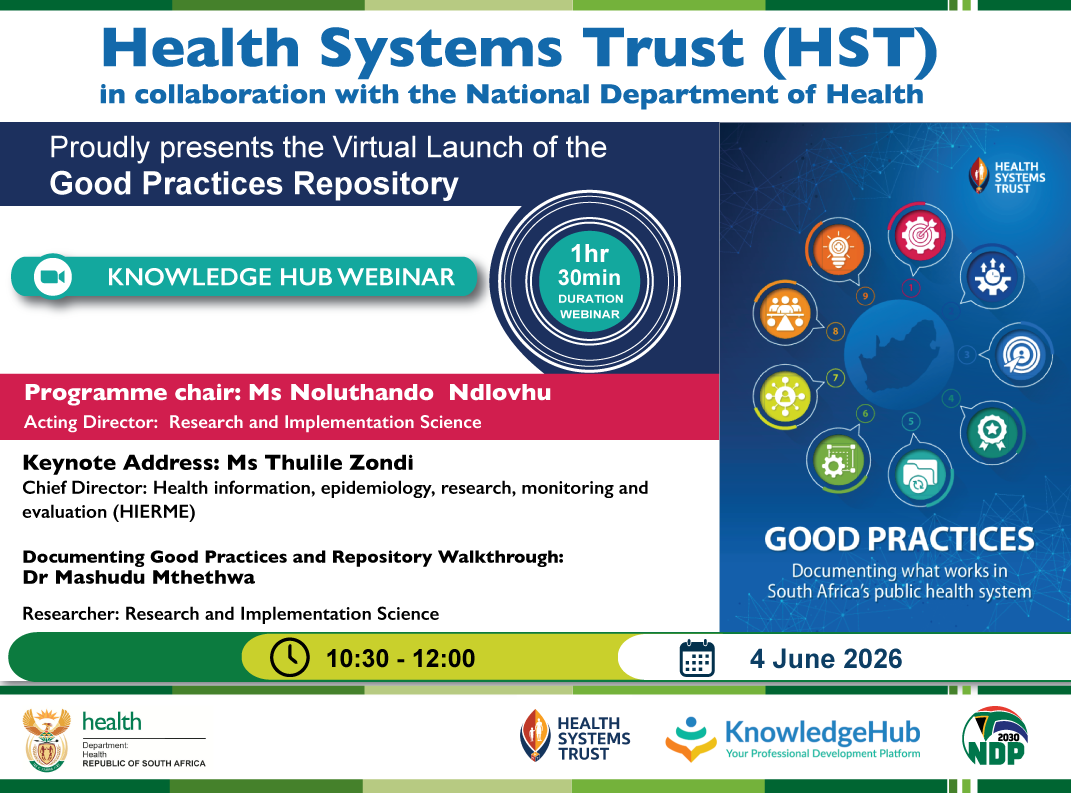
Objectives:
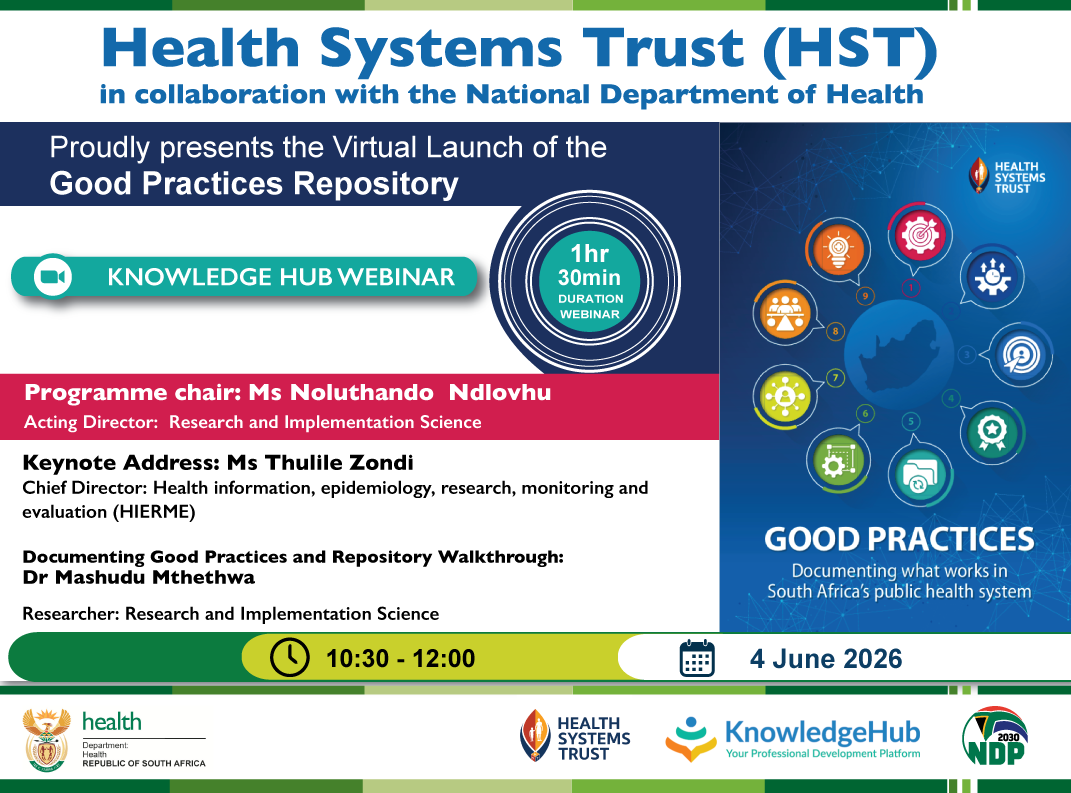
• To officially launch the Good Practices Repository to the public
• To present the Good Practices project
• Showcase the repository platform and its value within public health
• To encourage knowledge sharing within public health and overall health system
Questions/key issues to be covered:
• What is the Good Practices Repository, and why was it developed?
• What does the Good Practice project entail?
• What is good practice? What criteria define a good practice? (e.g., effectiveness, scalability, relevance)
Speakers:
Ms Thulile Zondi
Chief Director: HIREME
Dr Ntombi Sigwebela
Chief Executive Officer
Ms Noluthando Ndlovu
Programme Manager: Research and Implementation Science
Dr Mashudu Mthethwa
Researcher
Mr Malcom De Jager
Assistant Director: Environmental Health Services, Xhariep District Health Services, Free State Department of Health
Ms Nocawe Ndukula
Programme Manager
Video
.png)
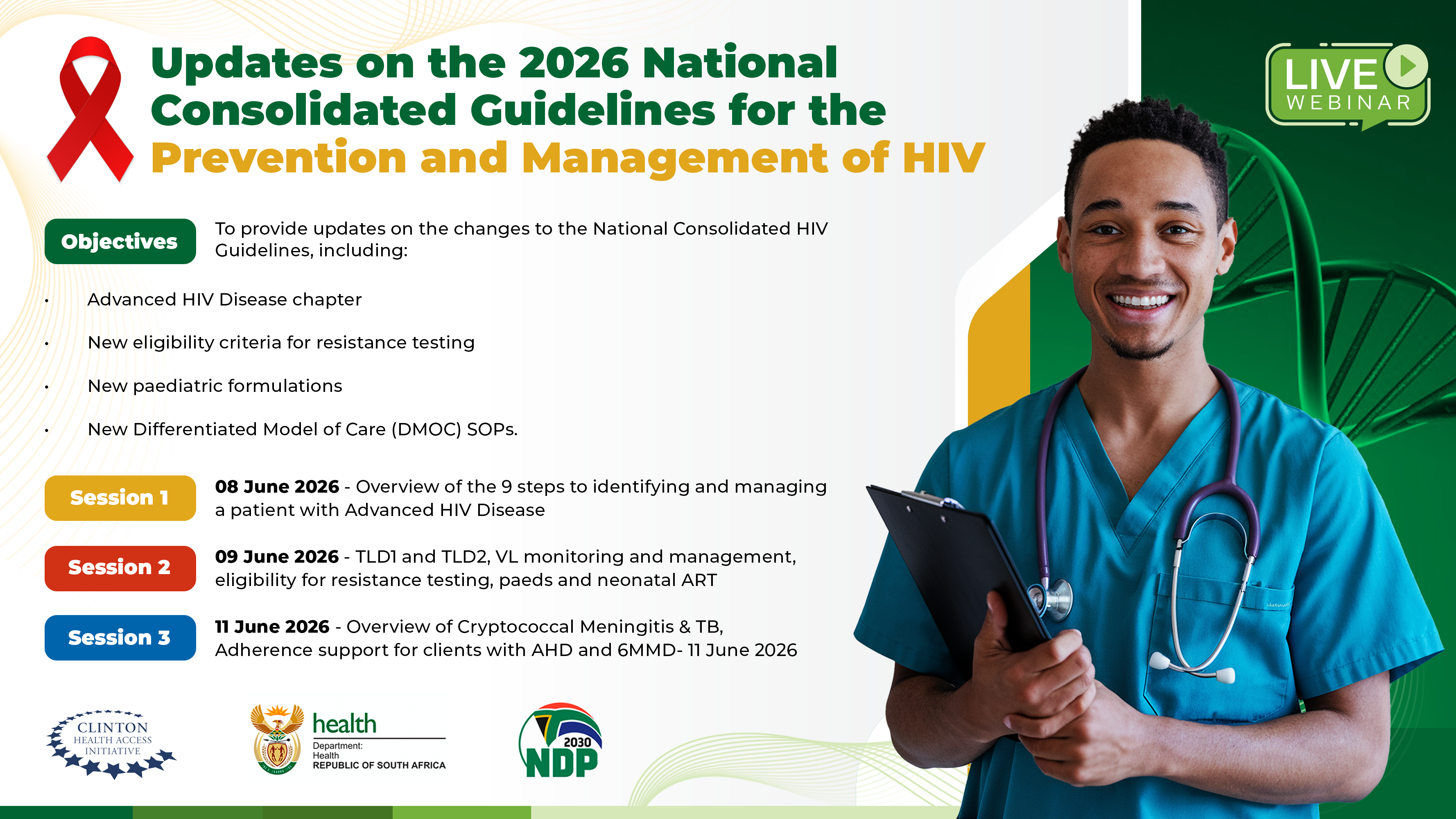
Objectives:
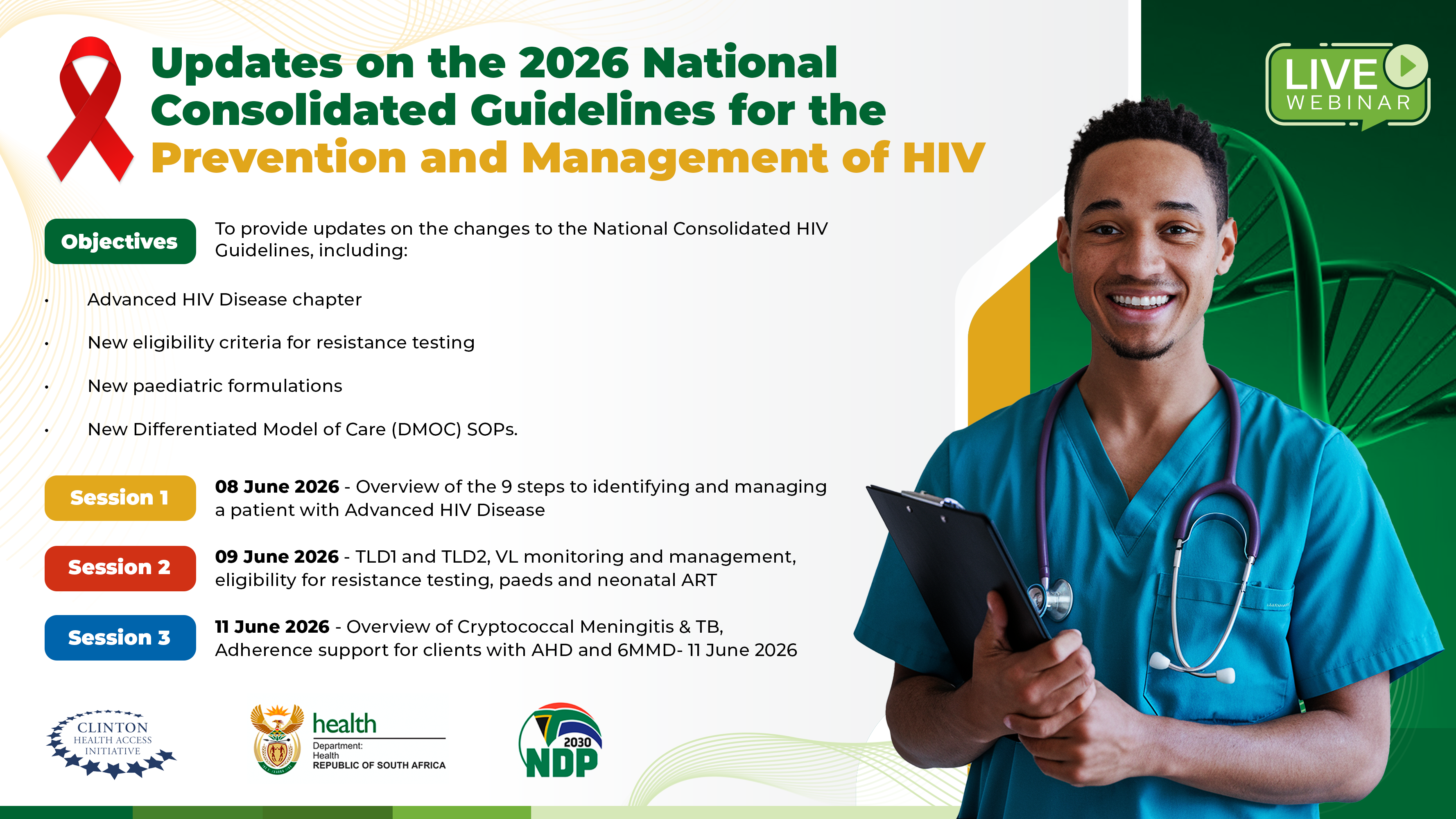
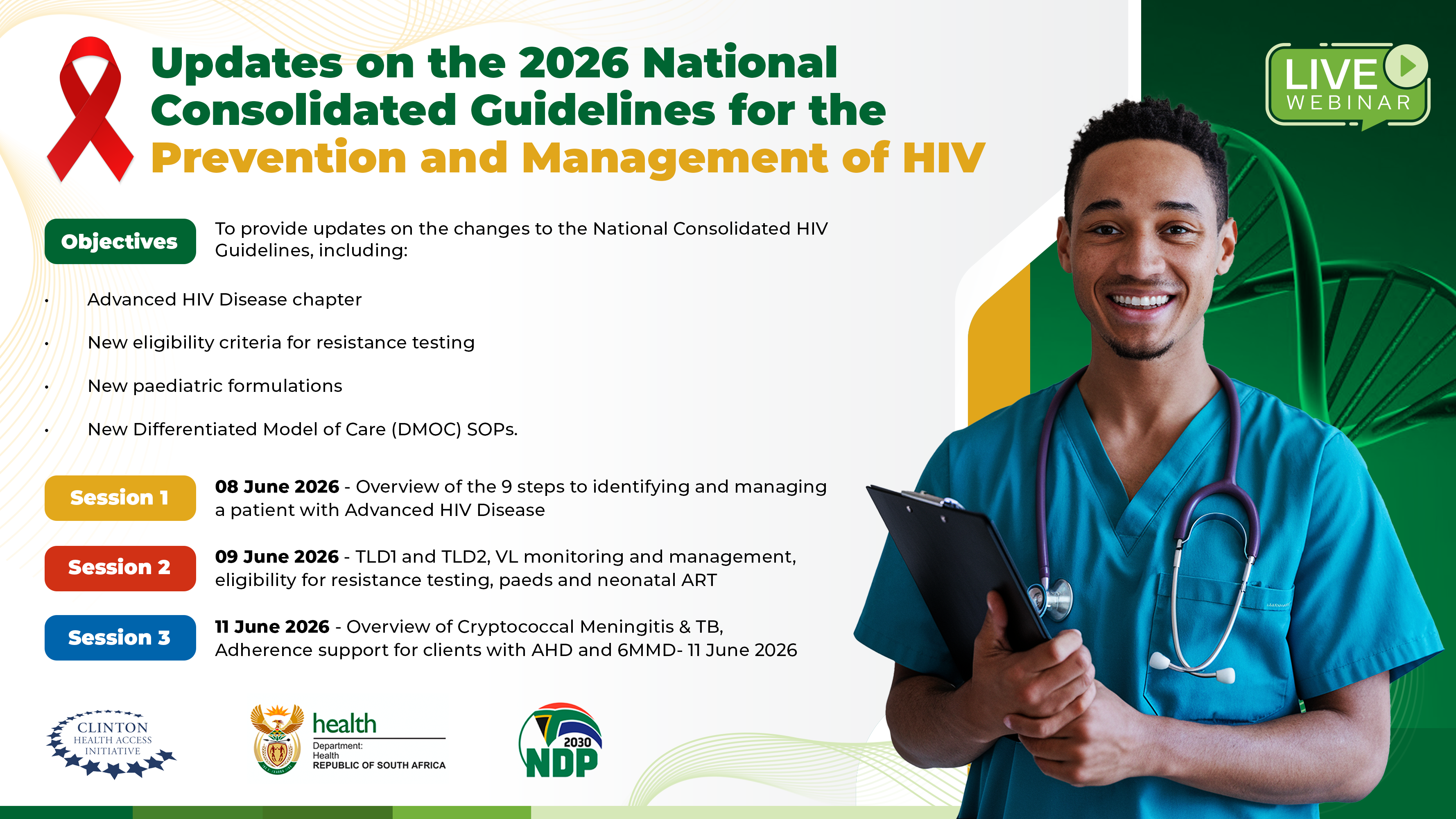
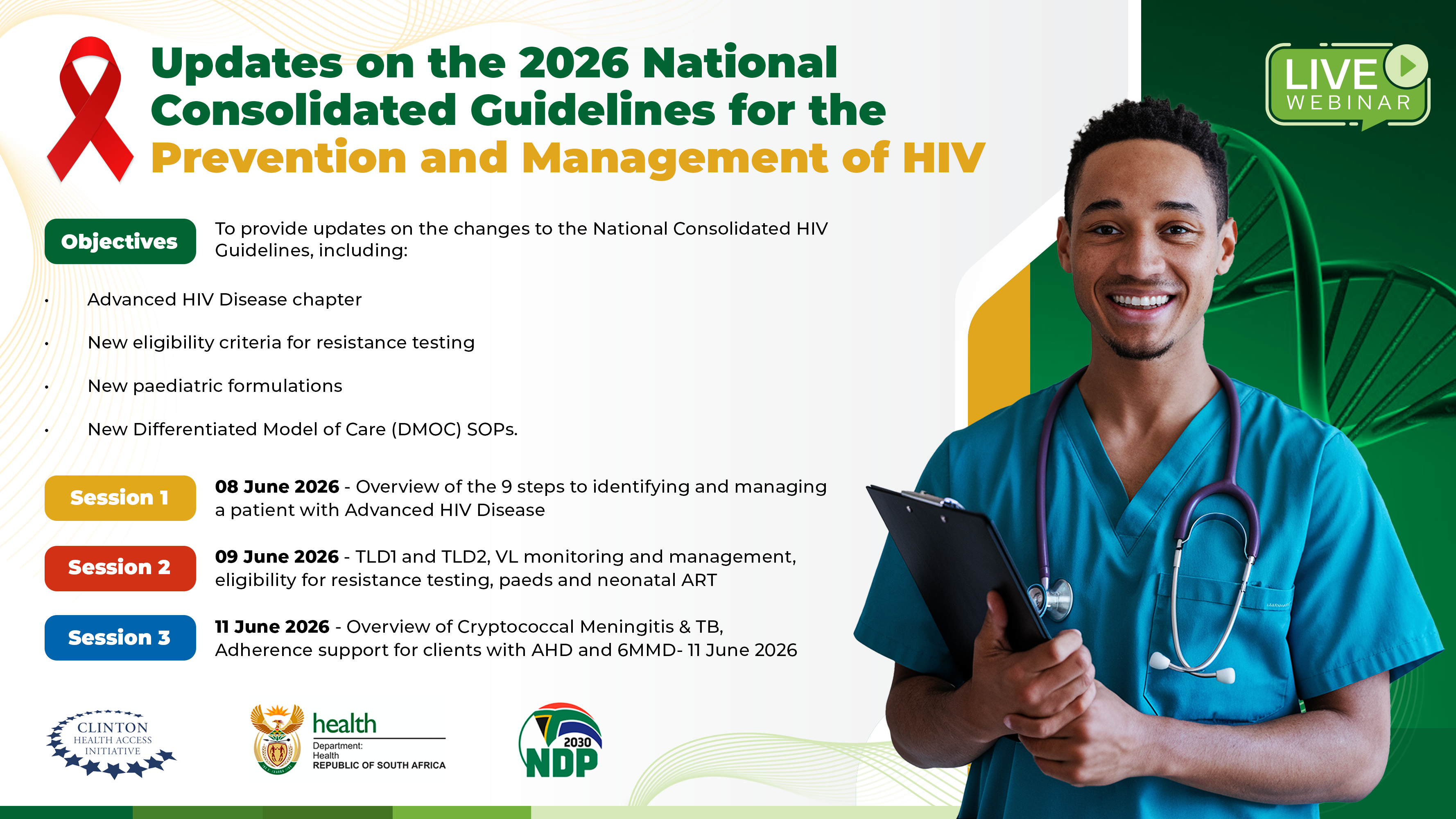
To update programme managers and support services on the changes to the Consolidated ART Guidelines, including:
• Advanced HIV Disease chapter
• New eligibility criteria for resistance testing
• New paediatric formulations
• New Differentiated Model of Care (DMOC) SOPs.
At the end of the webinar, participants should be able to:
• Understand the key programmatic changes and service delivery implications of the 2026 National Consolidated ART Guidelines.
• Strengthen systems for early identification, referral, and management support for Advanced HIV Disease (AHD), TB, and comorbidities.
• Support implementation of updated approaches for viral load monitoring, treatment failure, and access to optimised ART regimens.
• Strengthen integrated systems for prevention, adherence, linkage to care, retention, and differentiated models of care (DMOC).
• Identify operational, workforce, supply chain, data, and coordination requirements needed to support guideline implementation.
• Strengthen leadership, mentorship, quality improvement, and accountability mechanisms to support effective rollout of the updated guidelines.
Video
Speakers:
Ms Mathilda Ntloana
NDoH: CCMT Manager
Dr Jeannette Wessels
Public Health Consultant
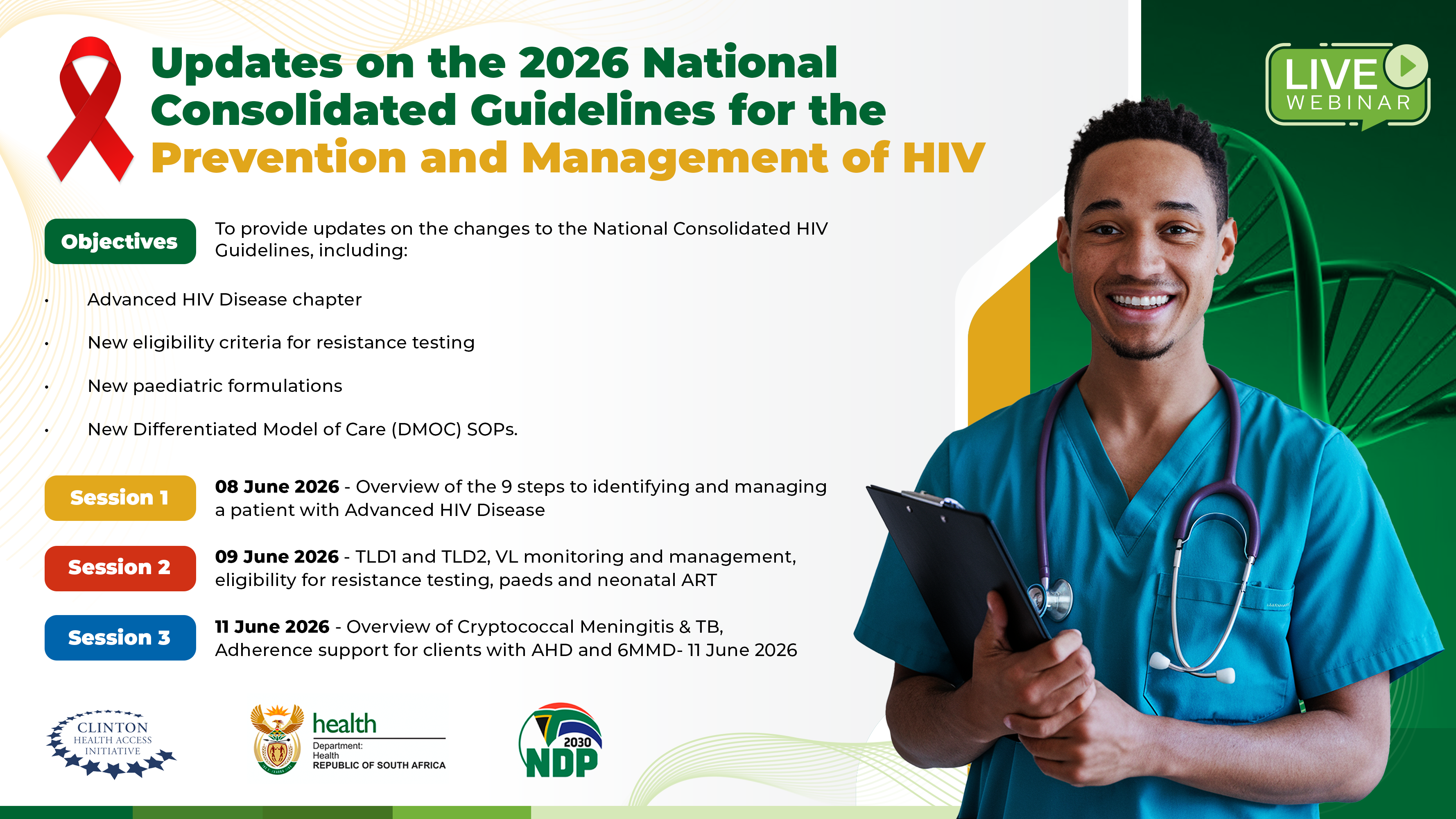
Objectives:
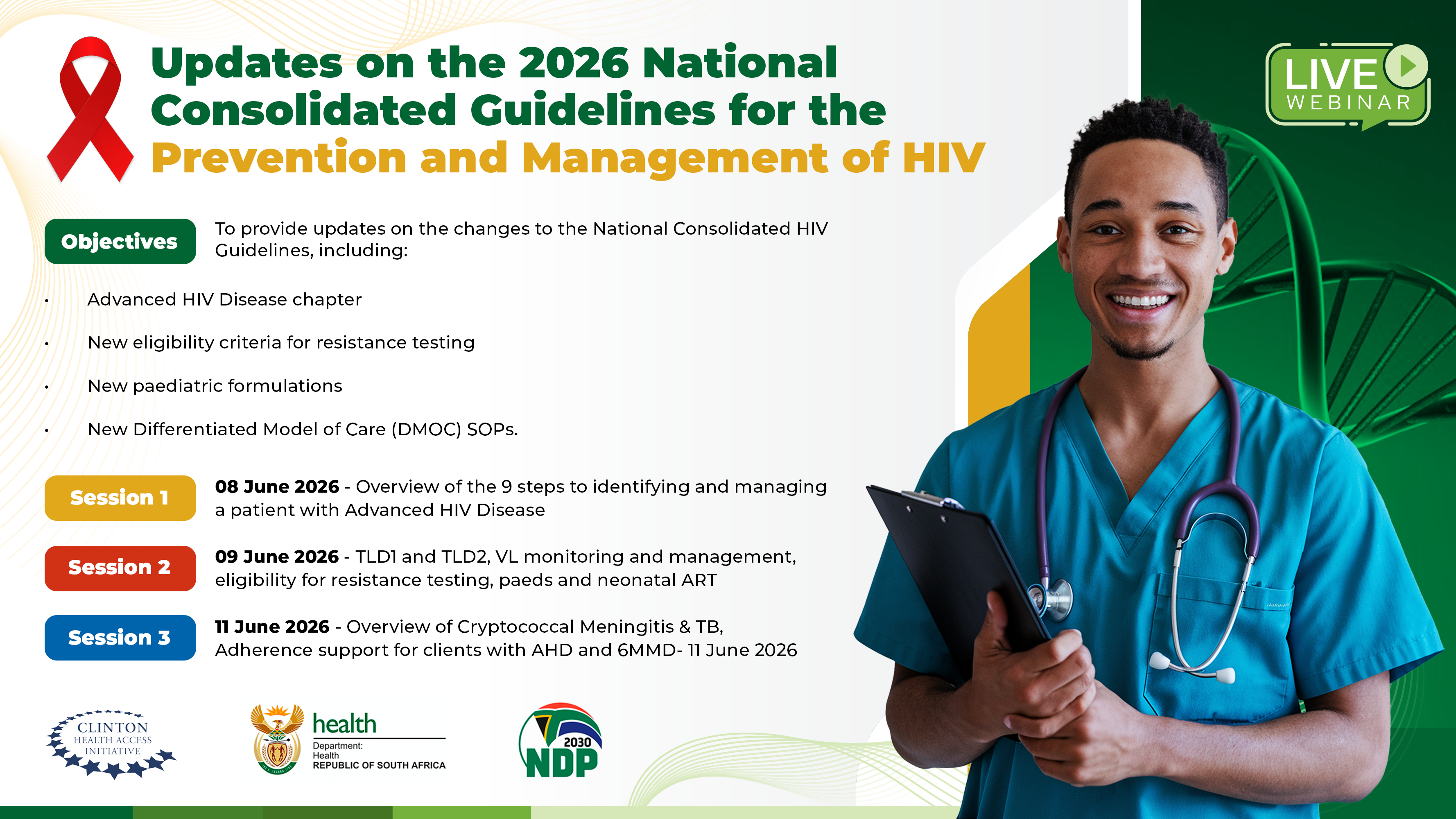
To update programme managers and support services on the changes to the Consolidated ART Guidelines, including:
• Advanced HIV Disease chapter
• New eligibility criteria for resistance testing
• New paediatric formulations
• New Differentiated Model of Care (DMOC) SOPs.
At the end of the webinar, participants should be able to:
• Understand the key programmatic changes and service delivery implications of the 2026 National Consolidated ART Guidelines.
• Strengthen systems for early identification, referral, and management support for Advanced HIV Disease (AHD), TB, and comorbidities.
• Support implementation of updated approaches for viral load monitoring, treatment failure, and access to optimised ART regimens.
• Strengthen integrated systems for prevention, adherence, linkage to care, retention, and differentiated models of care (DMOC).
• Identify operational, workforce, supply chain, data, and coordination requirements needed to support guideline implementation.
• Strengthen leadership, mentorship, quality improvement, and accountability mechanisms to support effective rollout of the updated guidelines.
Video
Speakers:
Ms Mathilda Ntloana
NDoH: CCMT Manager
Dr Jeannette Wessels
Public Health Consultant
Dr Leon Levin
Paediatrician
Objectives:
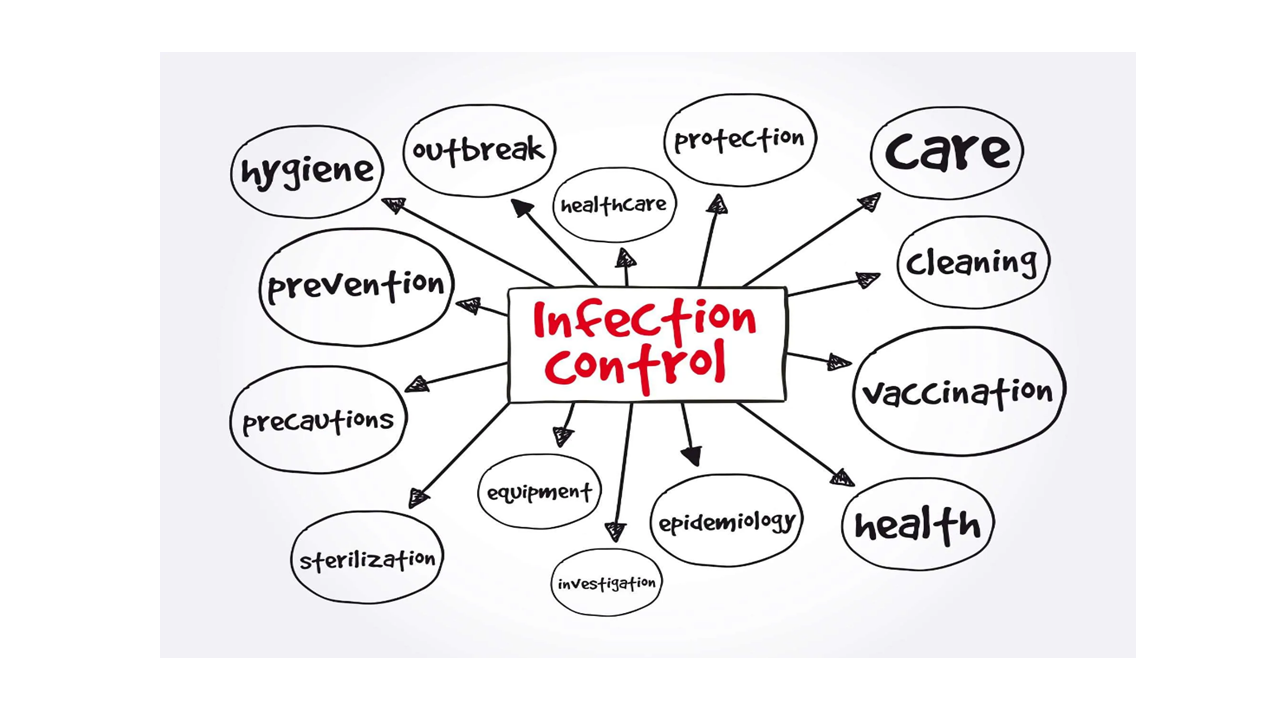
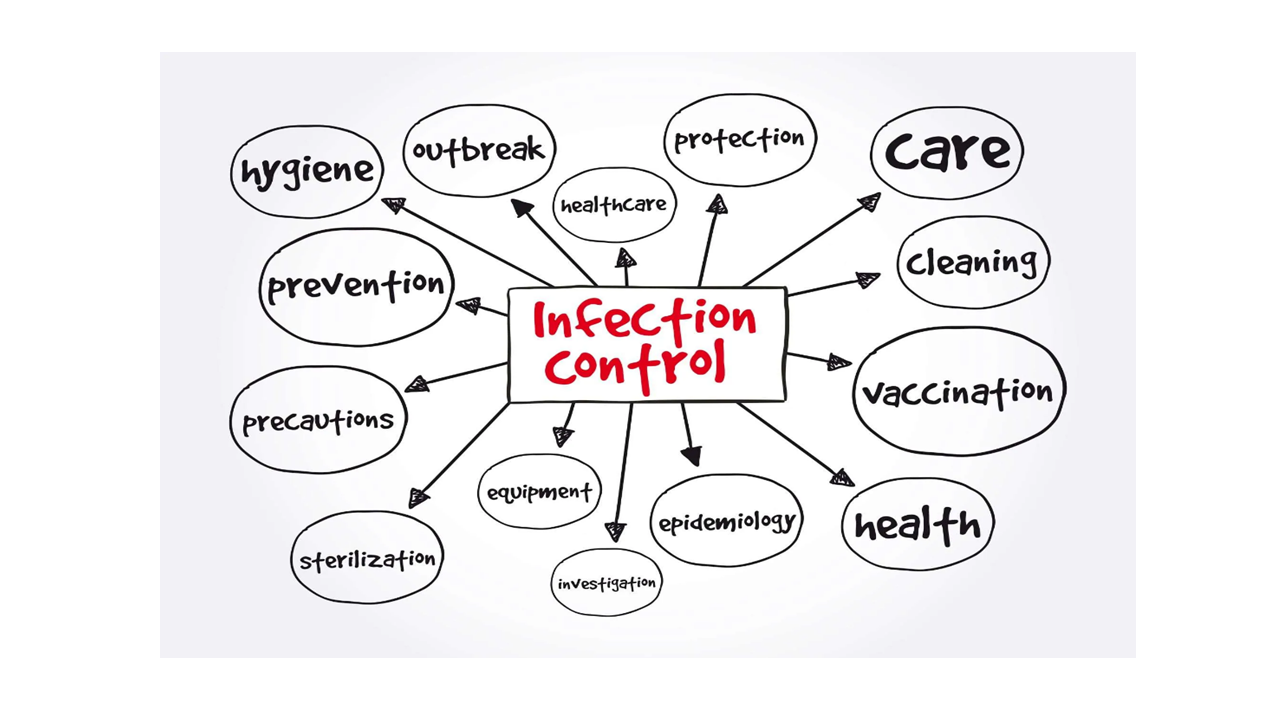
• Creating awareness on Ebola
• Capacity building
Questions/key issues to be covered:
• Ebola overview
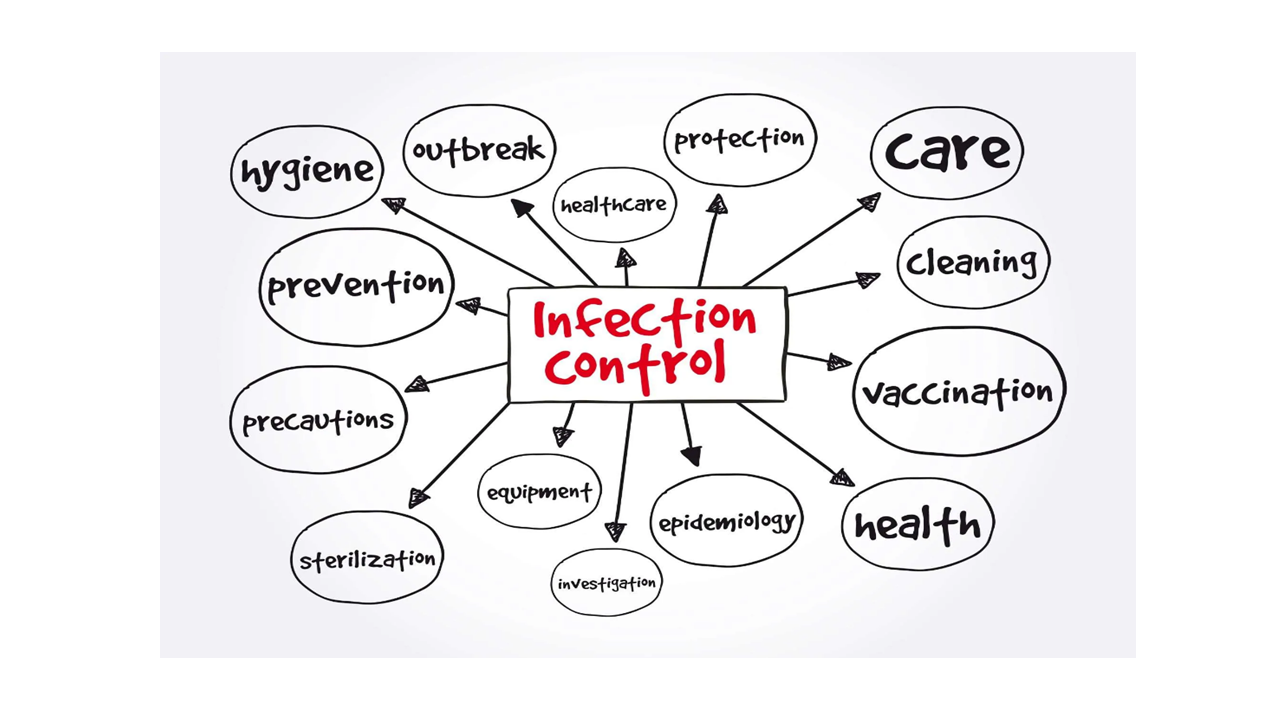
• IPC interventions
• PPE
Video
Speakers:
Dr Mbuyane Catherine Mokgadi
Director
Mrs. Rihette Lodewyk
Free State Province IPC manager (assistant director)
Mrs. Kumbuzile A. Khumalo is the
Deputy Director IPC in KZN Department of Health
Dr Joseph Wamala
Emergency Preparedness and Response Team Lead
Ms Tintswalo Mabuza
Deputy Director
Mr Benjamin Khoza
Assistant Director
Objectives:
To provide healthcare workers with support in managing patients with Advanced HIV Disease (AHD) and co-infections
Support clinicians who are interested in the Knowledge Hub online Advanced Clinical Care (ACC) course.
Provide clinical resources and guidelines to support the healthcare professional in the clinic or hospital setting
Provide practical management tools
Questions/key issues to be covered:
Provide healthcare workers with skills and tools to manage HIV positive patients with mental, legal and ethical challenges.
Video

Speakers:
Mathilda Ntloana
Deputy Director CCMT
Dr Dean Solomon
Technical Lead National
Dr Mirriam Close
Psychiatrist and Attorney of Law