English

English

National Demand Generation Implementation Guide

Demand generation for medical male circumcision is the process by which uncircumcised and HIV-negative men: learn about MMC; understand what the benefits are; make the decision to get medically circumcised; and ultimately become champions for MMC. This guide is designed to assist you with how best to generate demand for MMC, meet your MMC targets and reduce new HIV infections in your community. This implementation guide has arisen out of a need for more direct guidance in running successful MMC campaigns within a resource-limited environment.

National Contraception Clinical Guidelines 2019

These guidelines cover modern methods of contraception. In step with contemporary thinking, modern methods of contraception are described as methods which use a product or medical procedure that interferes with reproduction from acts of sexual intercourse. Non-modern methods, also known as traditional or natural methods, are generally less reliable and effective than modern methods. In light of the high rates of unintended pregnancies, unmet need for contraception, and HIV prevalence in South Africa, these methods are not actively promoted in the National Clinical Contraception Guidelines.

National Consolidated Guidelines for the Management of HIV in Adults, Adolescents, Children and Infants and Prevention of Mother-to-Child Transmission

Type
All HIV positive pregnant and breastfeeding women, infants, children, adolescents and adults have been eligible for ART regardless of CD4 count or WHO staging since 01 September 2016. The “Test and Treat All” approach has made it possible for people living with HIV (PLHIV) to access ART timeously. The 2019 Consolidated Guidelines have been revised to include a new formulation of the fixed dose combination (FDC) of tenofovir (TDF) 300 mg + lamivudine (3TC) 300 mg + dolutegravir (DTG) 50 mg (TLD) for all eligible adults, adolescents and children 10 years and older and weighing 35 kg or more.

National Clinical Guidelines of Post-Exposure Prophylaxis (PEP) in Occupational and Non-Occupational Exposures 2020

he purpose of this guideline is to ensure that healthcare providers at all levels of care in South Africa are following the most up-to-date recommendations for post-exposure prophylaxis for HIV and HBV, following either occupational or non-occupational exposure to blood or bodily fluids. Application of these guidelines by health care workers will improve access and adherence to PEP. Additionally, recommendations for PEP for sexually transmitted infections (STls), tetanus, and the prevention of unwanted pregnancies are also provided.

National Clinical Guidelines for Safe Conception and Infertility 2020

The clinical guideline on safe conception and infertility is responding to the National Health Insurance (NHI) principle of universal health access for all. It aims to promote, protect, and ensure the full and equal enjoyment of all human rights and fundamental freedoms by all, including persons with disabilities, and to promote respect for their inherent dignity. The guideline is also addressing the needs of lesbian, gay, bisexual transgendered and intersex, (LGBTQI) population in the context of their reproductive rights that has been lacking.

National Clinical Guideline for Implementation of the Choice of Termination of Pregnancy Act 2020

Type
The objectives of the guidelines is to provide clinical and operational framework for the provision of equitable, accessible, cost effective, and user friendly termination of pregnancy (TOP) services. It aims to advance individual's rights to access the highest quality of safe TOP services while ensuring integration into the comprehensive SRH&R health care service packages. These guidelines provide strategic and operational guidance to all public and private health care providers.

National Adolescent Sexual and Reproductive Health and Rights Framework Strategy 2015

This National ASRH&R Framework Strategy resonates with the vision of the Population Policy for South Africa (1998) which is “to contribute towards the establishment of a society that provides a high and equitable quality of life for all South Africans in which population trends are commensurate with sustainable socio-economic and environmental development.” The goal of the Population Policy is “to bring about changes in the determinants of the country's population trends, so that these trends are consistent with the achievement of sustainable human development.”
Subscribe to English

COVID-19 training and resources for health care workers

Access the latest COVID-19 clinical and safety information to keep you safe on the front line.

More info

Switching Stable 1st and 2nd Line ART Clients to DTG Containing Regimen

Stay up to date with all the latest information from experts working on the front line.

Access the latest information on the management of clients on TLD and guidance on switching of stable second-line clients to the DTG-containing regimen.

Register now

Getting started

  • Simple sign up

    • Visit the Knowledge Hub on your computer, tablet or phone.
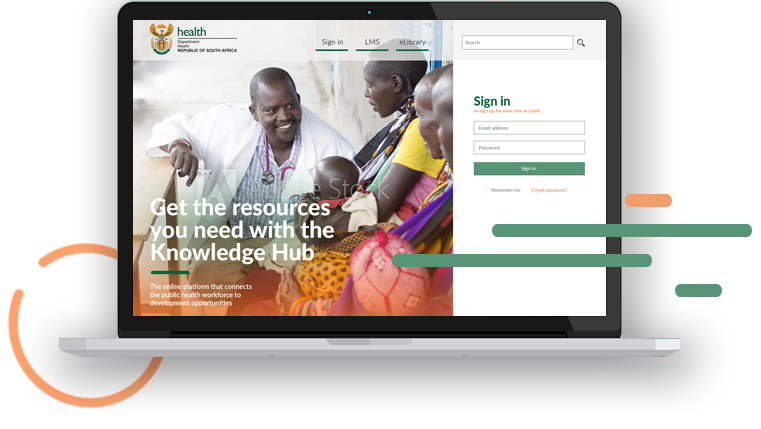
    • Click the Sign up button. Follow the simple process to create your personal profile. You will need your PERSAL and ID numbers, facility name and job role profile.
    • Next time you visit, simply log in with your chosen username and password.
  • Start your unique development journey

    • Choose priority competencies to streamline and customise your dashboard.
    • Customise your KH dashboard feeds based on your CPD opportunity preferences.
    • View and manage bookmarked CPD opportunities.
    • Access a personalised portfolio of current and completed professional development opportunities.
    • Update your personal information and preferences at any time in the future as your needs change.
  • Personalise your dashboard

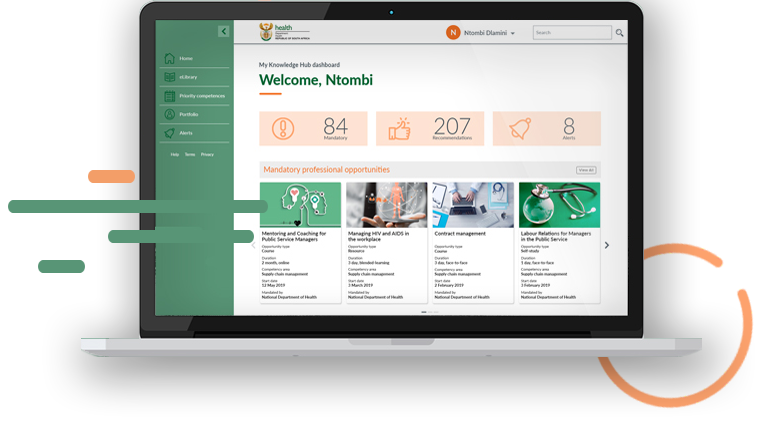
    • Based on your role profile and facility, the Hub will identify mandatory and recommended opportunities for you.
    • Access a searchable catalogue of all national and provincial Department of Health development opportunities available on the Knowledge Hub.
    • Bookmark identified opportunities to keep a record of those you would like to take up at a later date.
    • Enrol in opportunities and keep a printable record of opportunities you have completed.
    • Access an eLibrary of curated policies, guidelines and standard operating procedures.
    • Receive Knowledge Hub email alerts targeted specifically for you.

The Knowledge Hub

the CPD solution for the National Department of Health

The Knowledge Hub will help you build your competence and improve your professional skills. The KH provides you:

  • Relevant CPD opportunities: Access professional development opportunities, including online and blended-learning courses, conferences, face-to-face workshops, and self-study resources to meet your specific needs.
  • Up-to-date information and policies: Access all the latest legislation, policies, guidelines, standard operating procedures, reference materials, and best practices you need.
  • Email communication: Stay in the know with email alerts about new CPD opportunities and customise your entire KH experience based on your job profile and needs.