Type
Guides/Guidelines
Year
Topic
Ethics in Health Research Principles

Objectives:
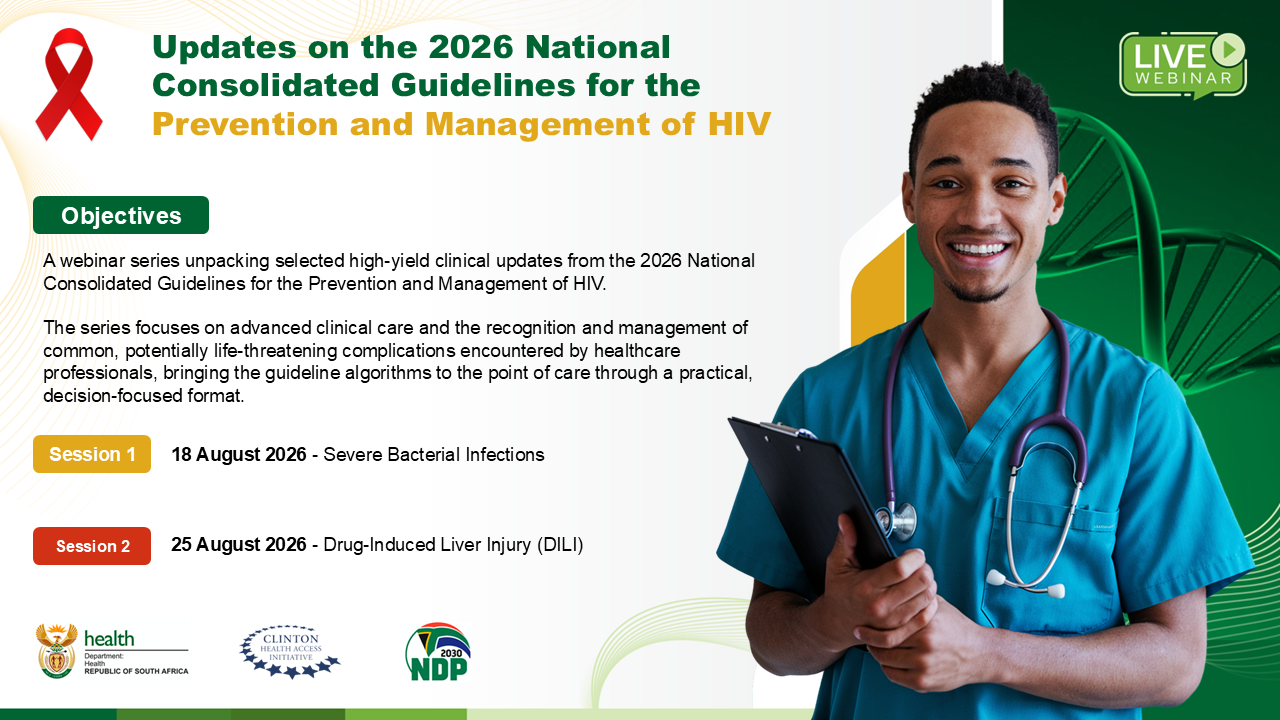
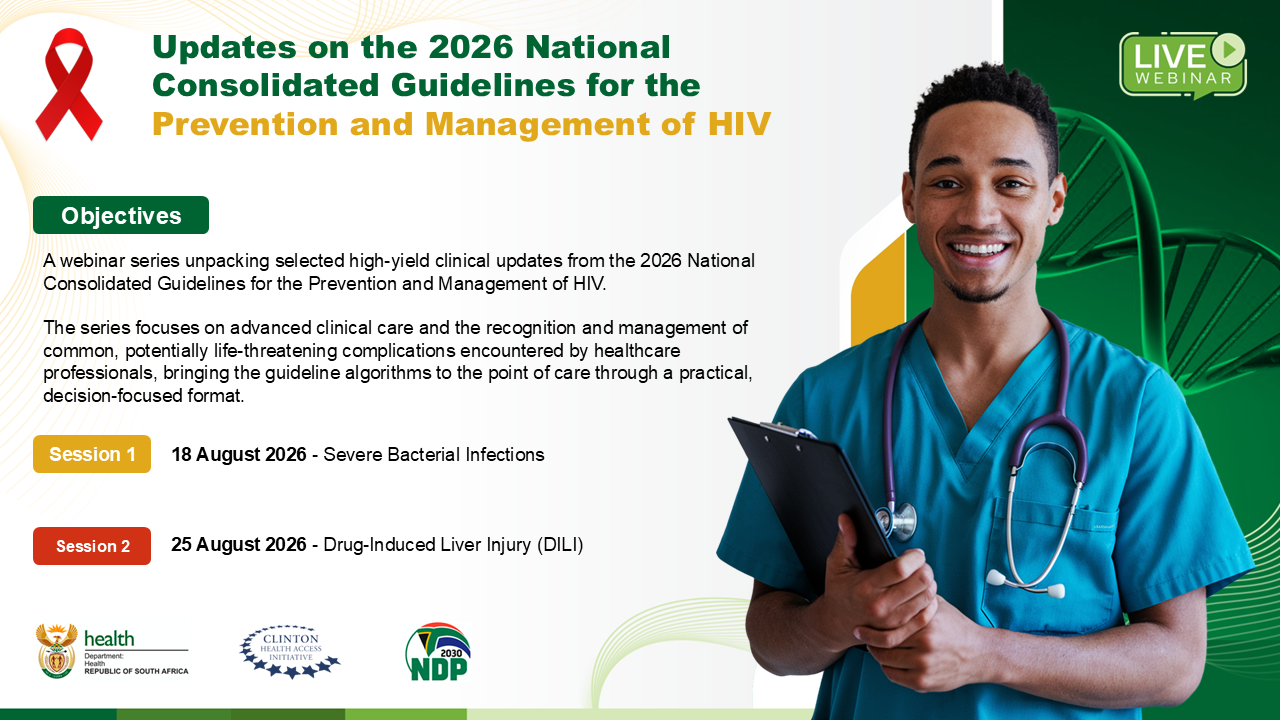
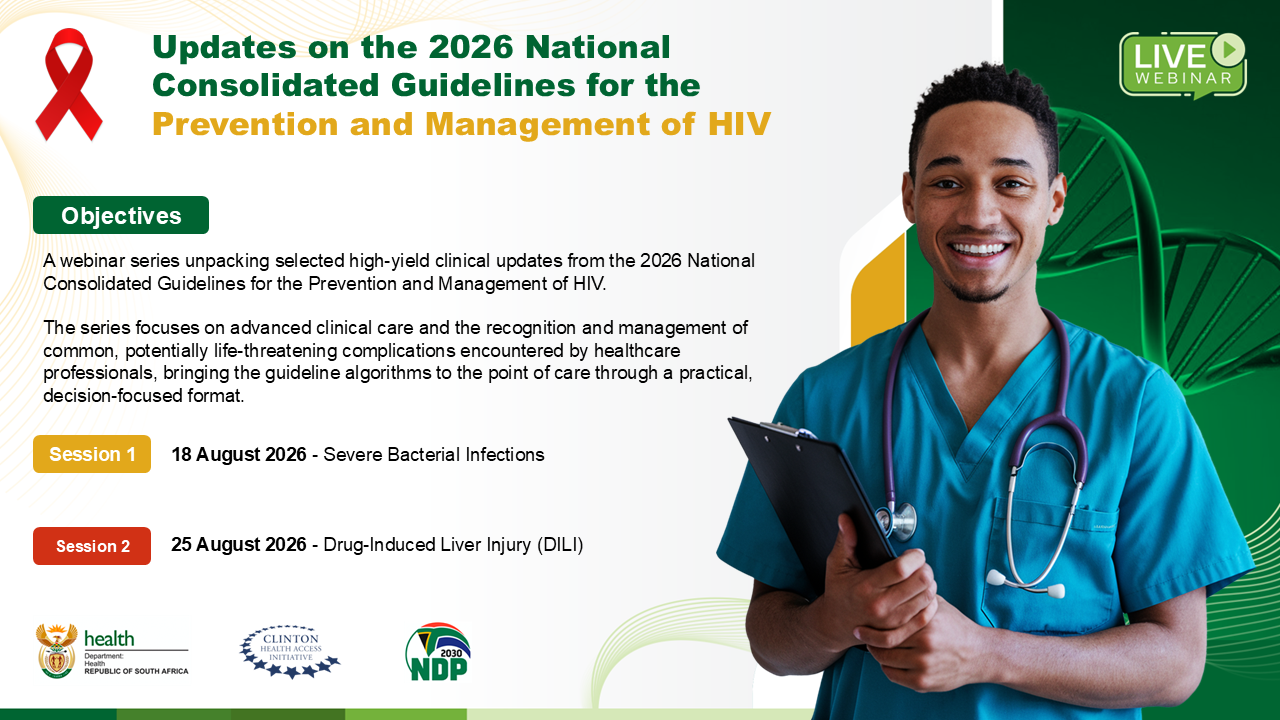
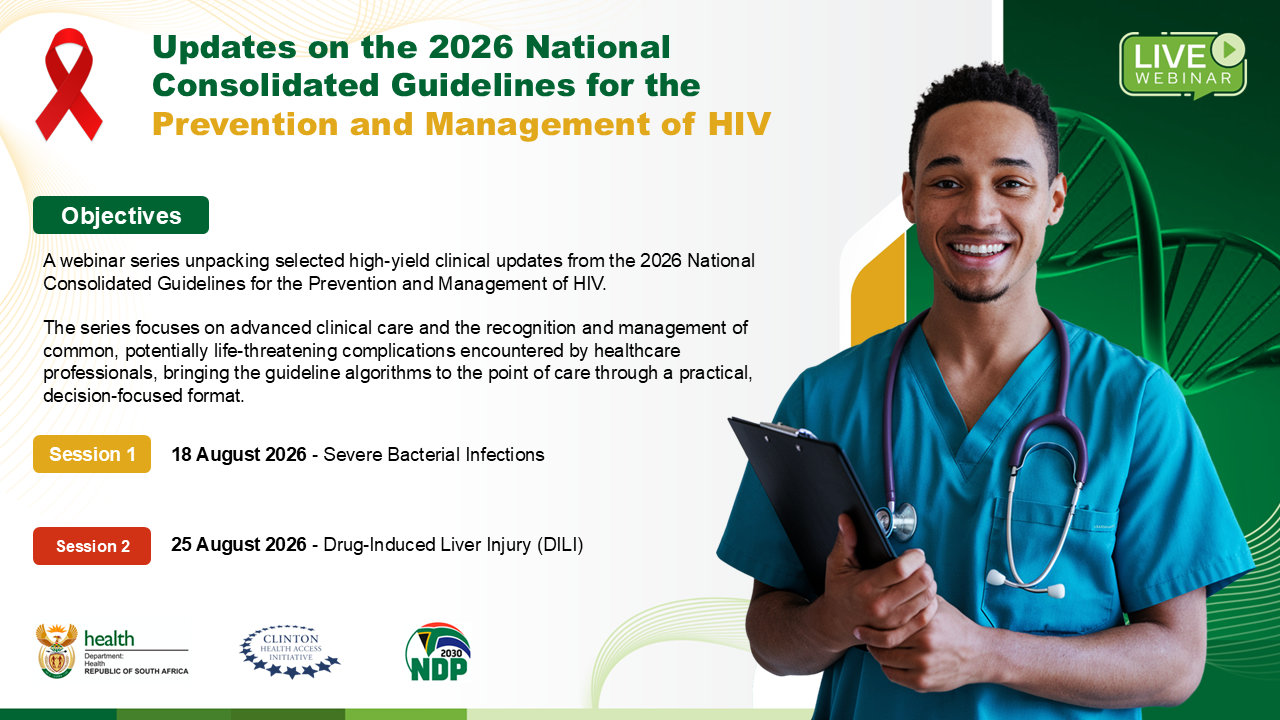
Severe bacterial infections (SBIs) are, alongside TB and cryptococcal meningitis, one of the leading causes of death in patients with advanced HIV disease. This session equips clinicians to recognise the often subtle presentation of invasive bacterial disease in people living with HIV, to investigate appropriately within scope of practice, and to initiate timeous empiric therapy and referral. It works through the 2026 guideline’s SBI framework, including the cadre-based “who, where and what” of investigating and managing SBIs and the inpatient approach to a patient with a pulmonary or meningeal presentation.
By the end of the session, participants will be able to:
• Define SBIs and explain their contribution to morbidity and mortality in advanced HIV disease
• Recognise the clinical danger signs and subtle features of invasive bacterial disease in PLHIV
• Apply the minimum diagnostic work-up (blood cultures, relevant clinical specimens, FBC and kidney function) before commencing antibiotics
• Determine the appropriate level of care and scope-of-practice actions for nurses and clinicians, including timeous referral
• Describe the principles of empiric broad-spectrum therapy and the diagnostic overlap with TB and PJP in the seriously ill patient
Video
Speakers:
Dr Musa Manganye
Director HIV Treatment, Care and Support
Dr Lesego Mawela
HIV Clinician & Facilitator: Clinical Care Platform
Objectives:
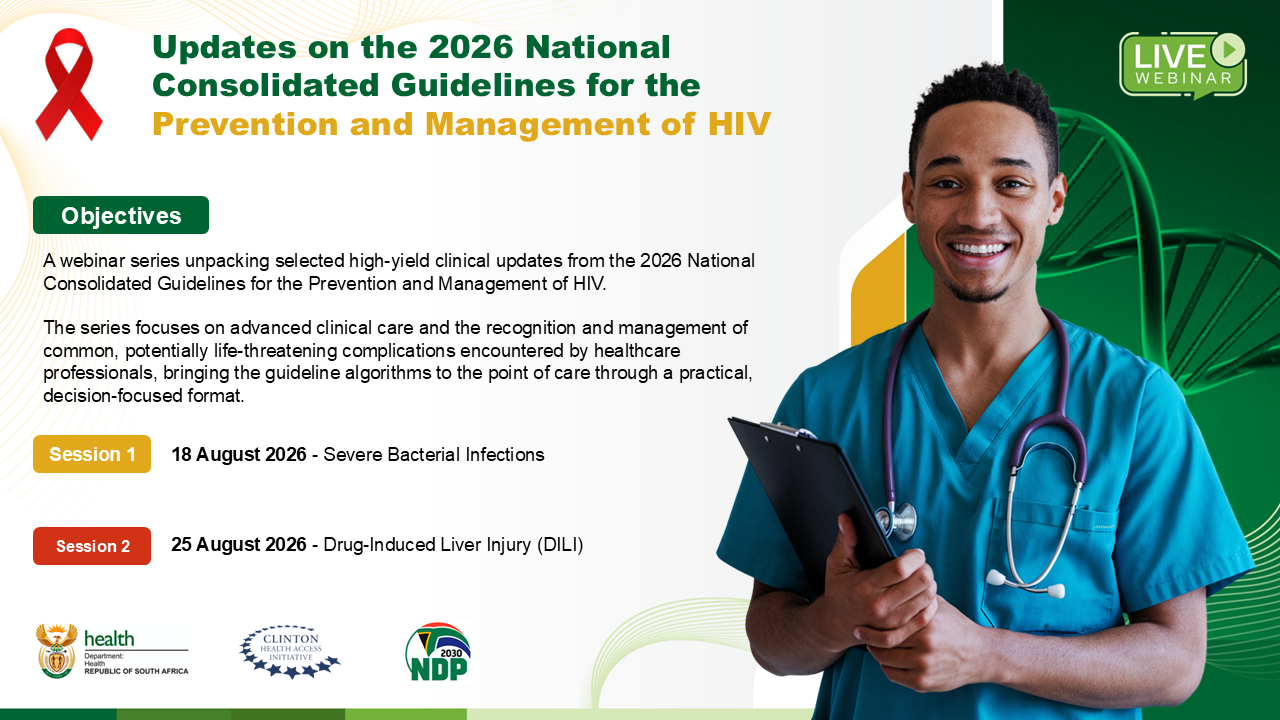
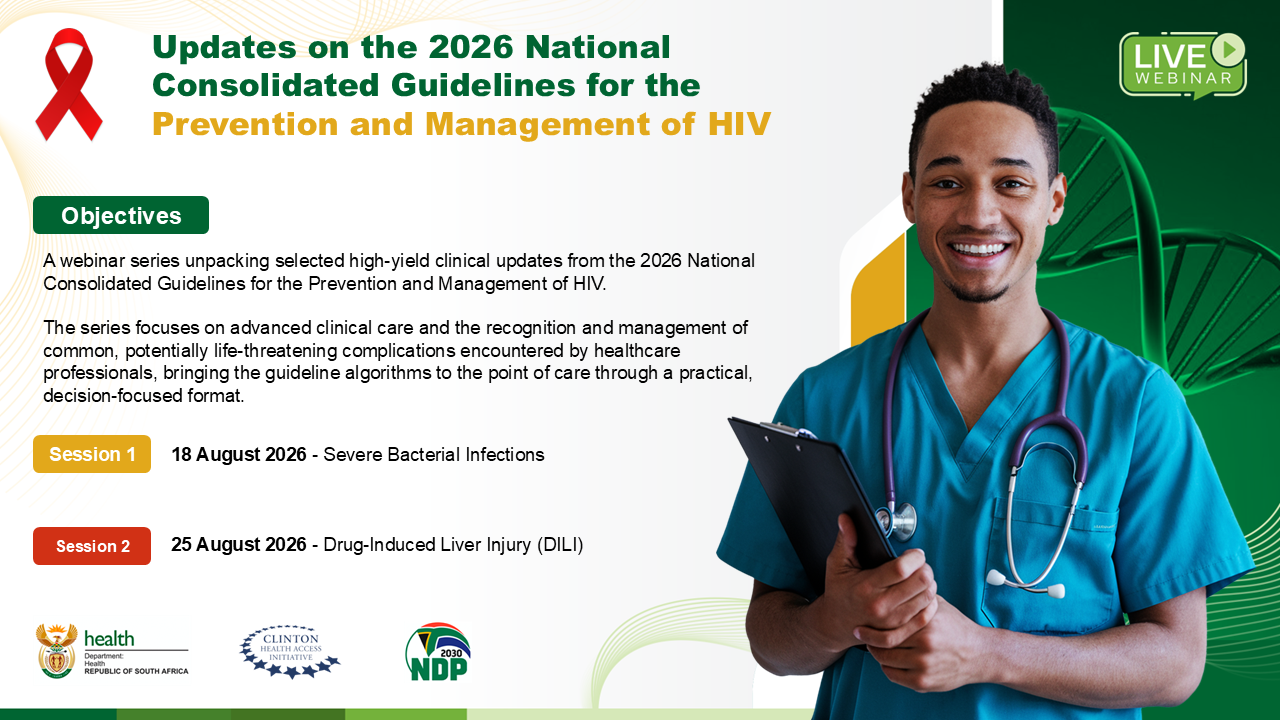
Hepatotoxicity is a common and potentially life-threatening complication in PLHIV, particularly in those on concurrent TB treatment. This session takes participants through the 2026 guideline approach to anti-tuberculosis drug-induced liver injury (AT-DILI): recognising and classifying DILI, differentiating it from TB-IRIS, deciding when and how to interrupt and sequentially re-challenge TB treatment and ART, and knowing when to escalate to specialist care.
Learning objectives:
By the end of the session, participants will be able to:
• Identify the clinical and laboratory criteria for diagnosing AT-DILI (ALT and bilirubin thresholds, symptoms)
• Classify DILI severity as mild, moderate or severe using symptoms and INR
• Differentiate DILI from TB-IRIS on clinical and biochemical grounds
• Apply the guideline’s stepwise approach to stopping, monitoring and re-challenging TB drugs, ART and prophylaxis in the correct order
• Make appropriate ART decisions during DILI (continuing DTG, switching off EFV or LPV/r) and recognise when to refer for specialist management
Video
Speakers:
Ms Mathilda Ntloana
NDoH: CCMT Manager
Dr Lesego Mawela
HIV Clinician & Facilitator: Clinical Care Platform
Objectives:
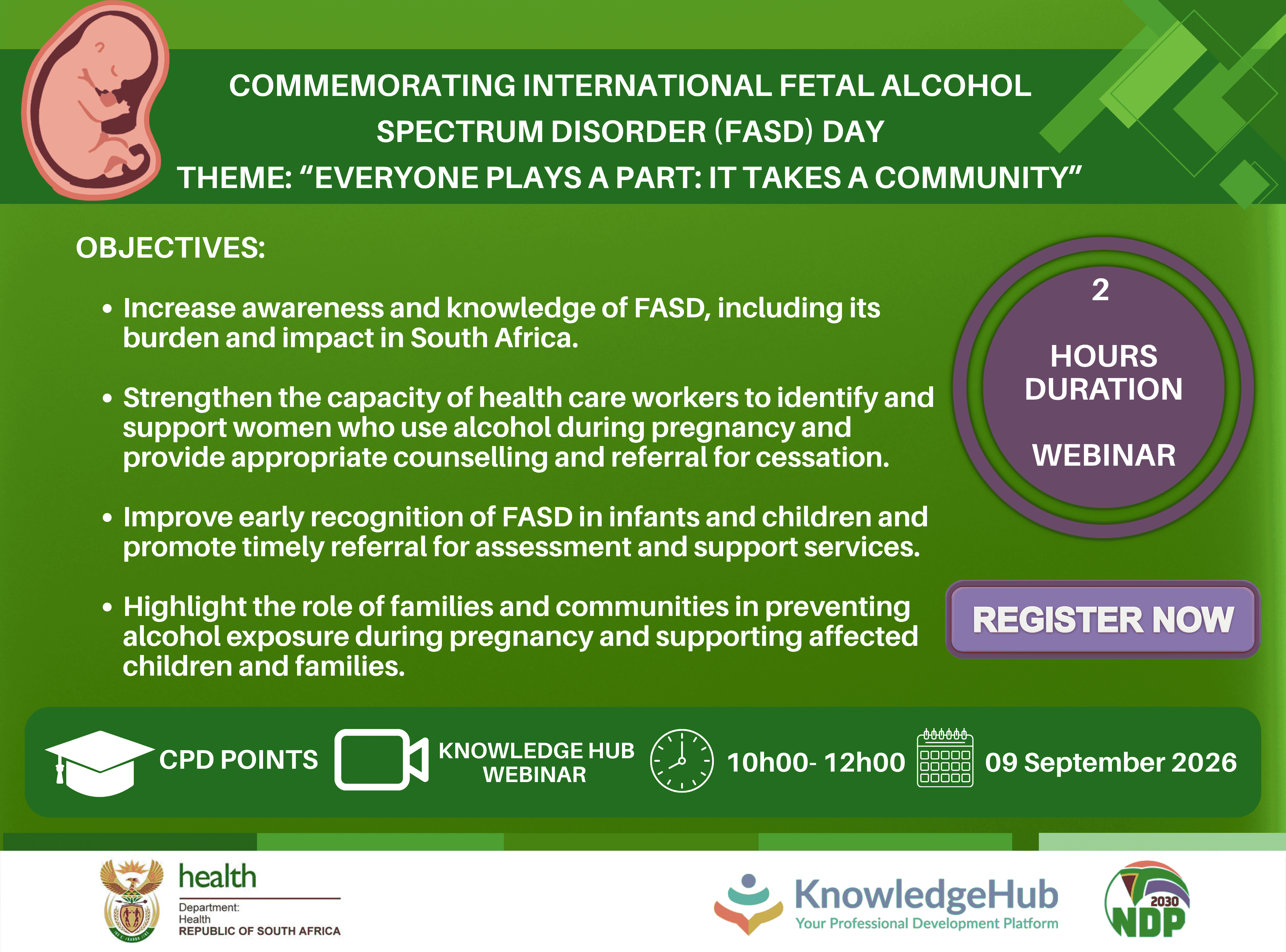
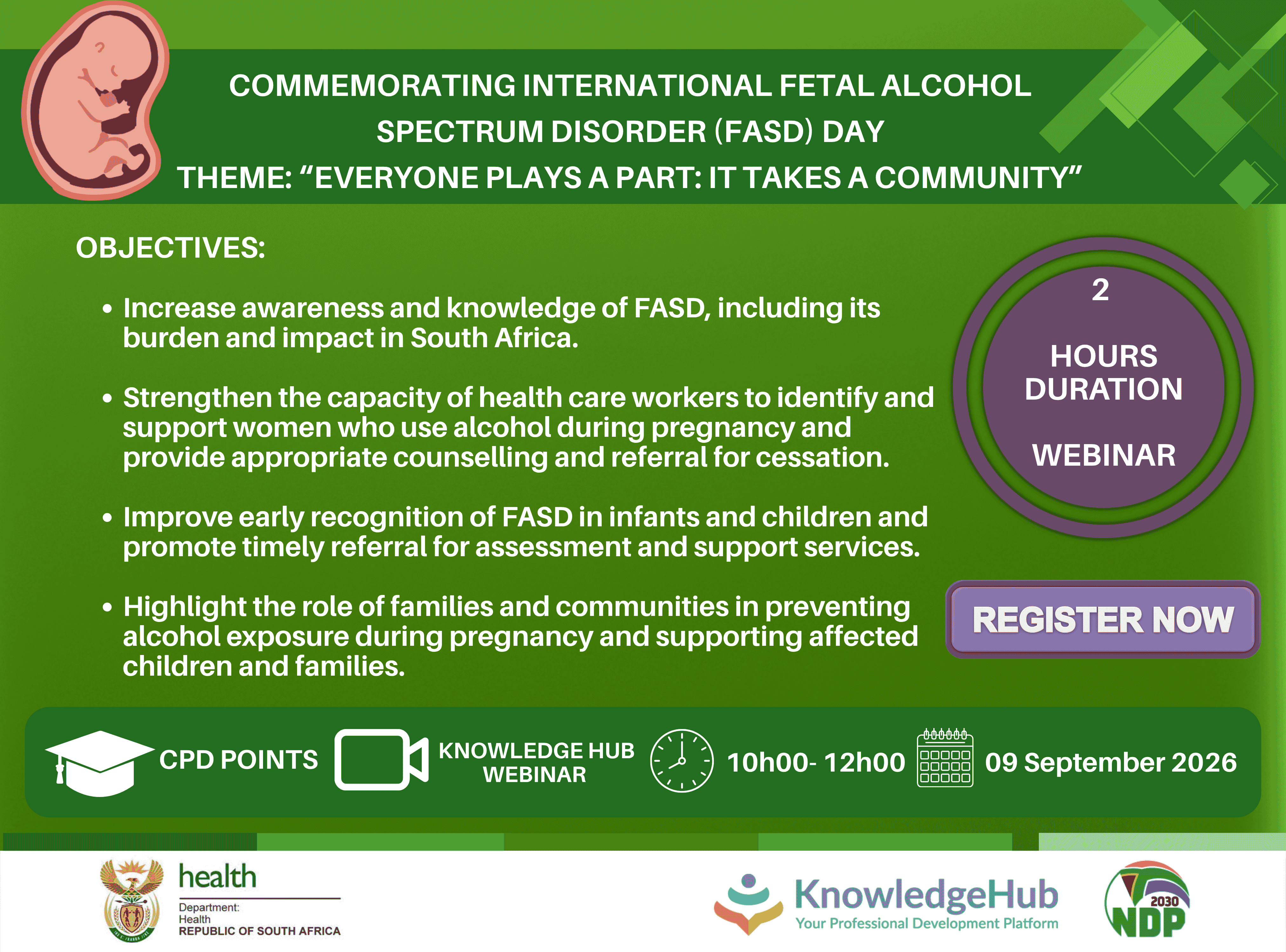
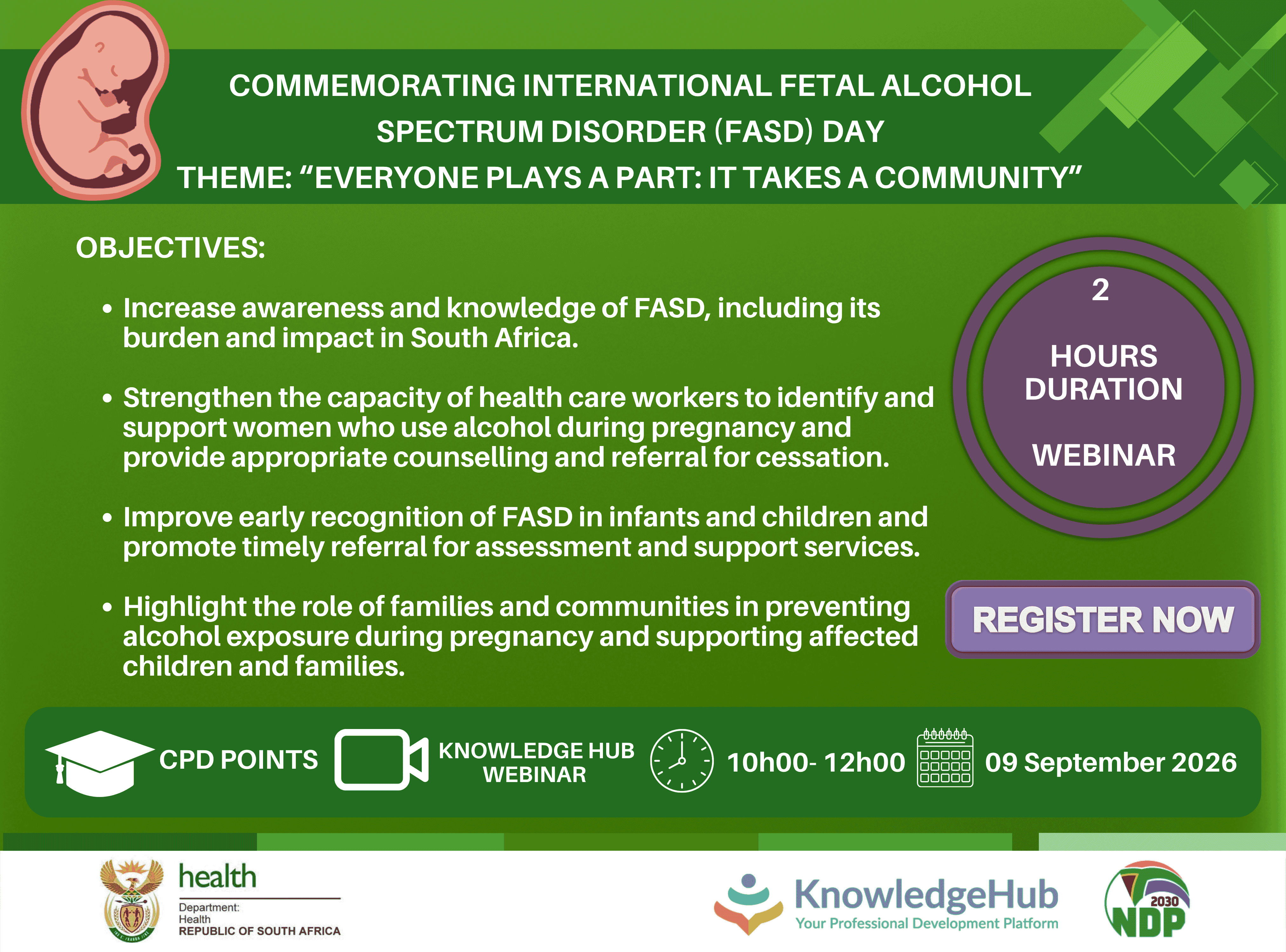
1. Increase awareness and understanding of FASD, including its burden, impact and lived experiences in South Africa.
2. Strengthen the capacity of healthcare workers to prevent alcohol-exposed pregnancies through prevention, counselling and support strategies.
3. Improve the early identification, referral and management of individuals affected by FASD, while promoting collaboration between healthcare workers, families and communities.
Questions/key issues to be covered:
What are the most effective strategies that healthcare workers can use to prevent alcohol-exposed pregnancies and reduce the risk of FASD?
What are the common signs and indicators of FASD that healthcare workers should look for to support early identification and referral?
What barriers prevent pregnant women from accessing support to stop or reduce alcohol use during pregnancy, and how can healthcare services address these barriers?
How can healthcare workers, families, schools, social services and communities collaborate to improve support and outcomes for individuals living with FASD?
What practical actions can healthcare facilities implement to strengthen the identification, referral and management of individuals affected by FASD within existing health services?
Video:
Speakers:
Ms Sebotse Ngake
Director: Child, Youth & School Health
Ms Vuyiswa Lebese
Assistant director: Human Genetics
Ms Kashifa Ancer
Project Lead – Rethink Your Drink
Dr Leana Olivier
Chief Executive Office
Ms Motshabi Nkoane
Social Work Policy Manager
Ms Vivien Lourens
Objectives:
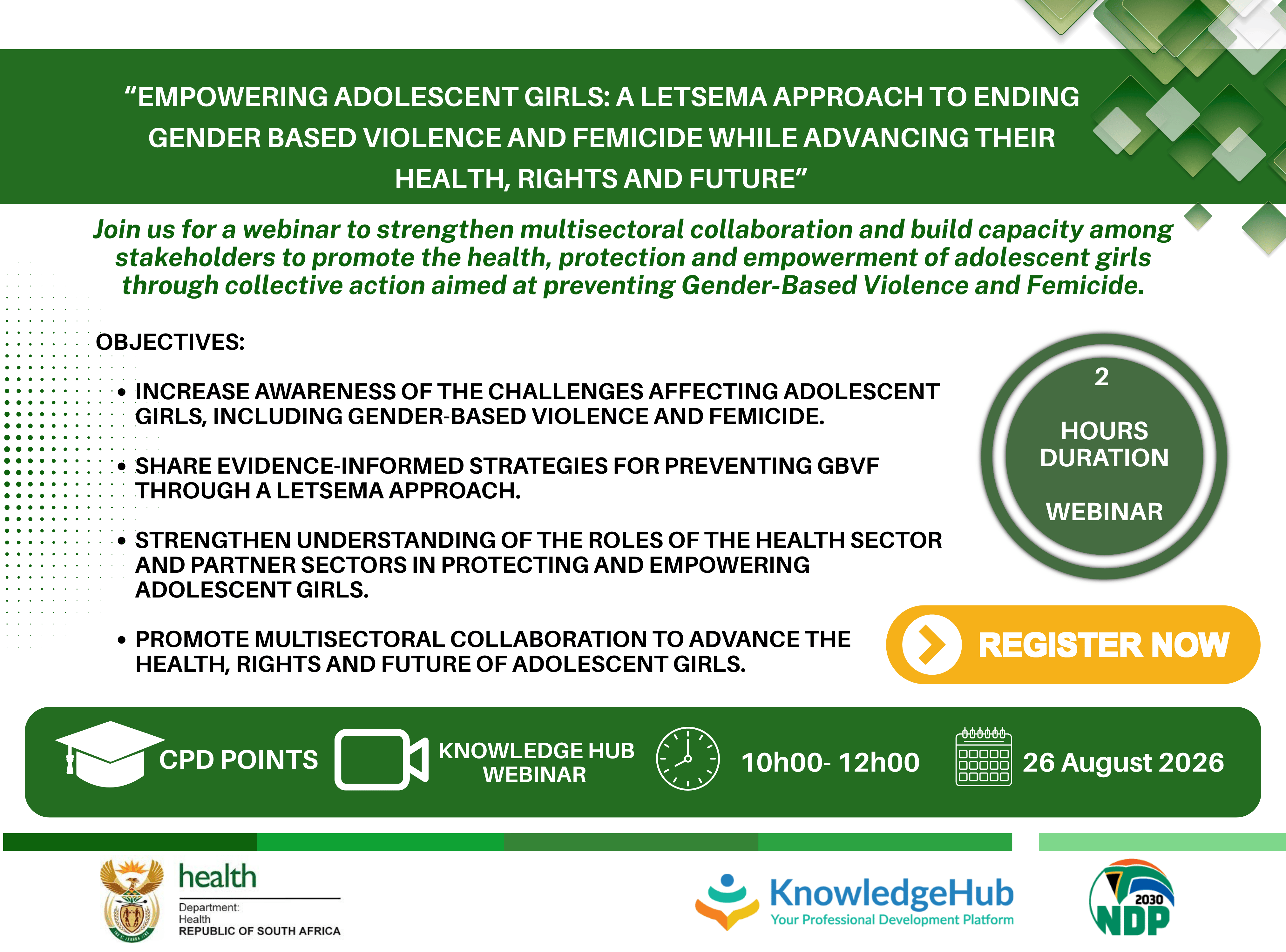
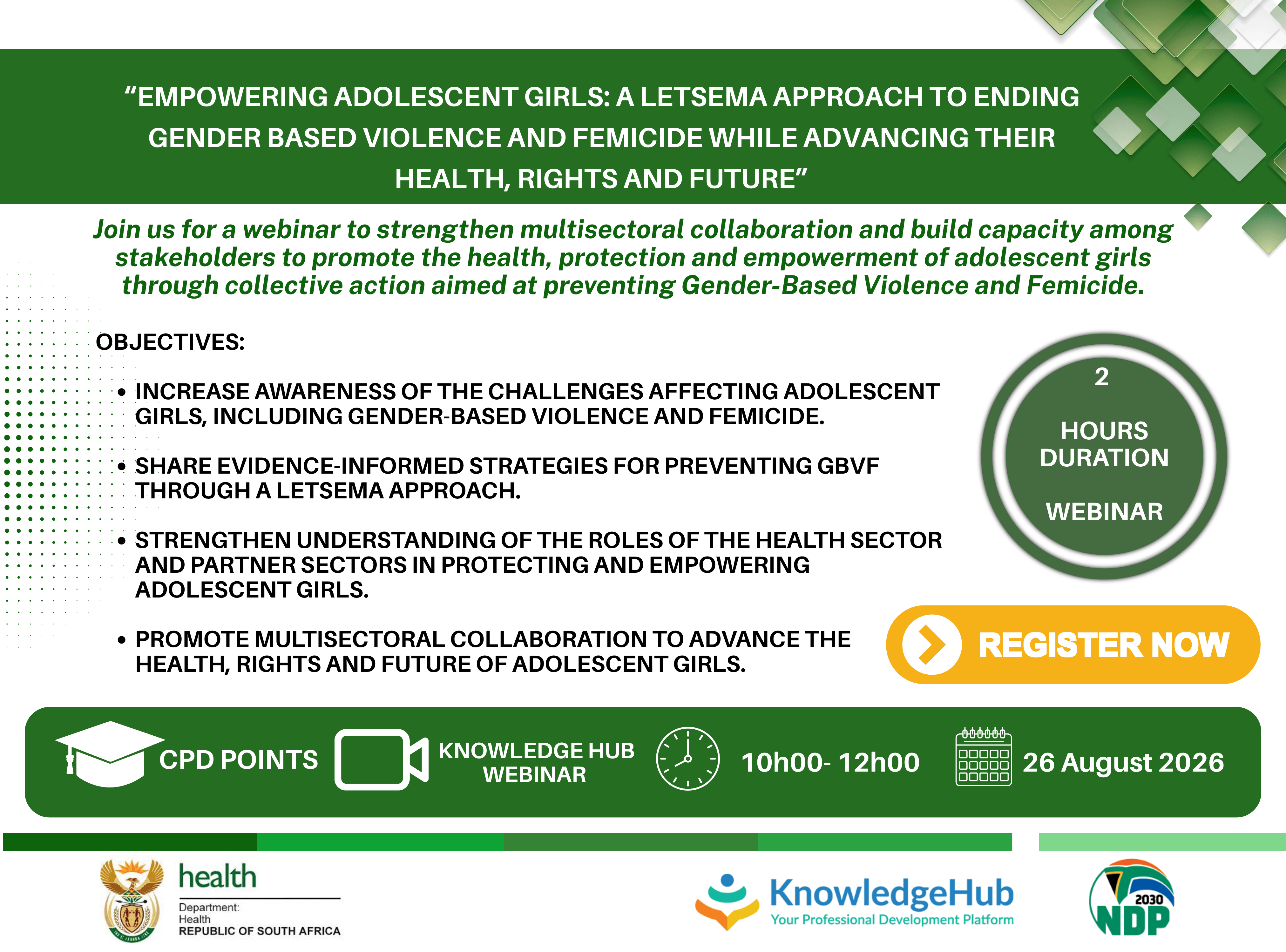
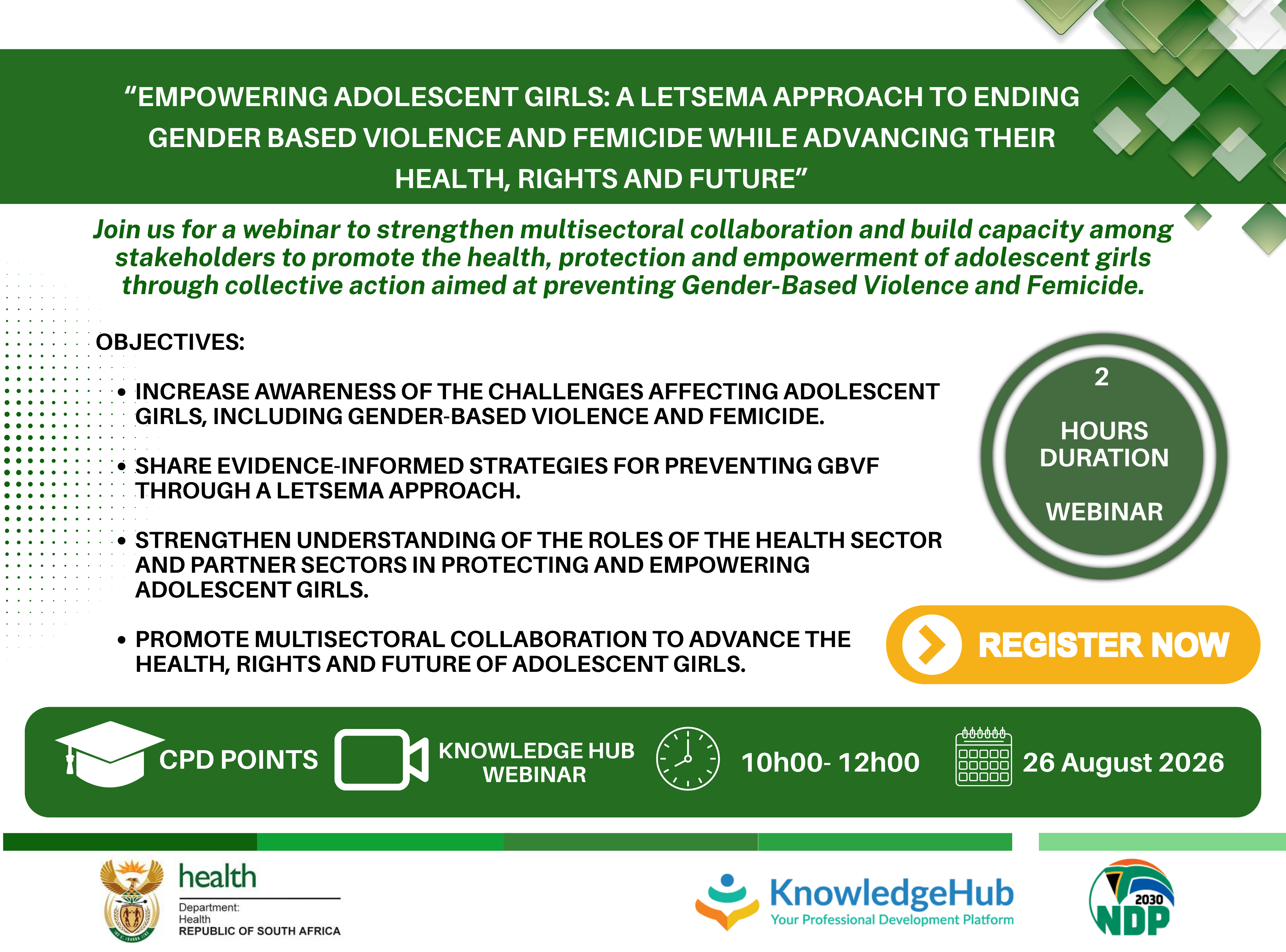
- To strengthen multisectoral collaboration and build capacity among stakeholders to promote the health, protection and empowerment of adolescent girls through collective action aimed at preventing Gender-Based Violence and Femicide
- Increase awareness of the challenges affecting adolescent girls, including Gender-Based Violence and Femicide.
- Share evidence-informed strategies for preventing GBVF through a Letsema approach.
- Strengthen understanding of the roles of the health sector and partner sectors in protecting and empowering adolescent girls.
- Promote multisectoral collaboration to advance the health, rights and future of adolescent girls.
Questions/key issues to be covered:
- How do we work together to create a South Africa where every adolescent girl is safe from GBVF, able to exercise her rights, access quality health services and have the opportunity to shape her own future.
Video:
Speakers:
Ms Feni Motshwane
Deputy Director: Integrated School Health
Dr Nonhlanhla Ndlovu
Deputy Director General: HIV/AIDS, TB and MCWH
Ms Hlamalani Queen Nenzhelele
Assistant Director: Adolescent and Youth Health Programme
Dr Ronel Sewpaul
Statistician: Researcher
Ms Matete Rinky Modise
Associate National Project Officer
Ms Julie Mentor
Project lead
Objectives:
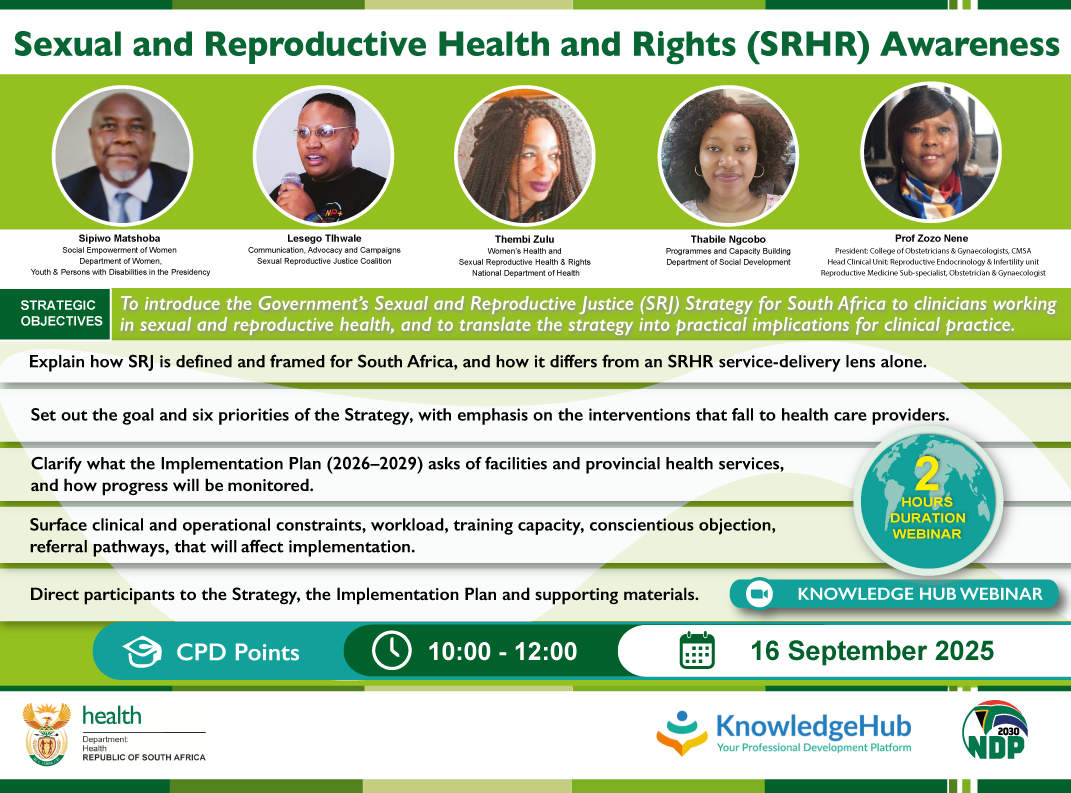
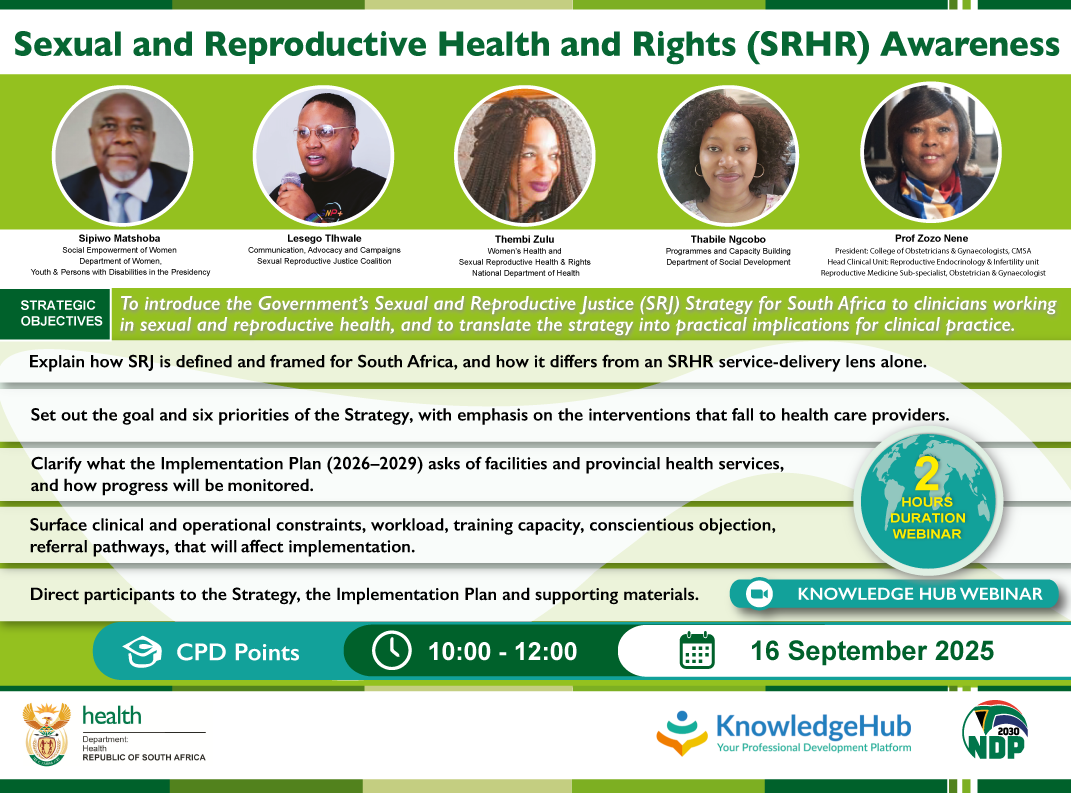
• Explain how SRJ is defined and framed for South Africa, and how it differs from an SRHR service-delivery lens alone Introduce the Government SRJ Strategy to clinicians working in sexual and reproductive health, and to translate it into what it means for clinical practice. Specifically
• Set out the goal and six priorities of the Strategy, with emphasis on the interventions that fall to health care providers. To contribute towards improving the socio-economic, health, structural, institutional and political conditions that enable individuals, especially women
• Clarify what the Implementation Plan (2026–2029) asks of facilities and provincial health services, and how progress will be monitored. To make informed and autonomous decisions regarding their sexual and reproductive health and rights, through coordinated multisectoral interventions at all levels
Questions/key issues to be covered:
• Compulsory values clarification and attitude transformation (VCAT) training for health care workers, and compulsory values clarification training for providers, delivered online or in person Focus on understanding of Sexual and reproductive health and Rights.
• Clinical mentoring and peer support, including District Clinical Specialist Teams, regular updates on new evidence-based developments, and an essential package of SRH services progressively expanding under the NHI Understanding Sexual and Reproductive Health and Rights to what what change champions do and how they fit SRHR work in their normal work/systems/ operations
Video:
.png)
Speakers:
Ms Thembi Zulu
Deputy Director: NDOH
Lesego Tlhwale
Program Coordinator: SRJ
Mrs Thabile Ngcobo
Deputy Director in the Programmes and Capacity Building Directorate: DSD
Mr S Matshoba
Deputy Director, Social Empowerment of Women
Prof Laura Nana Zozo Nene
President: College of Obstetricians & Gynaecologists, CMSA
Head Clinical Unit: Reproductive Endocrinology & Infertility unit
Reproductive Medicine Sub-specialist
Obstetrician & Gynaecologist
Objectives:
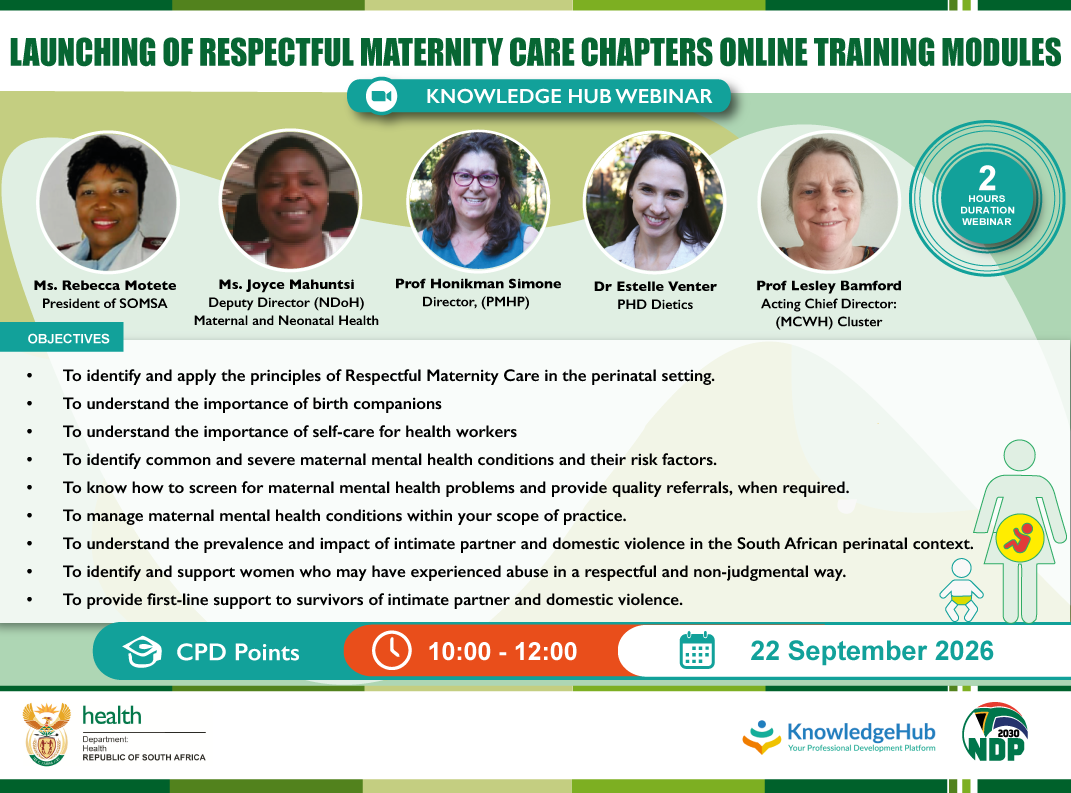
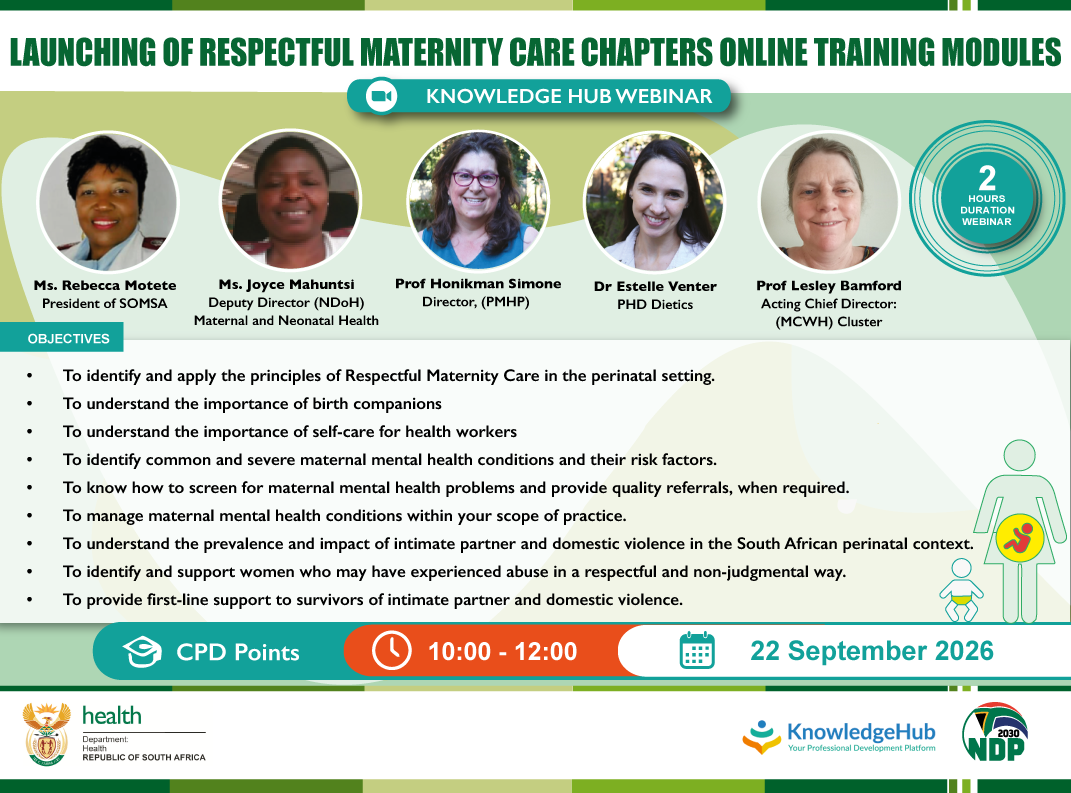
• To improve understanding of respectful maternity care among health care providers
• To improve health worker skills on application of the rights, dignity, privacy, informed choice and respectful communication of pregnant women, mothers and newborns across the continuum of care.
• To improve and refresh Health worker skills on RMC, Maternal Mental Health and Intimate Partner Violence Clinical skills
Questions/key issues to be covered:
• How to implement the RMC principles
• Key factors contributing to Maternal Mental Health issues, how to diagnose and manage the related conditions.
• How to recognize IPV and Domestic Violence
• Skills and resources for Care of the Carer
Video:
.png)
Speakers:
Dr Lesley Bamford
Acting Chief Director: MCWH
Dr Estelle Venter
PhD Dietetics
Prof Honikman Simone
Director, Perinatal Mental Health Project (PMHP)
Ms Joyce Mahuntsi
National Maternal Health Lead
Ms Rebecca Motete
President of the Society of Midwives of South Africa (SOMSA) and a Midwife Specialist serving in the Lejweleputswa District(FS)
Objectives:
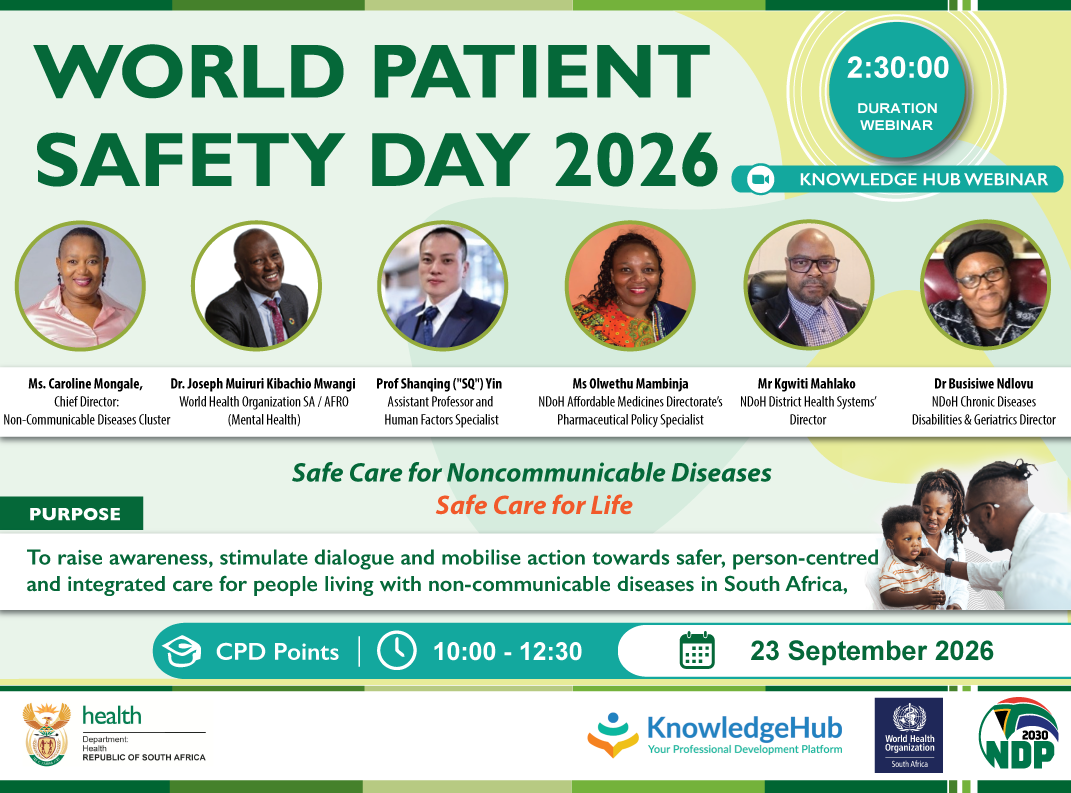
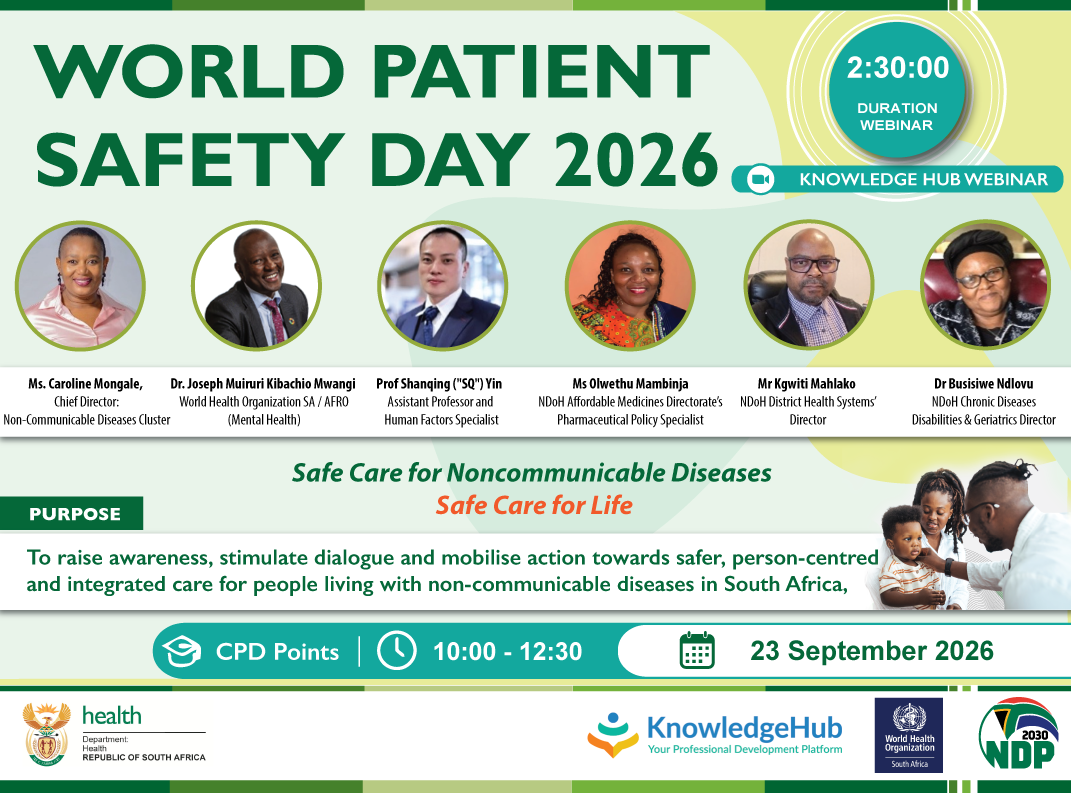
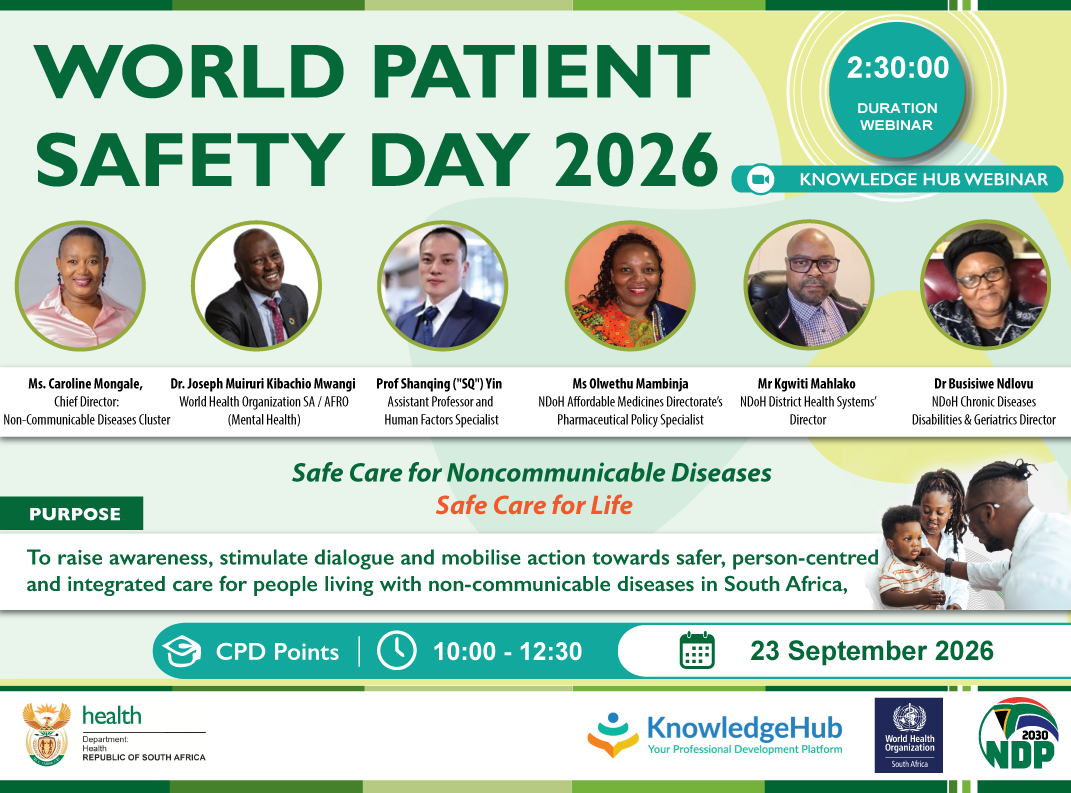
• Raise awareness of patient-safety challenges associated with NCDs across the continuum of care through a primary healthcare approach
• Increase the understanding of the disease-related, health-system and social determinants that may increase the risk of harm.
• Promote a meaningful engagement of people living with NCDs and communities in identifying safety risks and co-developing solutions.
• Encourage the integration of patient-safety principles into NCDs-related legislation, policies, strategies and programmes.
• Strengthen health workers' capacity to provide safer NCDs care, including safer diagnosis, medication safety, communication and patient engagement.
• Promote learning from patient-safety incidents, near misses, complaints and patient experiences
• Identify practical opportunities for strengthening patient safety within South Africa's primary healthcare-oriented NCDs response.
• Promote multisectoral and multi-stakeholder collaboration to address barriers to safe NCDs.
Questions/key issues to be covered:
• How do we ensure patient safety at all levels?
Video:
Speakers:
Ms Caroline Mongale
Chief Director: NCD
Dr Joseph Muiruri Kibachio Mwangi
WHO South Africa Cluster Lead; Health Promotion & Disease prevention and Control Cluster & Medical Officer and Advisor -NCDs and Mental Health
Prof Shanqing ("SQ") Yin
Assistant Professor and Human Factors Specialist
Ms Olwethu Mambinja
Pharmaceutical Policy Specialist Senior
Mr Kgwiti M Mahlako
Director-PHC
Dr Busisiwe Ndlovu
Director: Chronic Diseases, Disabilities and Geriatrics