Search Opportunities

Search Opportunities

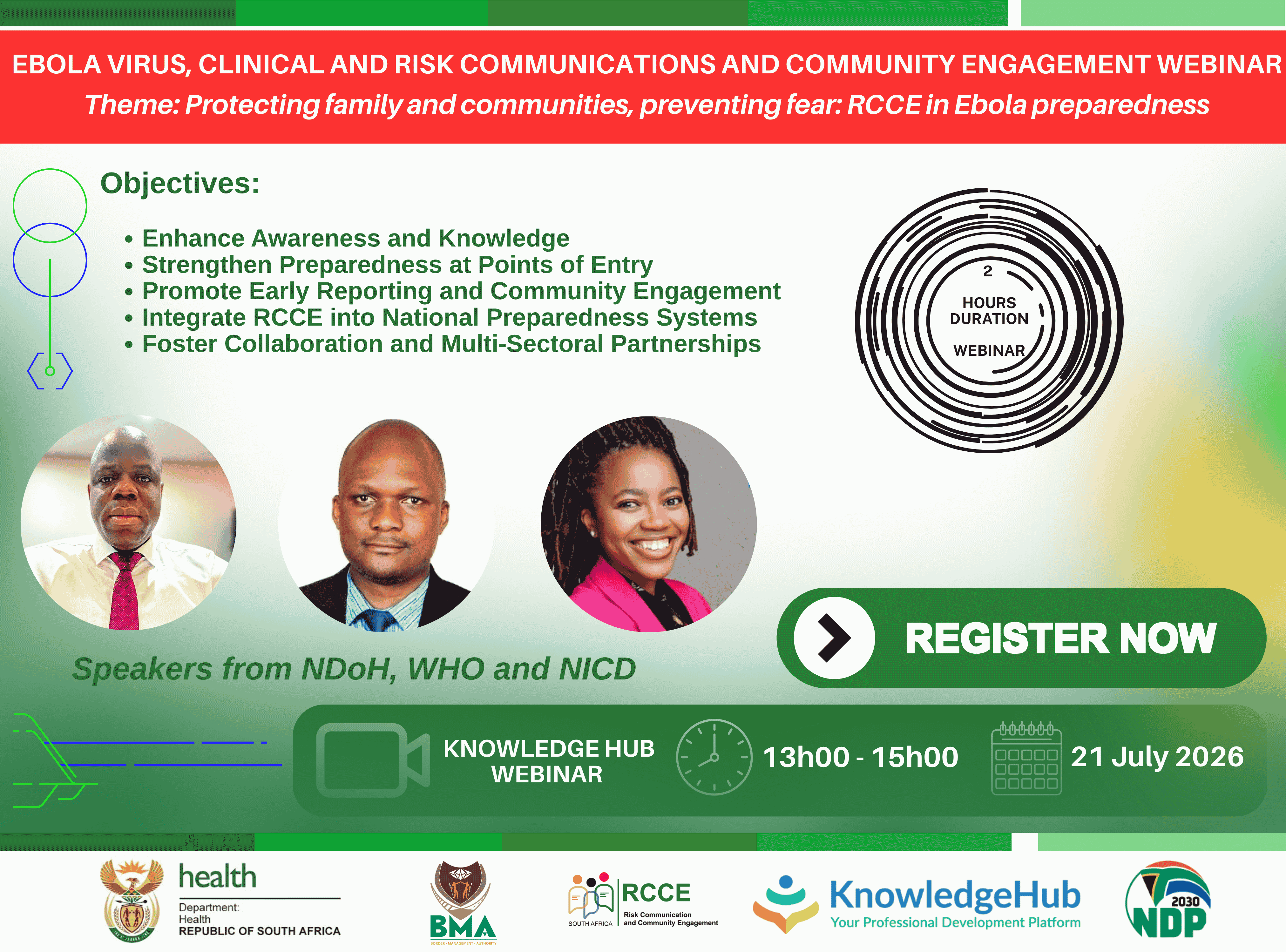
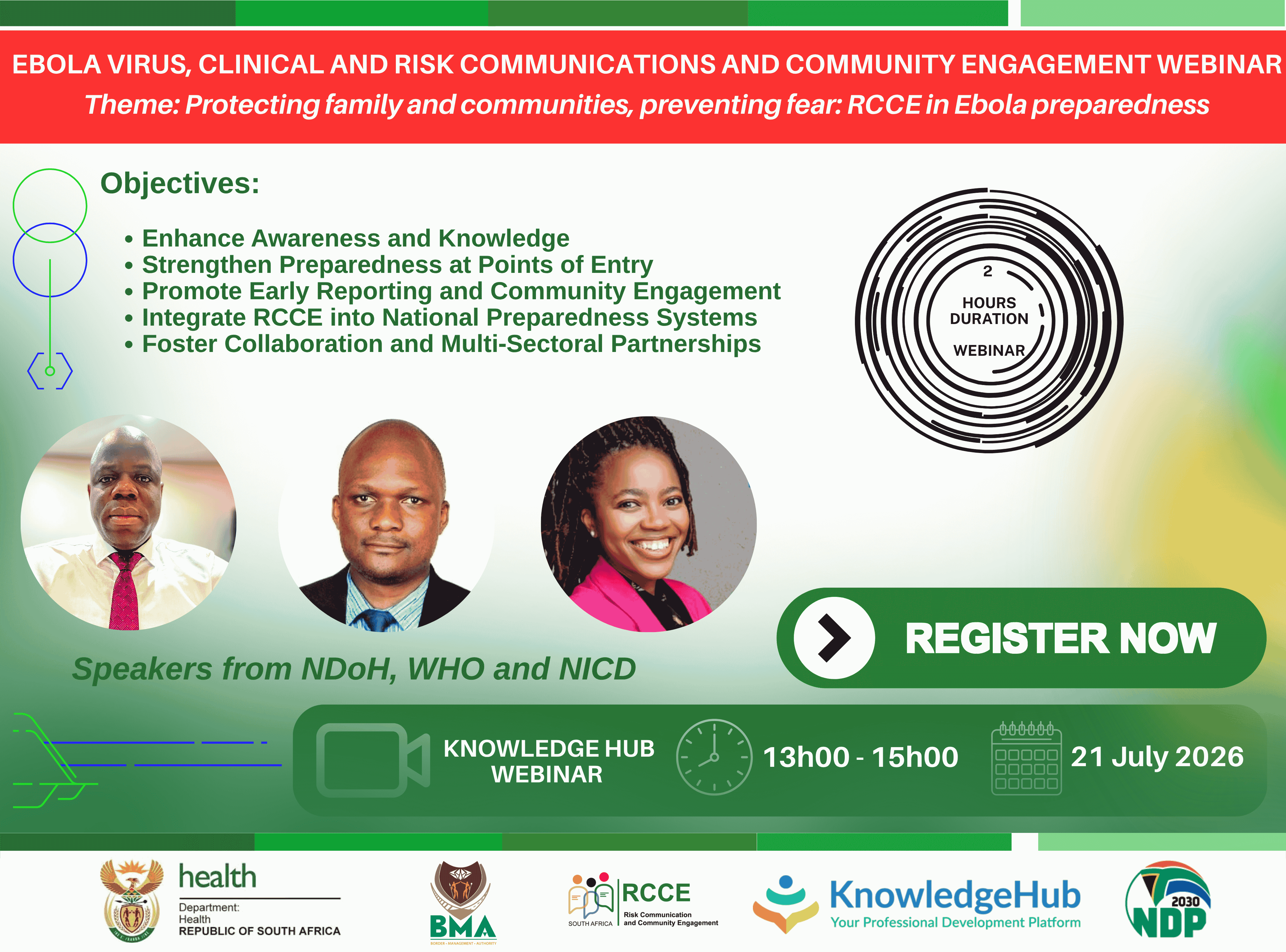
Ebola Virus Disease (Bundibugyo strain), Clinical and Risk Communication & Community Engagement

Objectives:

•    Enhance Awareness and Knowledge
•    Strengthen Preparedness at Points of Entry
•    Promote Early Reporting and Community Engagement

Questions/key issues to be covered:

•    Community engagement 
•    key principles of effective risk communication
•    Community engagement before, during, and after the outbreak.
•    How can misinformation, rumours, and disinformation be effectively addressed?

Video

Ebola Virus Disease (Bundibugyo strain), Clinical and Risk Communication & Community Engagement Webinar

Speakers:

Ms Rebone Ntsie
Chief Director: Health Promotion

Dr Joseph Wamala: WHO 
Doctor: Public Health Epidemiologist and Emergency Preparedness and Response specialist) 

Wayne Ramkrishna
Acting Director: CDC Programme

Dr Vuyiswa Kumalo: NICD
Medical Officer in the Outbreak Response Unit within the Division of Public Health Surveillance and Response 

Dr Terrence Magoro: WHO
District Health Officer 

Ms Nomkhosi Stone
Assistant Director

Ms Tintswalo Mabuza
Deputy Director: Infection Prevention and Control

Pam Masilela
Deputy Director, Port Health Operations and Monitoring 
 

Medical
Health Promotion and Nutrition
-
Image
 Updated Webinar Banner (8).png
Teaser Image
 Updated Webinar Banner (8).png
2

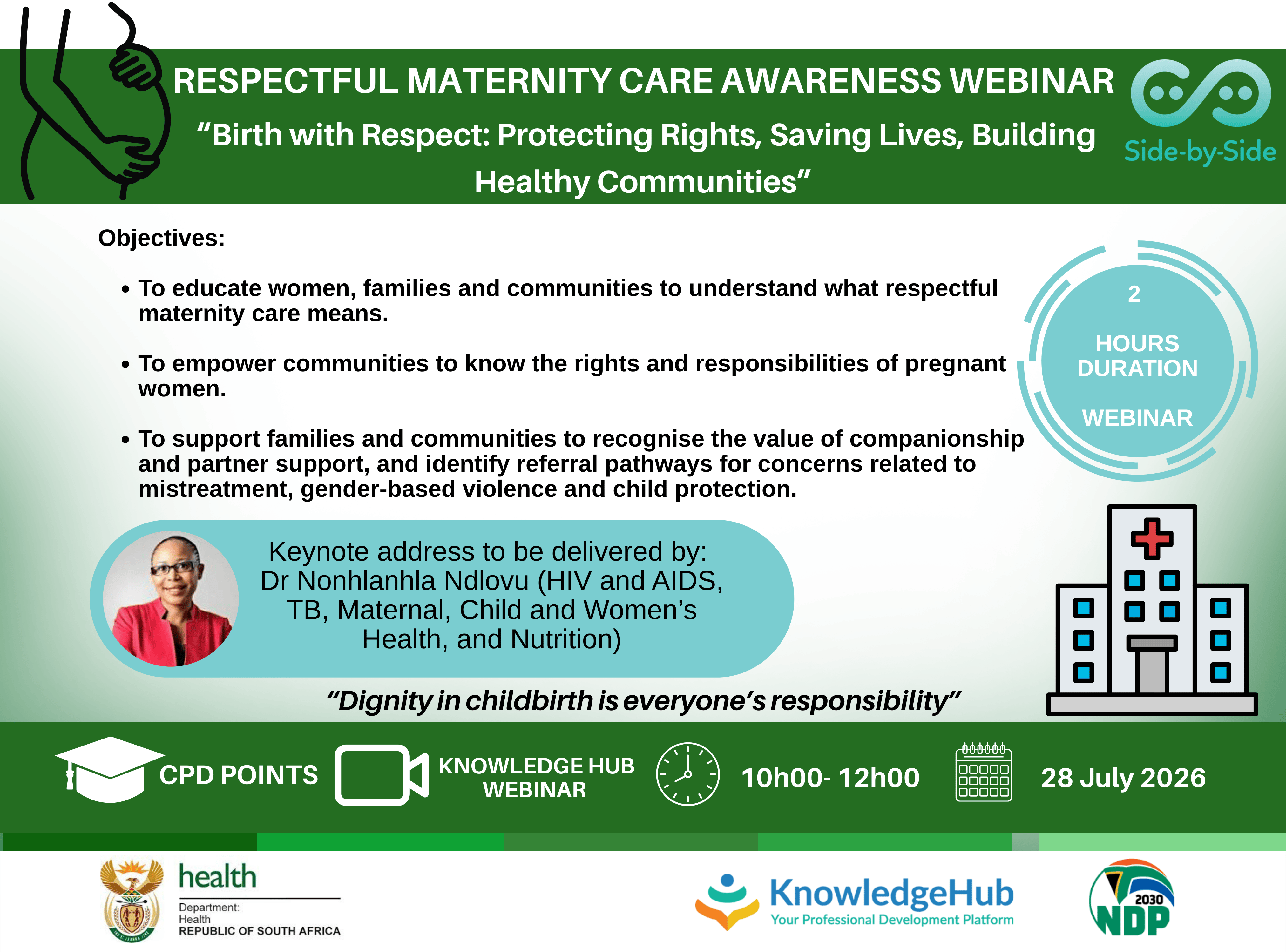
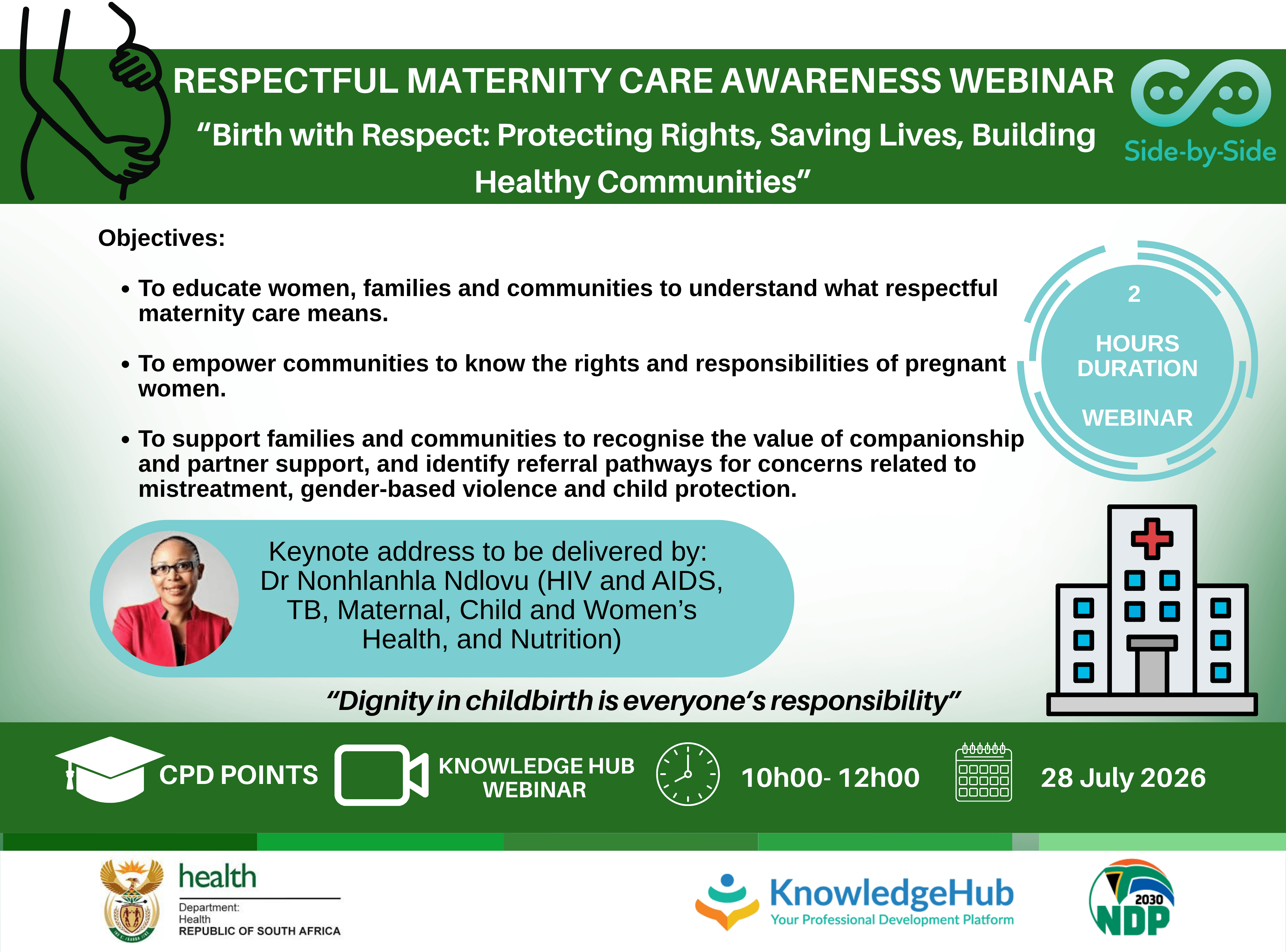
Respectful Maternity Care Awareness

Objectives:

To educate women, families and communities to understand what respectful maternity care means.
To empower communities to know the rights and responsibilities of pregnant women.
To support families and communities to recognise the value of companionship and partner support, and identify referral pathways for concerns related to mistreatment, gender-based violence and child protection.

Questions/key issues to be covered:

Foundations of Respectful Maternity Care
Companionship and birth preparedness
Male and partner involvement during pregnancy.

Video 

Respectful Maternity Care Awareness

Speakers:

Dr Nonhlanhla Ignatia Ndlovu
Deputy Director-General for HIV, AIDS, TB, and MCWH, National Department of Health, South Africa.

Dr Sithembile Dlamini-Nqeketo
Reproductive, Maternal, Neonatal Child & Adolescent Health (RMNCAH) World Health Organization (WHO) South Africa

Prof Simone Honikman 
Director, Perinatal Mental Health Project (PMHP)

Ms Joyce Mahuntsi 
National Maternal Health Lead

Ms Jane Sebidi
Deputy Director for Mom Connect at the National Department of Health

Mr Ndumiso Mdayi
Founder and Director of Never Give Up Academy School of Excellence

Ms Carol Tladi 
Social Work Policy Manager in the Victim Empowerment and Prevention of GBV Directorate, working as the manager of the Gender-Based Violence Command Centre. National Department of Social Development


Medical
Child Youth and School Health
-
Image
 Respectful maternity care (3).png
Teaser Image
 Respectful maternity care (3).png
2

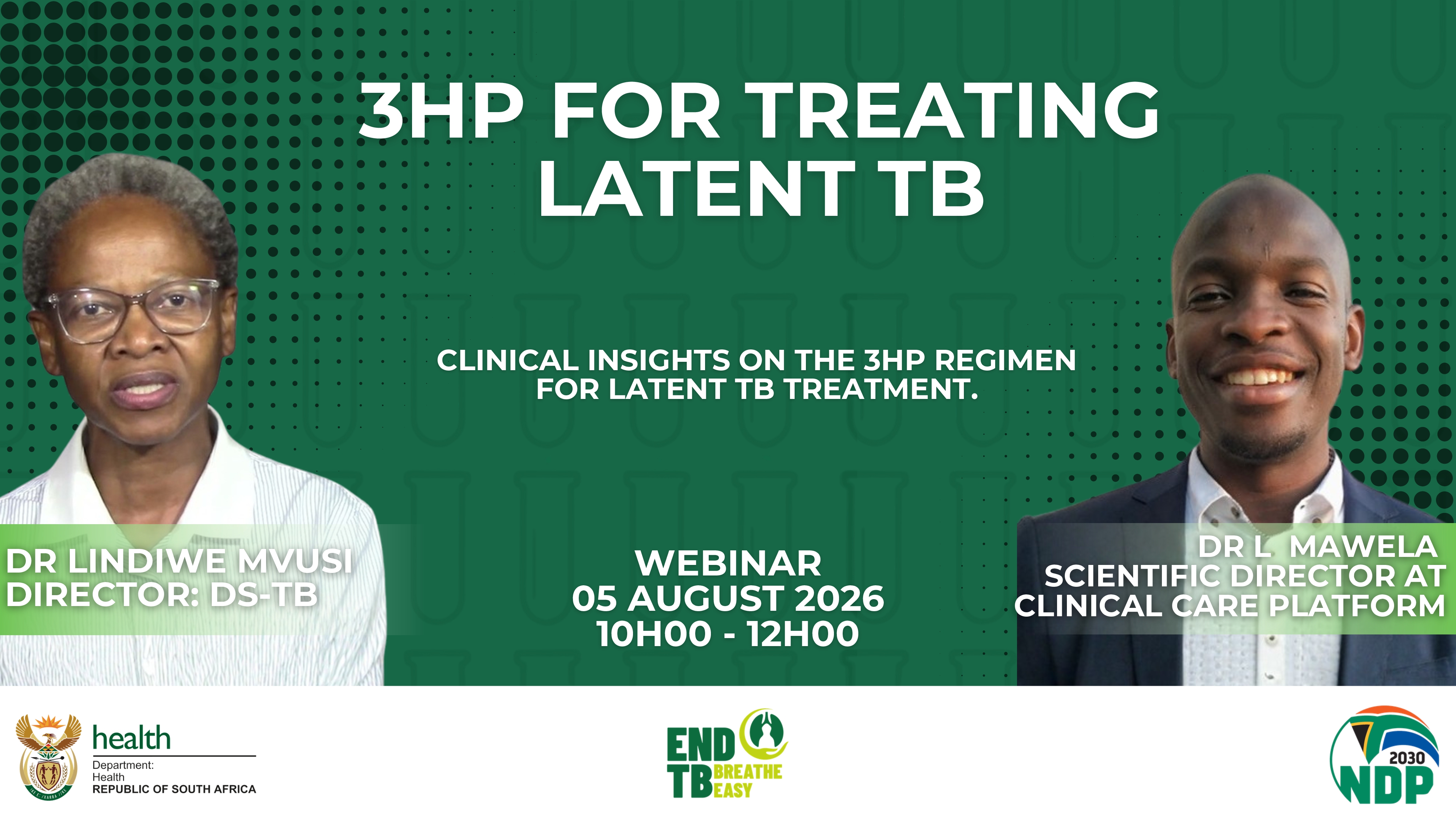
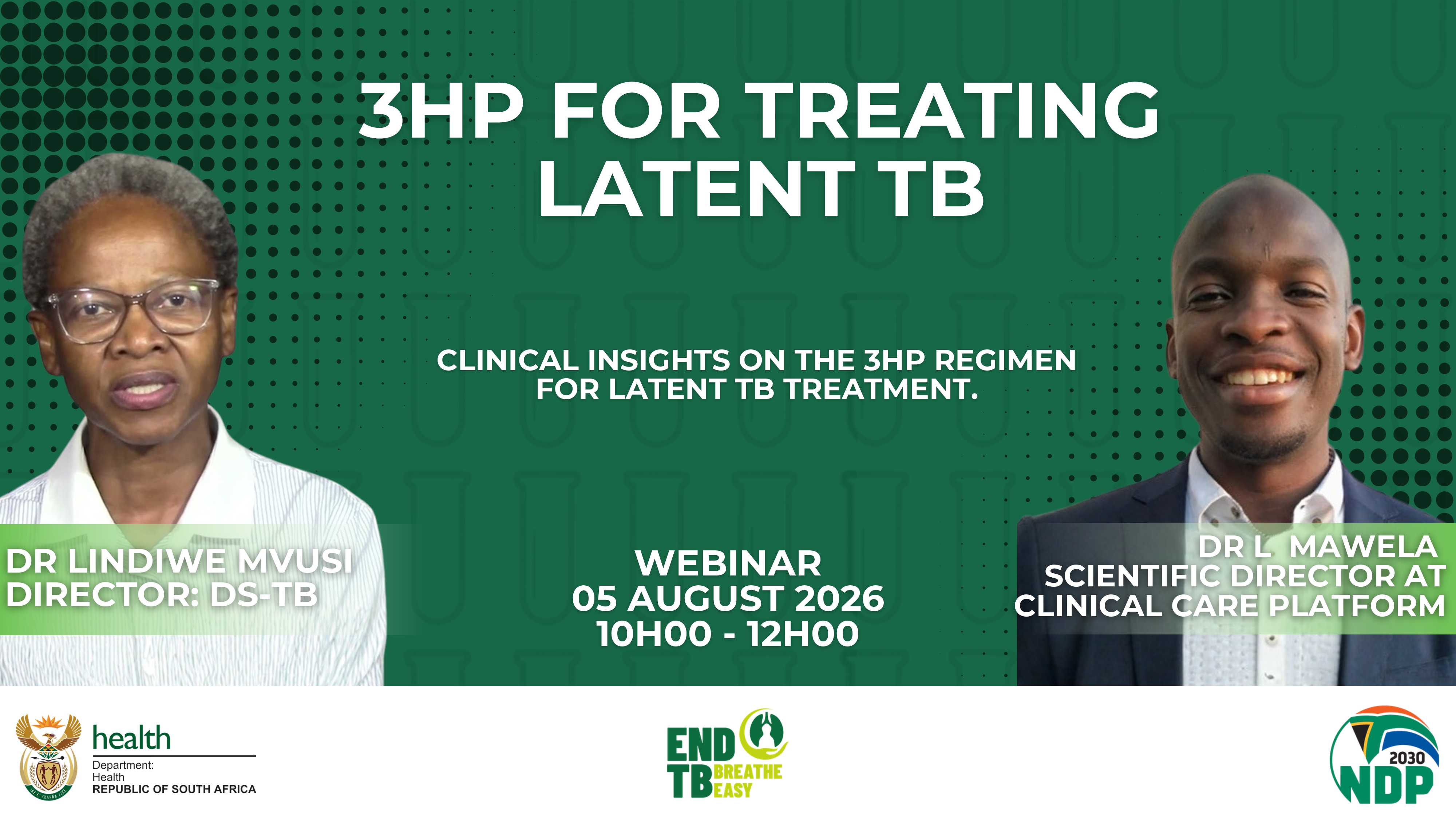
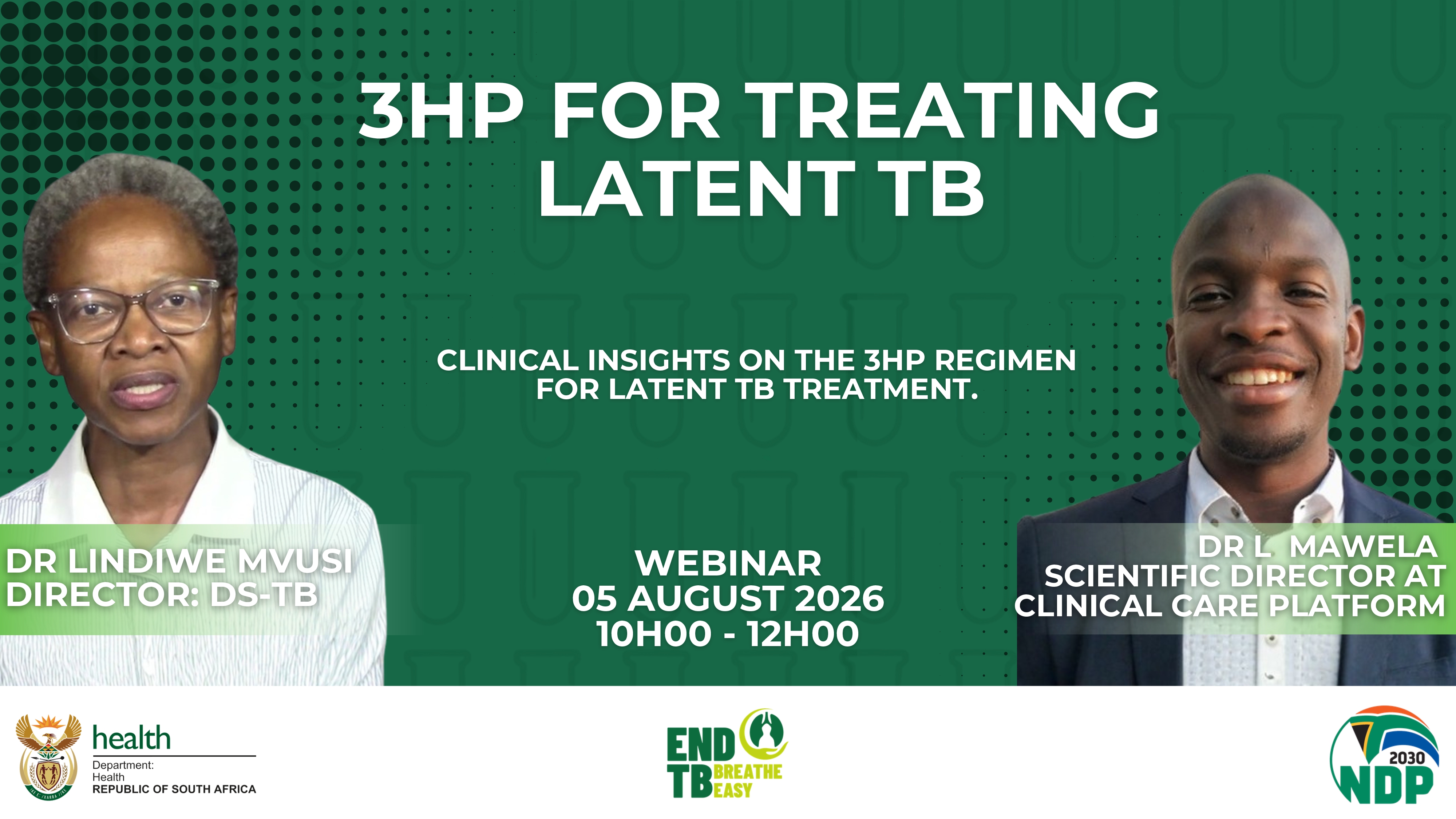
Reinforcing the Benefits, Eligibility Criteria, and Correct Use of 3HP: South African TB Preventive Treatment Guidelines Overview

Objectives:

- Strengthen understanding of South Africa’s TB Preventive Treatment (TPT) guidelines, with a specific focus on the 3HP regimen,
- Highlight the evidence supporting 3HP, 
- Outline eligibility criteria, 
- Address common implementation challenges. 

Questions/key issues to be covered:

The webinar will improve participants’ understanding of the role of 3HP in preventing TB among high risk populations, including people living with HIV, household contacts, and other vulnerable groups. 
It will increase confidence in assessing eligibility, prescribing 3HP correctly, managing side effects, and supporting adherence. 
The session will also strengthen alignment with the National Department of Health’s TB Preventive Treatment guidelines and national TB programme priorities, ensuring consistent implementation across facilities.

Video

Reinforcing the Benefits, Eligibility Criteria, and Correct Use of 3HP: South African TB Preventive Treatment Guidelines Overview

Speakers:

Dr Lindiwe Mvusi
Director: DS-TB

Dr Lesego Mawela
Director at Clinical Care Platform and a Technical Advisor for HIV and TB Programmes

Medical
TB
-
Image
 Webinar invites 2.jpg (1.97 MB)
Teaser Image
 Webinar invites 2.jpg (1.97 MB)
2

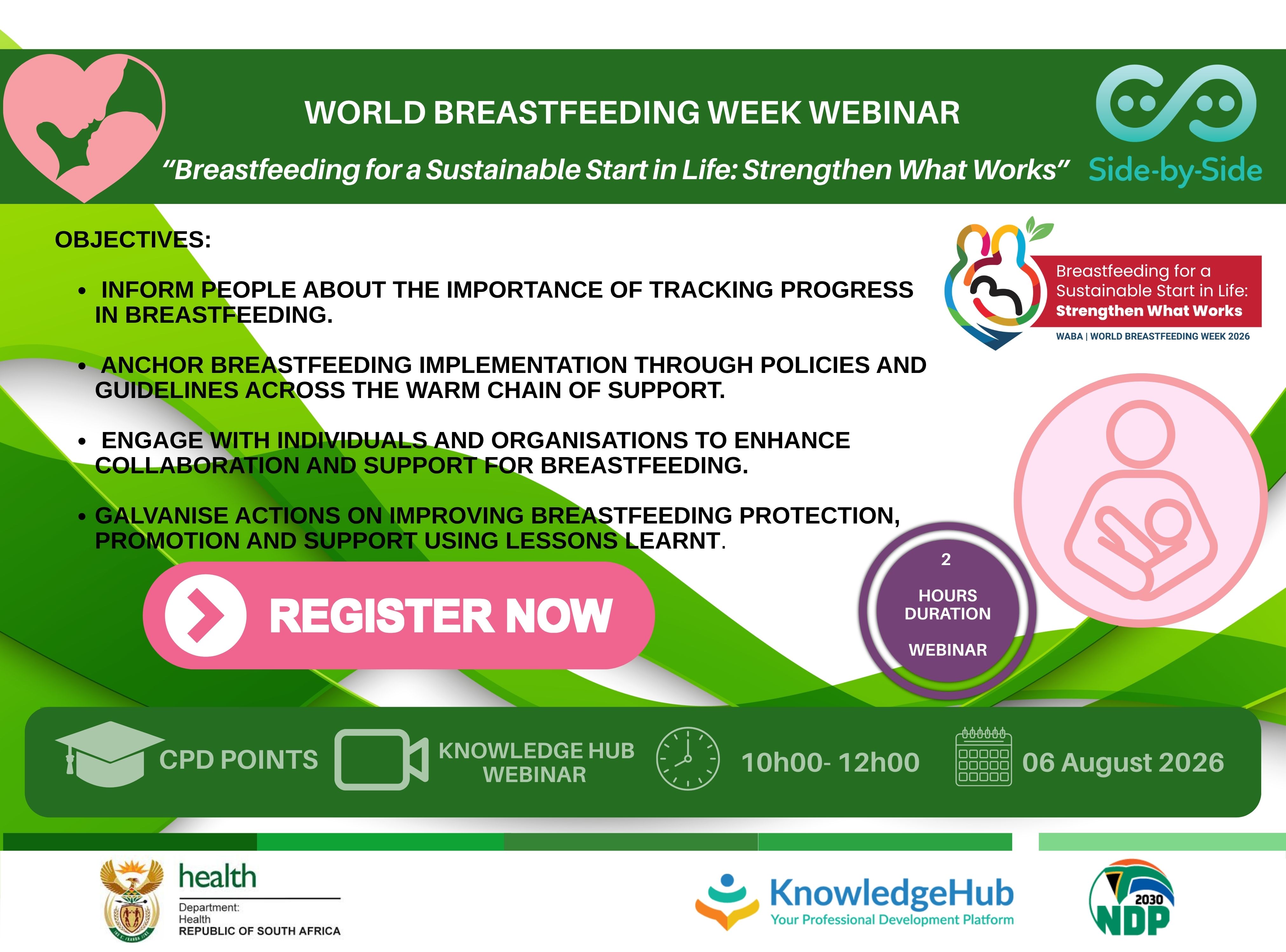
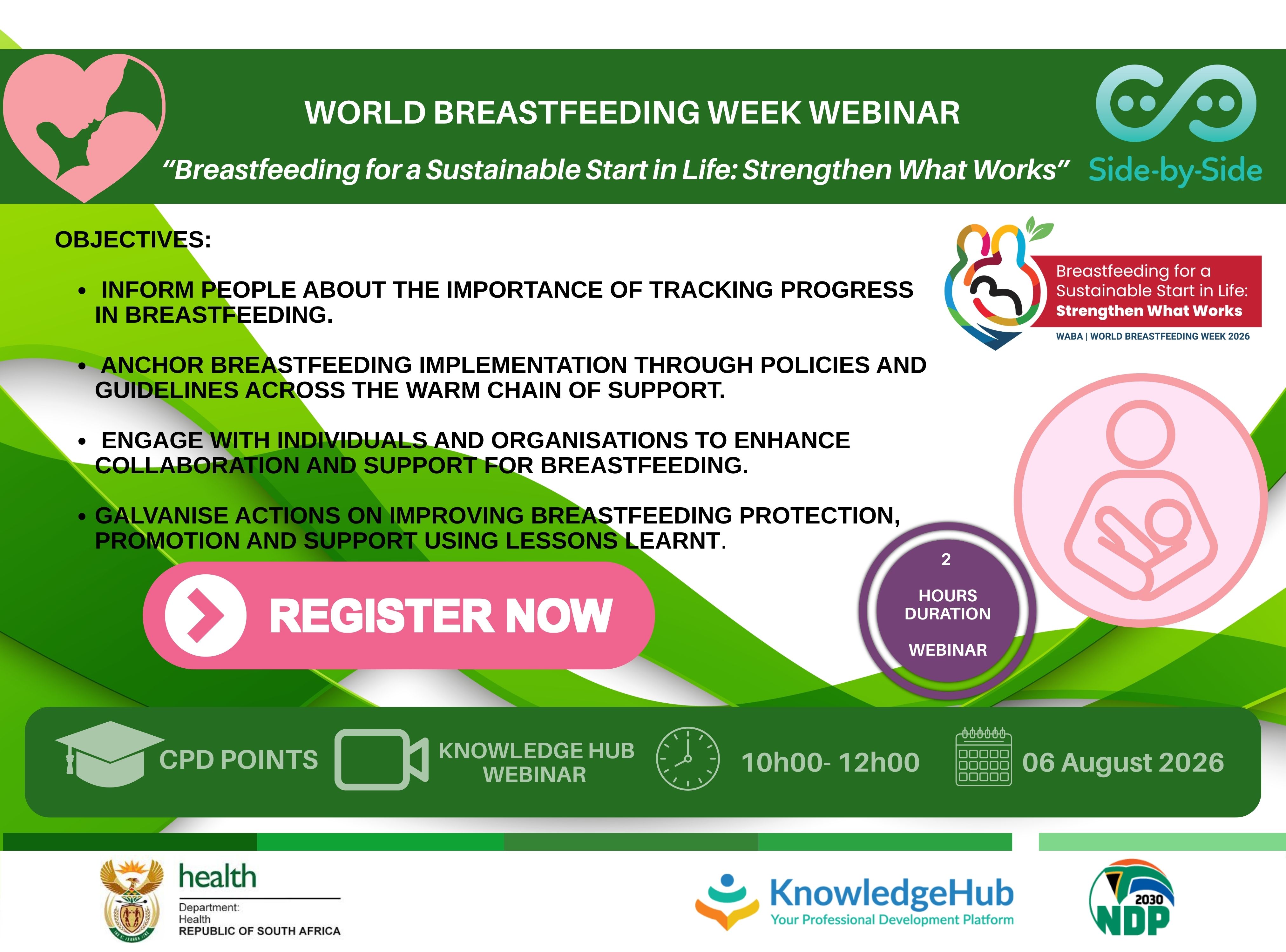
World Breastfeeding Week (1-7 August) Commemoration 2026

Objectives:

Inform people about the importance of tracking progress in breastfeeding.
Anchor breastfeeding implementation through policies and guidelines across the warm chain of support.
Engage with individuals and organisations to enhance collaboration and support for breastfeeding.
Galvanise actions on improving breastfeeding protection, promotion and support using lessons learnt.

Questions/key issues to be covered:

Overcoming Barriers to Exclusive Breastfeeding in South Africa
Breastfeeding as a Strategy to Address the Triple Burden of Malnutrition
Creating Enabling Environments: Workplace, Community, and Health System Support
Community Voices and Lived Experiences: What Works on the Ground
Innovations and Digital Solutions to Improve Breastfeeding promotion and Support

Video: 

World Breastfeeding Week (1-7 August) Commemoration 2026

Speakers:

Dr Lesley Bamford
Acting Chief Director for Maternal, Child and Women’s Health 

Dr Nonhlanhla Ignatia Ndlovu
Deputy Director-General for HIV, AIDS, TB, and MCWH

Prof Tanya Doherty
Chief specialist scientist

Ms Zandile Kubeka
Deputy Director-Dietetics

Panellists:  Panel 1 

Dr Sithembile Dlamini-Nqeketo, WHO 
Ms Tobie Muller, Laleche League SA  

Panellists: Panel 2

Dr C Witten, Ifalabantwana 
Dr G Ngubane, CHAI 
Dr Shuaib Kauchali, WITS 

Panellists: Panel 3 

Dr K Pereira-Kotze, SAMRC 
Dr C Phiri, PSCBC 
Ms Lori Lake, Children’s Institute UCT 

Panellists: Panel 4 

Dr K Selekana, (Breastfeeding Influencer) 
Ms Tobie Muller, Laleche League SA  

Panellists: Panel 5 

Ms Buhle Mabaso, SidebySide 
Ms Jane Sebidi, MomConnect 

Messages of support

Mr Johanes Wedening, UNICEF  
Dr Magombo, WHO 


Medical
Child Youth and School Health
-
Image
 WBW 2026 webinar banner_0.jpg
Teaser Image
 WBW 2026 webinar banner_0.jpg
2

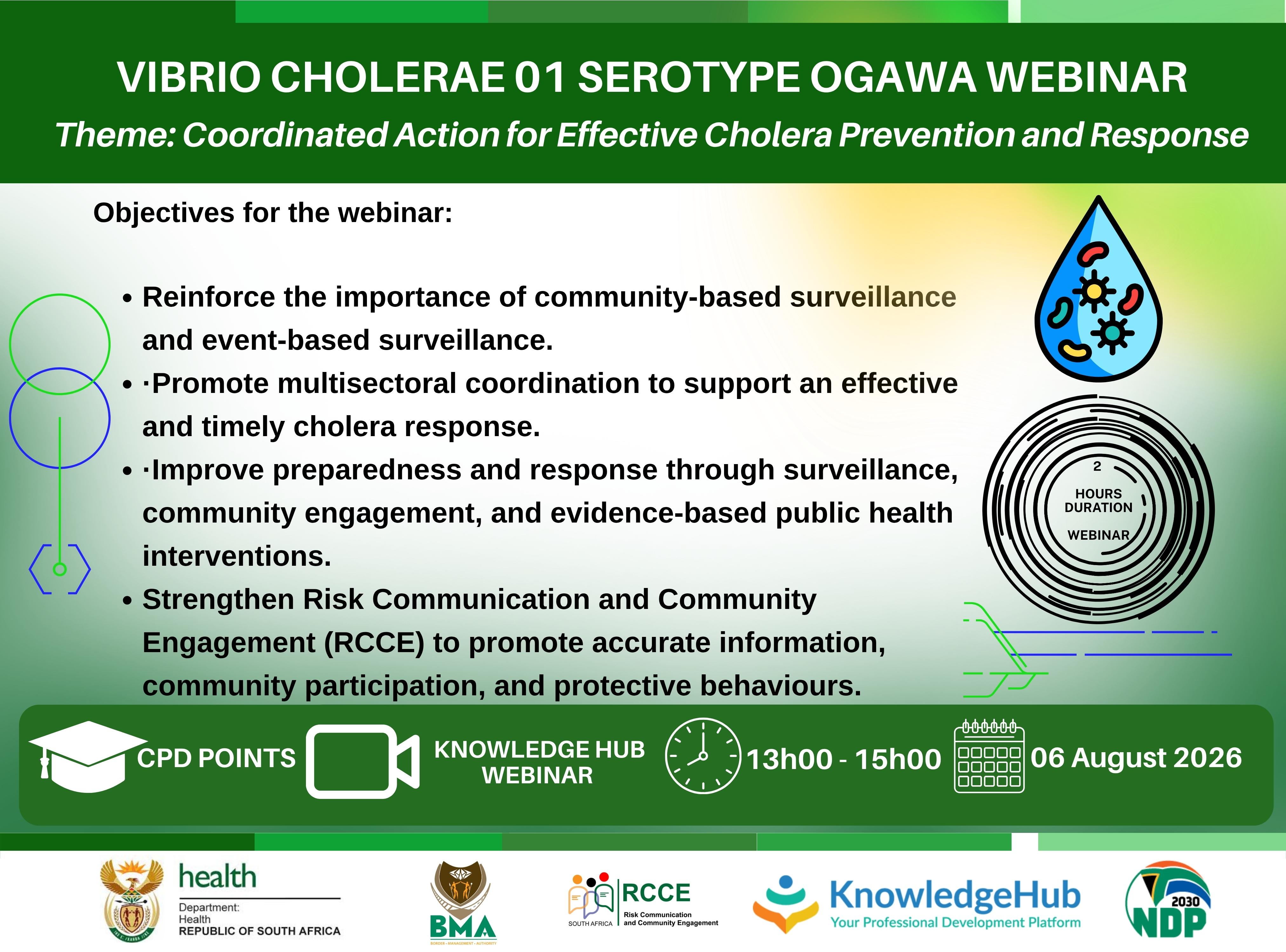
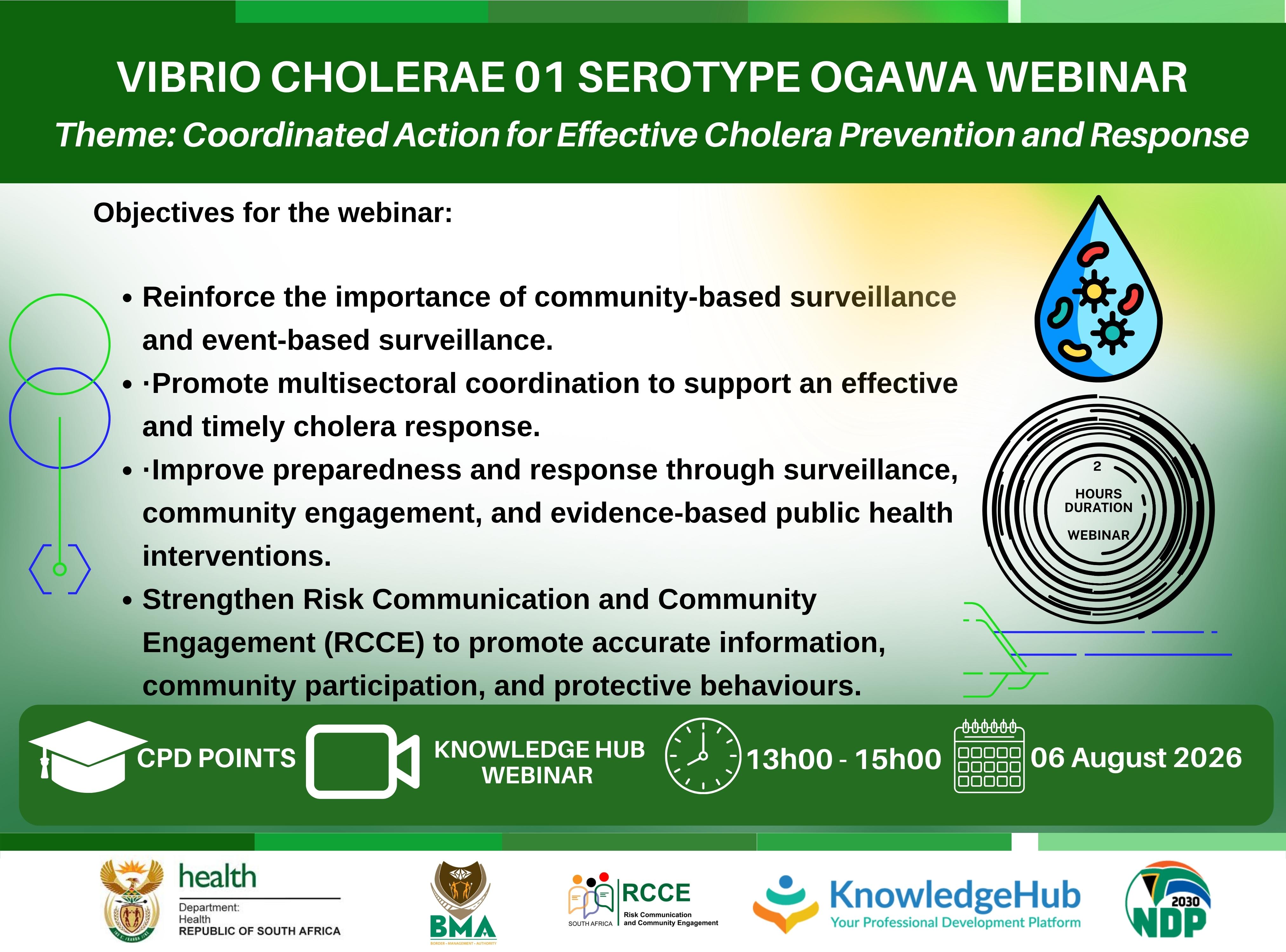
Vibrio cholerae O1 serotype Ogawa

Objectives:

Reinforce the importance of community-based surveillance and event-based surveillance
Promote multisectoral coordination to support an effective and timely cholera response

Questions/key issues to be covered:

Cholera Overview
Clinical Recognition and Case Management
Surveillance and Reporting
Infection Prevention and Control (IPC)
Risk Communication and Community Engagement (RCCE)
Preparedness and Multisectoral Response

Video:

Vibrio cholerae O1 serotype Ogawa

Speakers:

Chief NeSongozwi MuDzanani: NDoH: RCCE
Director: Health Promotion

Dr Keeren Lutchminarain
Senior pathologist in medical microbiology

Dr Joseph Wamala: WHO 
Doctor: Public Health Epidemiologist and Emergency Preparedness and Response Specialist 

Ms Zamokuhle Mntambo: NDoH 
Assistant Director: Environmental Health

Ms Zikhona Mpiyana: NDoH
Assistant Director: Environmental Health

Ms Tintswalo Mabuza
Deputy Director: Infection Prevention and Control


Medical
Environmental Health and Port Health, Primary Health Care
-
Image
 Ebola Preparedness Webinar Banner (4).jpg
Teaser Image
 Ebola Preparedness Webinar Banner (4).jpg
2

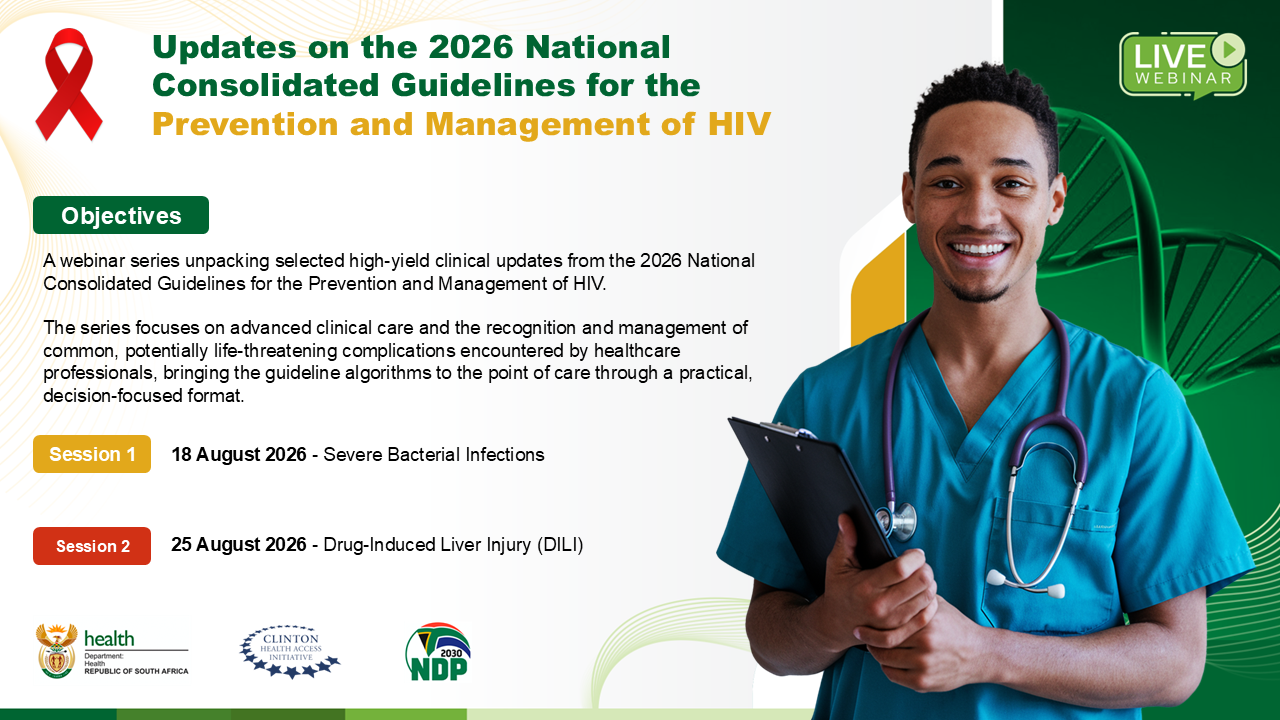
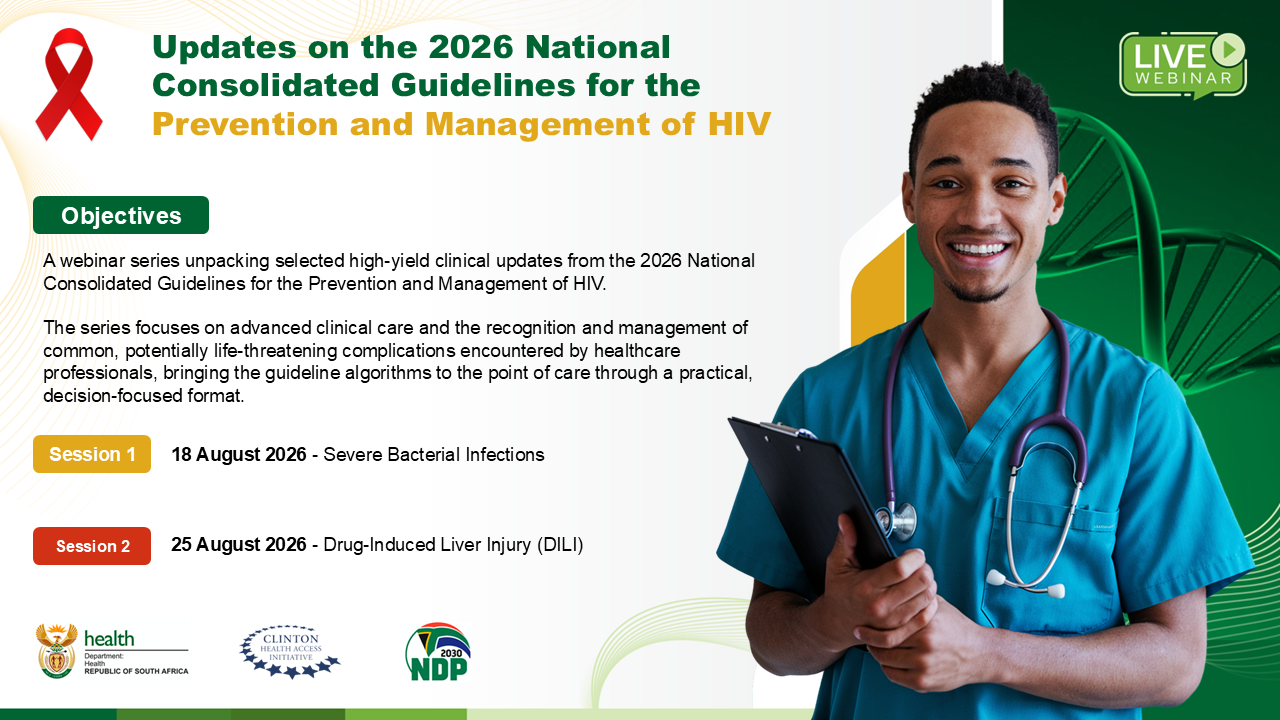
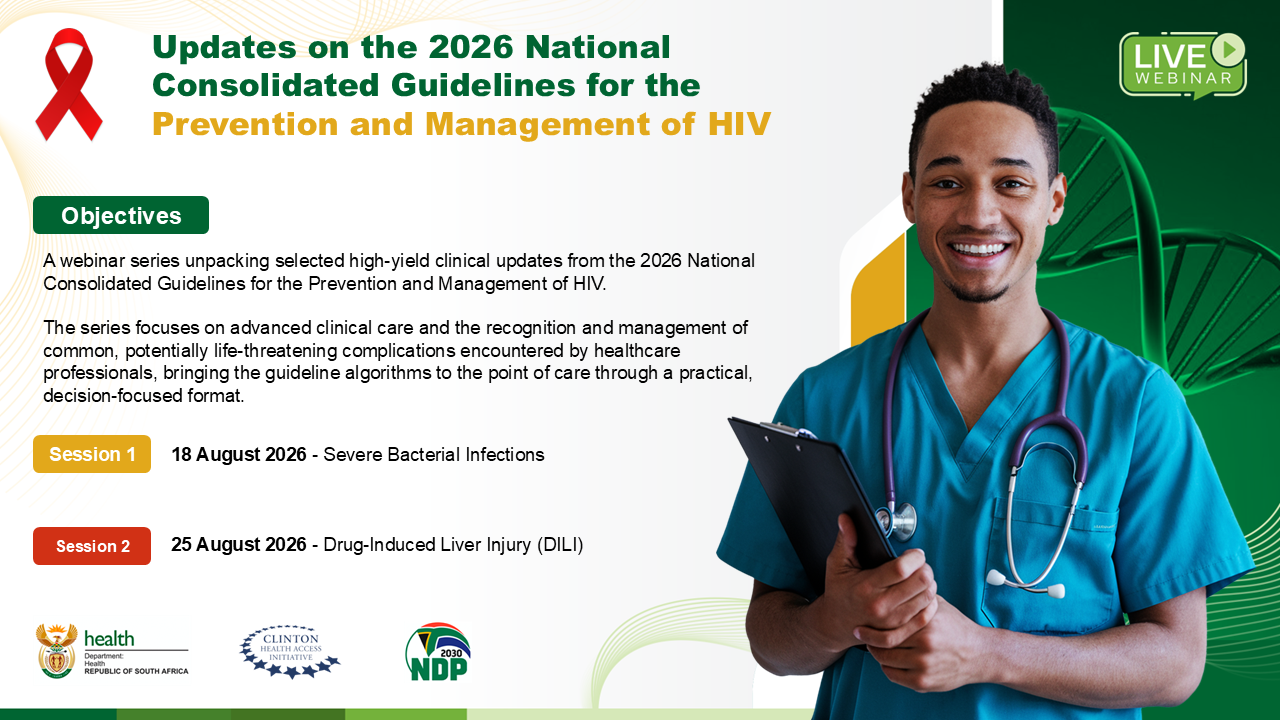
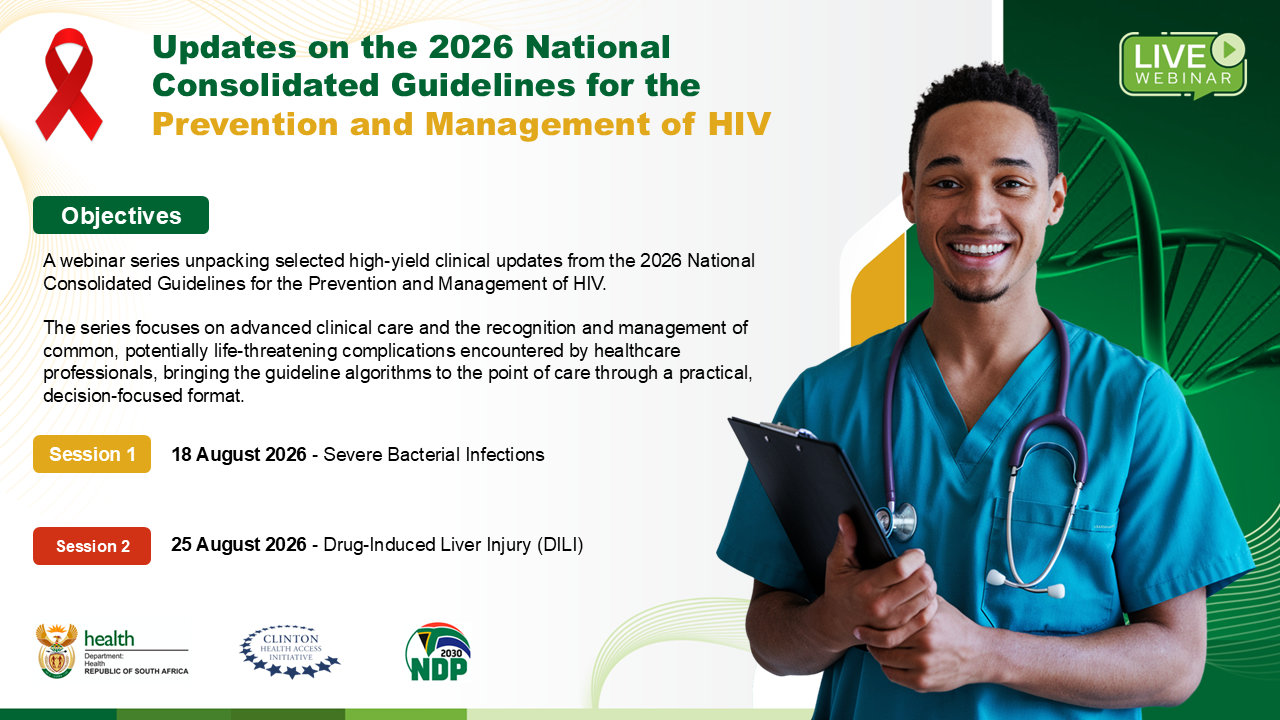
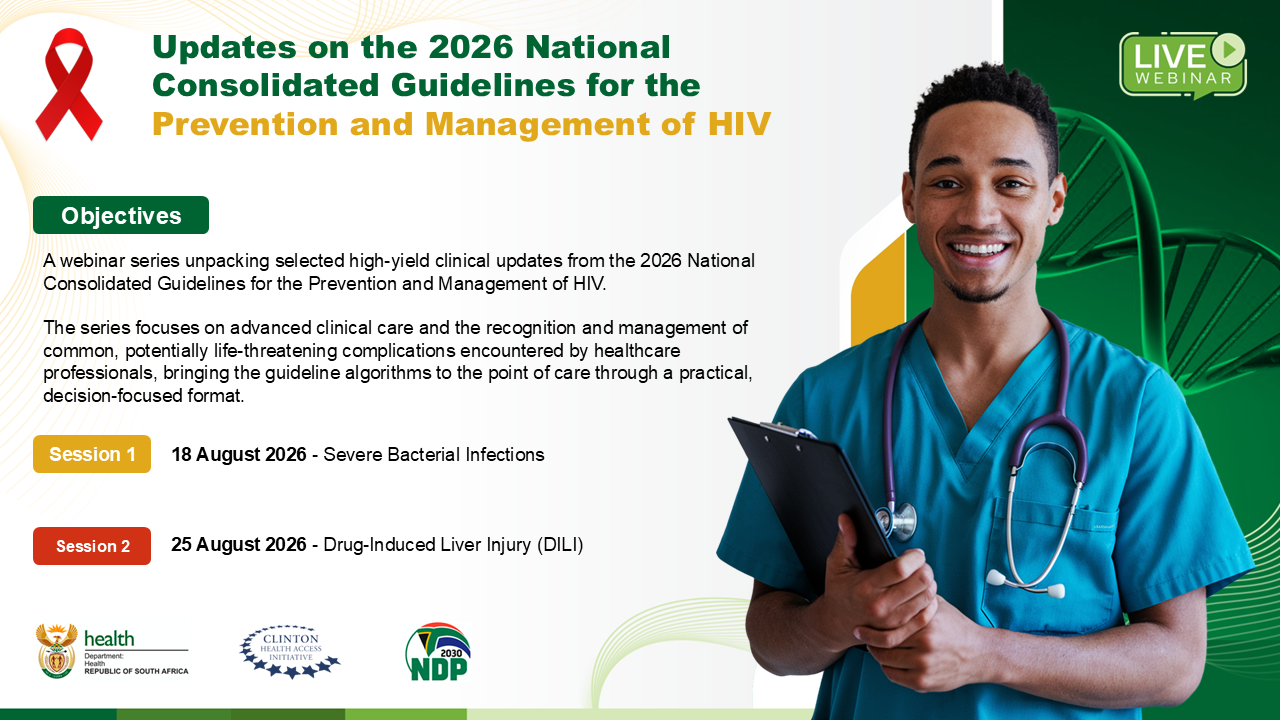
2026 Advanced HIV Disease Guidelines for the Prevention and Management of HIV: Session 1: Severe Bacterial Infections (18 August)

Objectives:

Severe bacterial infections (SBIs) are, alongside TB and cryptococcal meningitis, one of the leading causes of death in patients with advanced HIV disease. This session equips clinicians to recognise the often subtle presentation of invasive bacterial disease in people living with HIV, to investigate appropriately within scope of practice, and to initiate timeous empiric therapy and referral. It works through the 2026 guideline’s SBI framework, including the cadre-based “who, where and what” of investigating and managing SBIs and the inpatient approach to a patient with a pulmonary or meningeal presentation.

By the end of the session, participants will be able to:
•    Define SBIs and explain their contribution to morbidity and mortality in advanced HIV disease
•    Recognise the clinical danger signs and subtle features of invasive bacterial disease in PLHIV
•    Apply the minimum diagnostic work-up (blood cultures, relevant clinical specimens, FBC and kidney function) before commencing antibiotics
•    Determine the appropriate level of care and scope-of-practice actions for nurses and clinicians, including timeous referral
•    Describe the principles of empiric broad-spectrum therapy and the diagnostic overlap with TB and PJP in the seriously ill patient

Video 

2026 Advanced HIV Disease Guidelines for the Prevention and Management of HIV: Session 1: Severe Bacterial Infections (18 August)
Speakers:

Dr Musa Manganye
Director HIV Treatment, Care and Support

Dr Lesego Mawela
HIV Clinician & Facilitator: Clinical Care Platform


Medical
HIV/AIDS
-
Image
 Pic ART training Aug 2026 .png
Teaser Image
 Pic ART training Aug 2026 .png
2

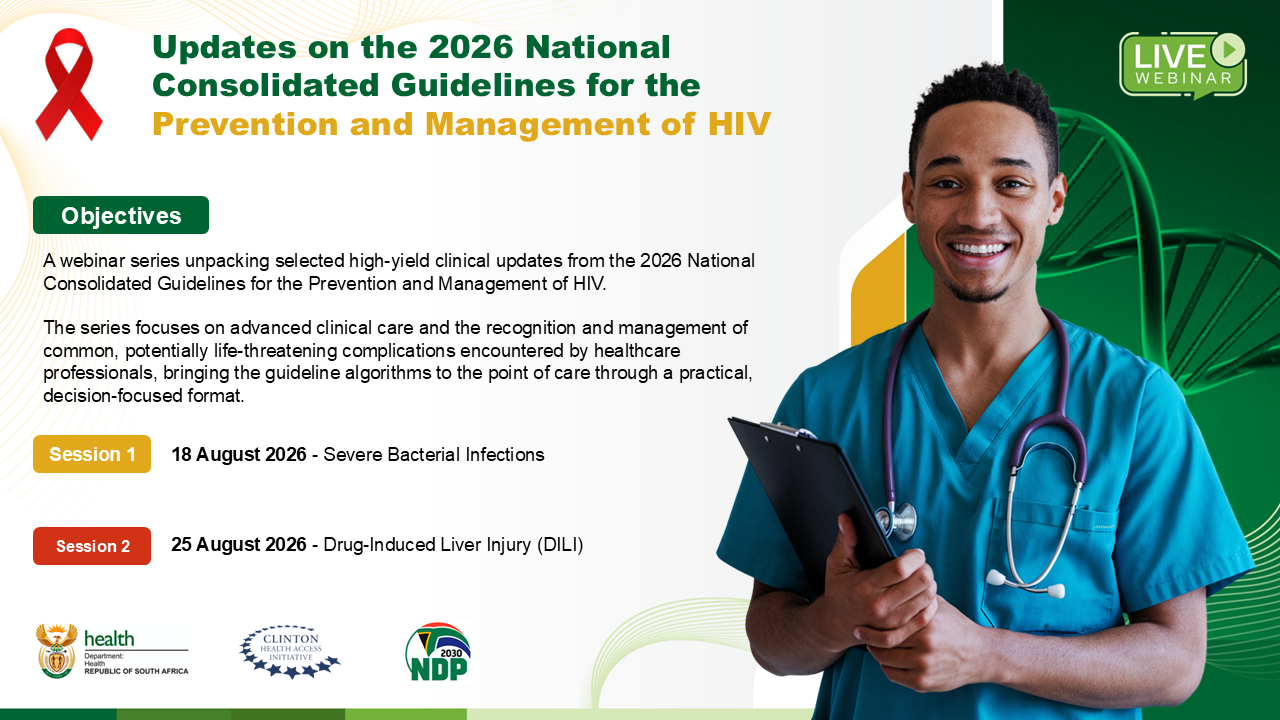
2026 Advanced HIV Disease Guidelines for the Prevention and Management of HIV: Session 2: Drug-Induced Liver Injury (25 August 2026)

Objectives:

Hepatotoxicity is a common and potentially life-threatening complication in PLHIV, particularly in those on concurrent TB treatment. This session takes participants through the 2026 guideline approach to anti-tuberculosis drug-induced liver injury (AT-DILI): recognising and classifying DILI, differentiating it from TB-IRIS, deciding when and how to interrupt and sequentially re-challenge TB treatment and ART, and knowing when to escalate to specialist care.

Learning objectives:
By the end of the session, participants will be able to:
•    Identify the clinical and laboratory criteria for diagnosing AT-DILI (ALT and bilirubin thresholds, symptoms)
•    Classify DILI severity as mild, moderate or severe using symptoms and INR
•    Differentiate DILI from TB-IRIS on clinical and biochemical grounds
•    Apply the guideline’s stepwise approach to stopping, monitoring and re-challenging TB drugs, ART and prophylaxis in the correct order
•    Make appropriate ART decisions during DILI (continuing DTG, switching off EFV or LPV/r) and recognise when to refer for specialist management

Video

2026 Advanced HIV Disease Guidelines for the Prevention and Management of HIV: Session 2: Drug-Induced Liver Injury (25 August 2026)
Speakers:

Ms Mathilda Ntloana
NDoH: CCMT Manager

Dr Lesego Mawela
HIV Clinician & Facilitator: Clinical Care Platform

Medical
HIV/AIDS
-
Image
 Pic ART training Aug 2026 .png
Teaser Image
 Pic ART training Aug 2026 .png
2

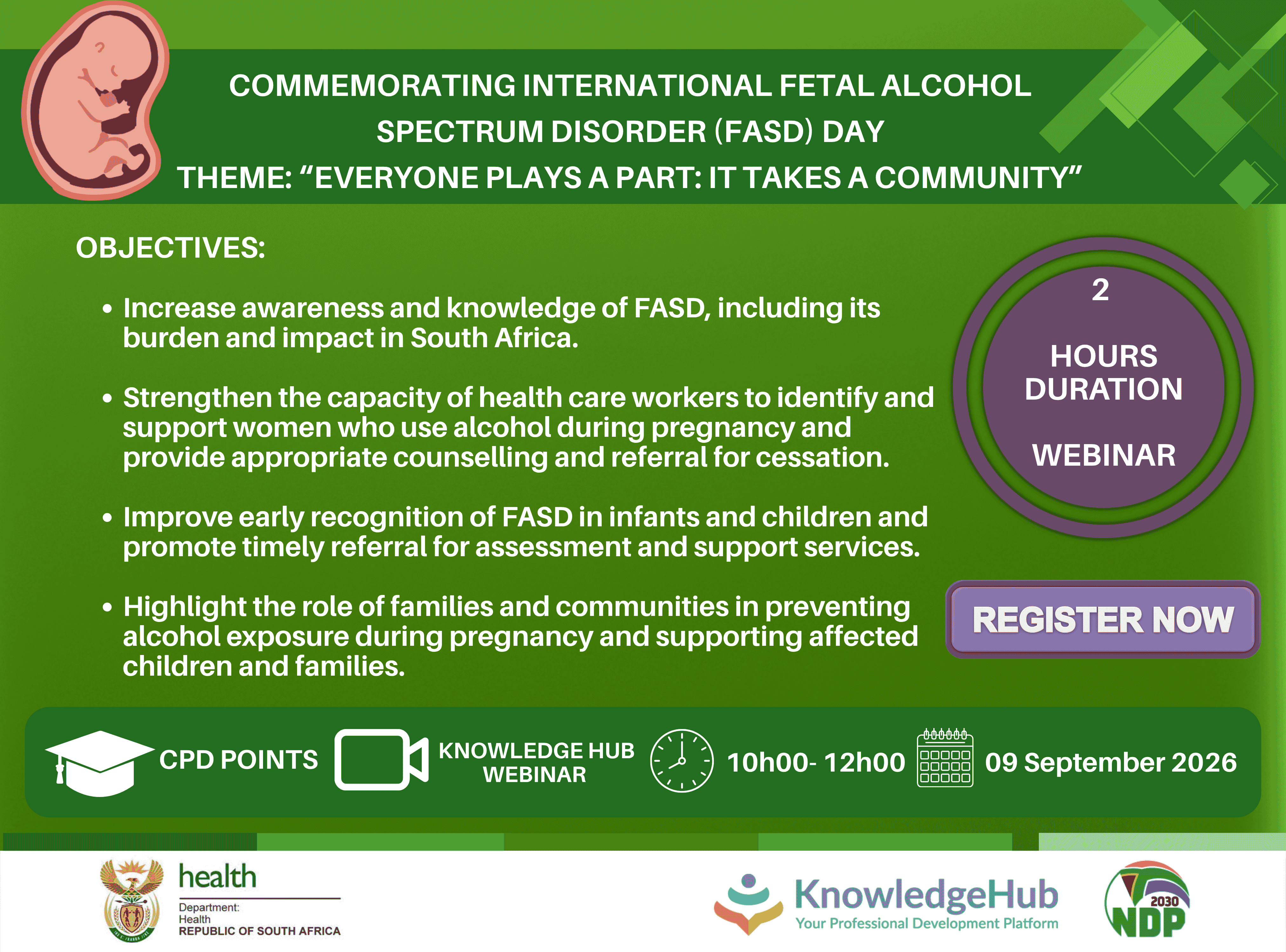
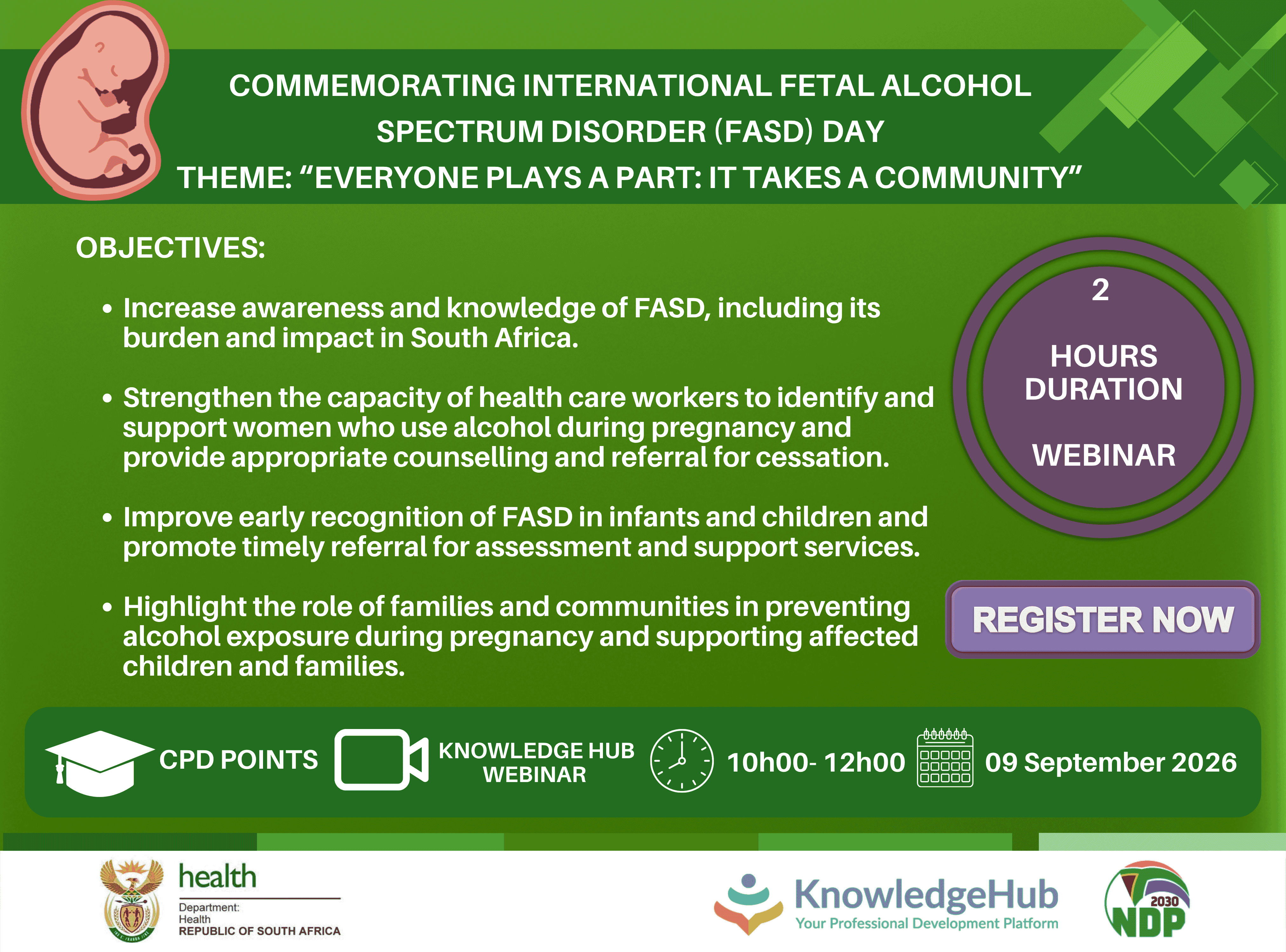
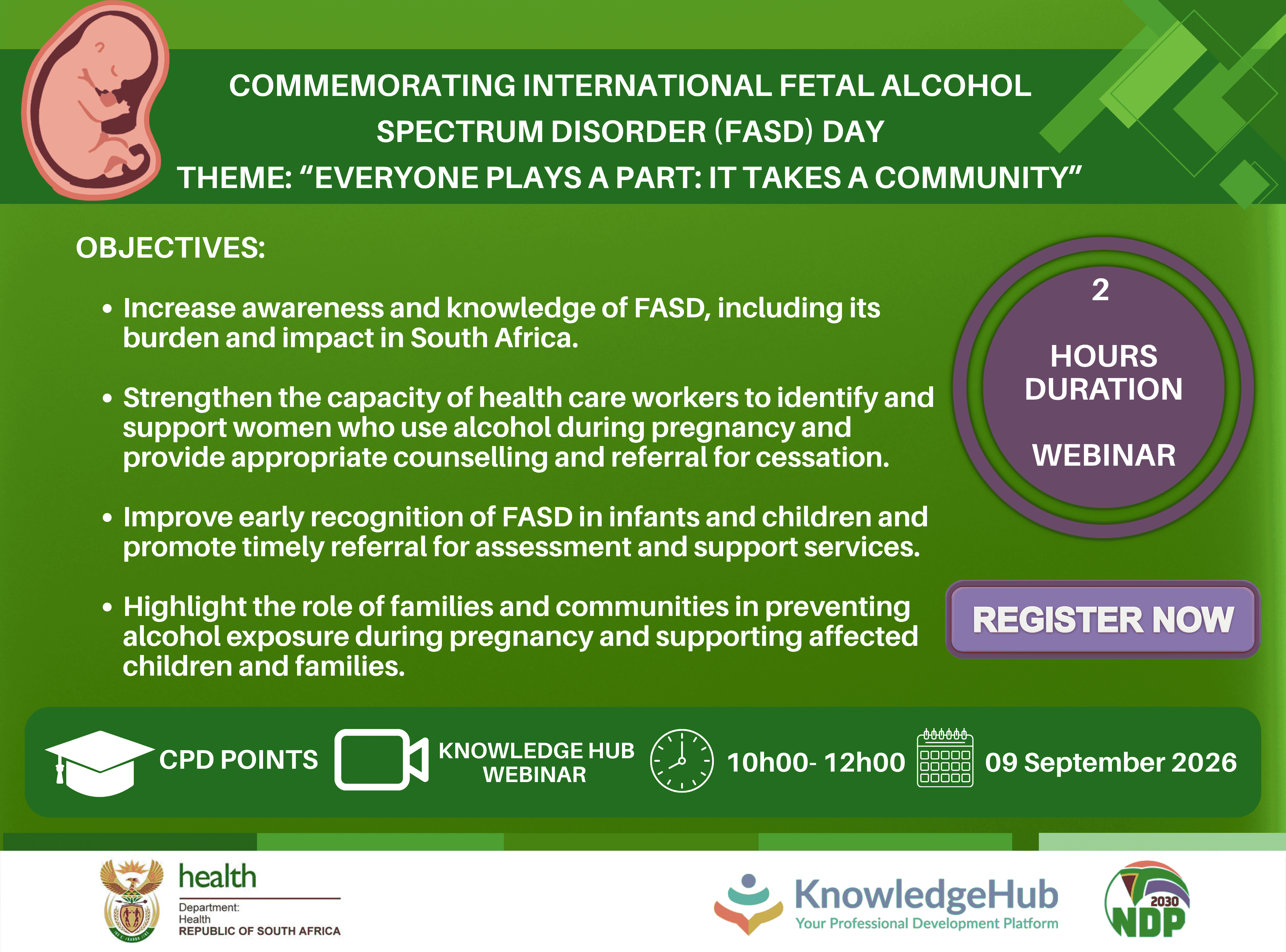
International FASD Day

Objectives:

1.    Increase awareness and understanding of FASD, including its burden, impact and lived experiences in South Africa.
2.    Strengthen the capacity of healthcare workers to prevent alcohol-exposed pregnancies through prevention, counselling and support strategies.
3.    Improve the early identification, referral and management of individuals affected by FASD, while promoting collaboration between healthcare workers, families and communities.

Questions/key issues to be covered:

What are the most effective strategies that healthcare workers can use to prevent alcohol-exposed pregnancies and reduce the risk of FASD?

What are the common signs and indicators of FASD that healthcare workers should look for to support early identification and referral?

What barriers prevent pregnant women from accessing support to stop or reduce alcohol use during pregnancy, and how can healthcare services address these barriers?

How can healthcare workers, families, schools, social services and communities collaborate to improve support and outcomes for individuals living with FASD?

What practical actions can healthcare facilities implement to strengthen the identification, referral and management of individuals affected by FASD within existing health services?

Video: 

International FASD Day


Speakers:

Ms Sebotse Ngake
Director: Child, Youth & School Health

Ms Vuyiswa Lebese
Assistant director: Human Genetics

Ms Kashifa Ancer
Project Lead – Rethink Your Drink

Dr Leana Olivier
Chief Executive Office

Ms Motshabi Nkoane
Social Work Policy Manager

Ms Vivien Lourens

Medical
Child Youth and School Health
-
Image
FASD Webinar Banner.png
Teaser Image
FASD Webinar Banner.png
2

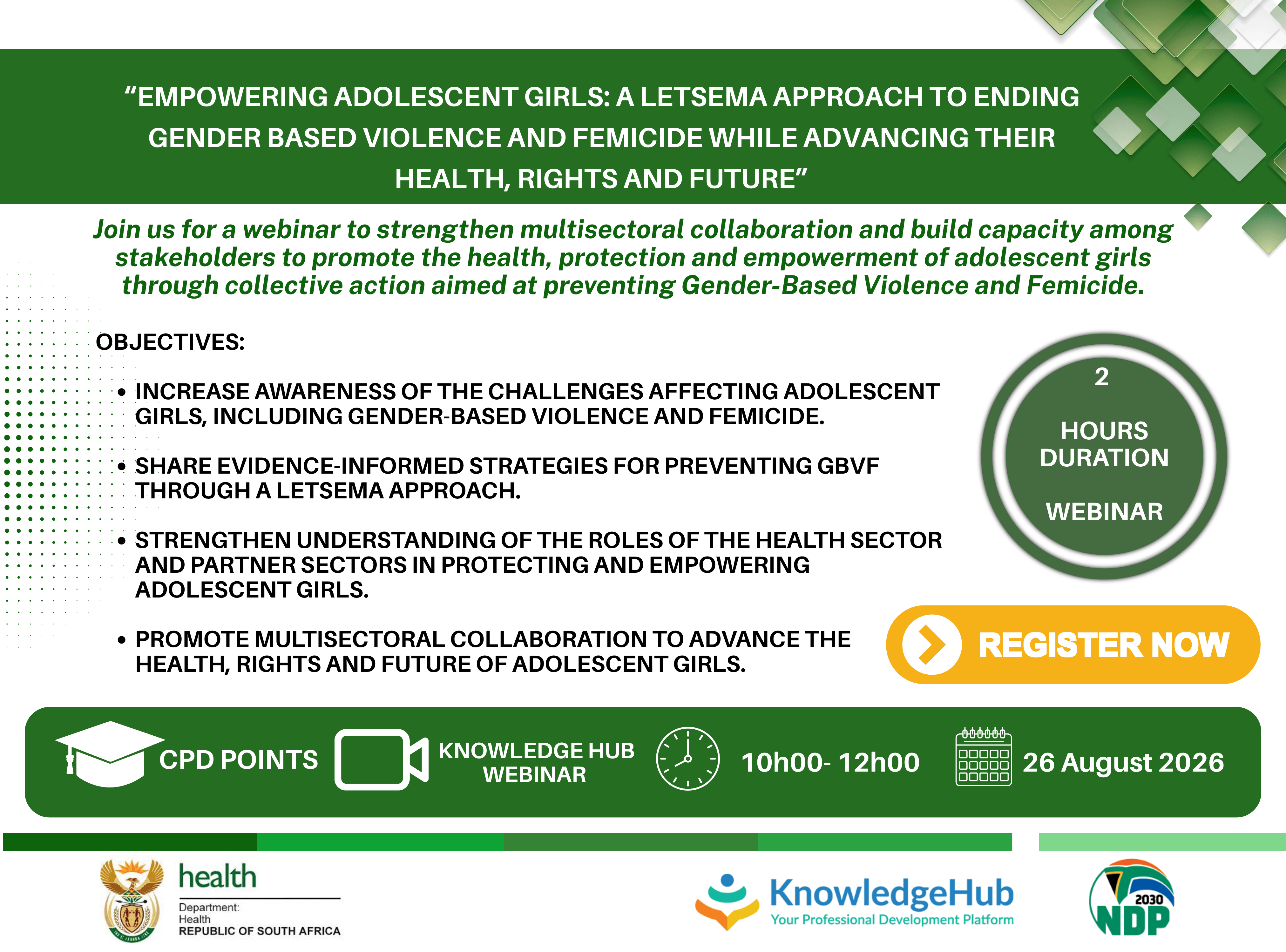
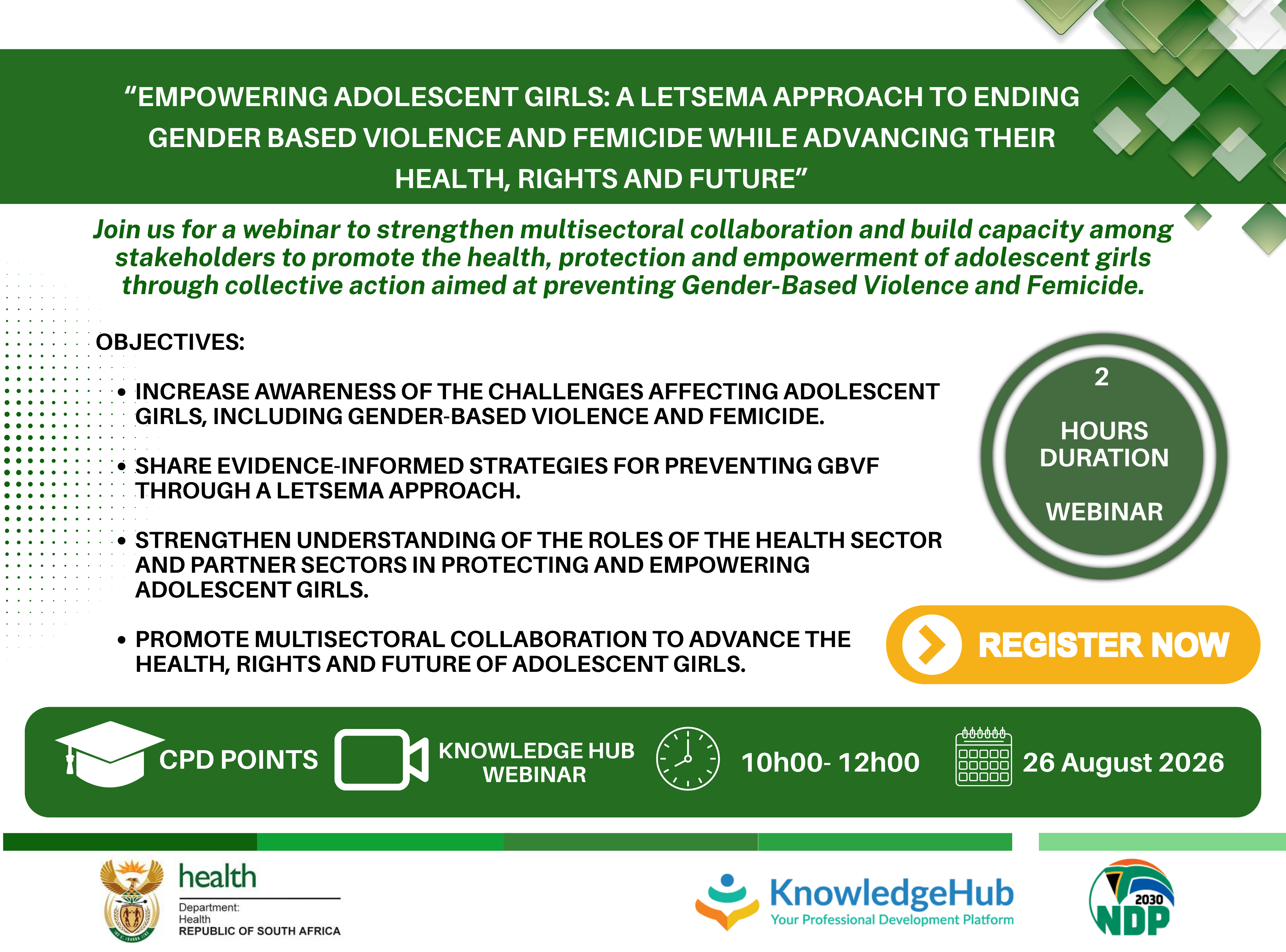
Empowering Adolescent Girls: A Letsema Approach to Ending Gender-Based Violence and Femicide while Advancing Their Health, Rights and Future.

Objectives:

-    To strengthen multisectoral collaboration and build capacity among stakeholders to promote the health, protection and empowerment of adolescent girls through collective action aimed at preventing Gender-Based Violence and Femicide
-    Increase awareness of the challenges affecting adolescent girls, including Gender-Based Violence and Femicide.
-    Share evidence-informed strategies for preventing GBVF through a Letsema approach.
-    Strengthen understanding of the roles of the health sector and partner sectors in protecting and empowering adolescent girls.
-    Promote multisectoral collaboration to advance the health, rights and future of adolescent girls.

Questions/key issues to be covered:

-    How do we work together to create a South Africa where every adolescent girl is safe from GBVF, able to exercise her rights, access quality health services and have the opportunity to shape her own future.

Video:

Empowering Adolescent Girls: A Letsema Approach to Ending Gender-Based Violence and Femicide while Advancing Their Health, Rights and Future.

Speakers:

Ms Feni Motshwane 
Deputy Director: Integrated School Health 

Dr Nonhlanhla Ndlovu
Deputy Director General: HIV/AIDS, TB and MCWH

Ms Hlamalani Queen Nenzhelele
Assistant Director: Adolescent and Youth Health Programme

Dr Ronel Sewpaul
Statistician: Researcher

Ms Matete Rinky Modise
Associate National Project Officer

Ms Julie Mentor 
Project lead 


Medical
Child Youth and School Health
-
Image
Adolescent and Youth Health Programme Webinar.png
Teaser Image
Adolescent and Youth Health Programme Webinar.png
2

Advanced Clinical Care (ACC) live tutorial session: An approach to management of the adult HIV patient with drug-resistant TB.

Objectives: 

- To provide healthcare workers with support in managing patients with Advanced HIV Disease (AHD) and co-infections. 
- Support clinicians who are interested in the Knowledge Hub online Advanced Clinical Care (ACC) course.  
- Provide clinical resources and guidelines to support the healthcare professional in the clinic or hospital setting.
- Provide practical management tools.

Speakers: 

Dr Francesca Conradie 
Principal Investigator 
Qualifications: MBBCh, Dip HIV Management, DTM&H

Video

Thumbnail


Medical
HIV/AIDS
-
Image
5 Oct 2023.png (1.93 MB)
Teaser Image
5 Oct 2023.png (1.93 MB)
2

COVID-19 training and resources for health care workers

Access the latest COVID-19 clinical and safety information to keep you safe on the front line.

More info

Switching Stable 1st and 2nd Line ART Clients to DTG Containing Regimen

Stay up to date with all the latest information from experts working on the front line.

Access the latest information on the management of clients on TLD and guidance on switching of stable second-line clients to the DTG-containing regimen.

Register now

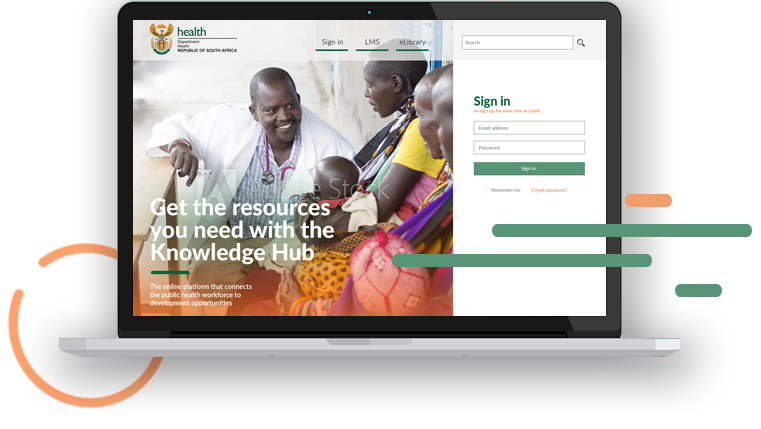
Getting started

  • Simple sign up

    • Visit the Knowledge Hub on your computer, tablet or phone.
    • Click the Sign up button. Follow the simple process to create your personal profile. You will need your PERSAL and ID numbers, facility name and job role profile.
    • Next time you visit, simply log in with your chosen username and password.
  • Start your unique development journey

    • Choose priority competencies to streamline and customise your dashboard.
    • Customise your KH dashboard feeds based on your CPD opportunity preferences.
    • View and manage bookmarked CPD opportunities.
    • Access a personalised portfolio of current and completed professional development opportunities.
    • Update your personal information and preferences at any time in the future as your needs change.
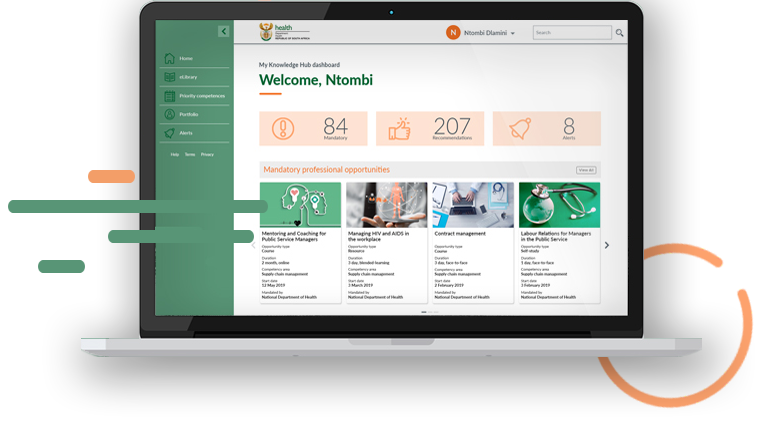
  • Personalise your dashboard

    • Based on your role profile and facility, the Hub will identify mandatory and recommended opportunities for you.
    • Access a searchable catalogue of all national and provincial Department of Health development opportunities available on the Knowledge Hub.
    • Bookmark identified opportunities to keep a record of those you would like to take up at a later date.
    • Enrol in opportunities and keep a printable record of opportunities you have completed.
    • Access an eLibrary of curated policies, guidelines and standard operating procedures.
    • Receive Knowledge Hub email alerts targeted specifically for you.

The Knowledge Hub

the CPD solution for the National Department of Health

The Knowledge Hub will help you build your competence and improve your professional skills. The KH provides you:

  • Relevant CPD opportunities: Access professional development opportunities, including online and blended-learning courses, conferences, face-to-face workshops, and self-study resources to meet your specific needs.
  • Up-to-date information and policies: Access all the latest legislation, policies, guidelines, standard operating procedures, reference materials, and best practices you need.
  • Email communication: Stay in the know with email alerts about new CPD opportunities and customise your entire KH experience based on your job profile and needs.