
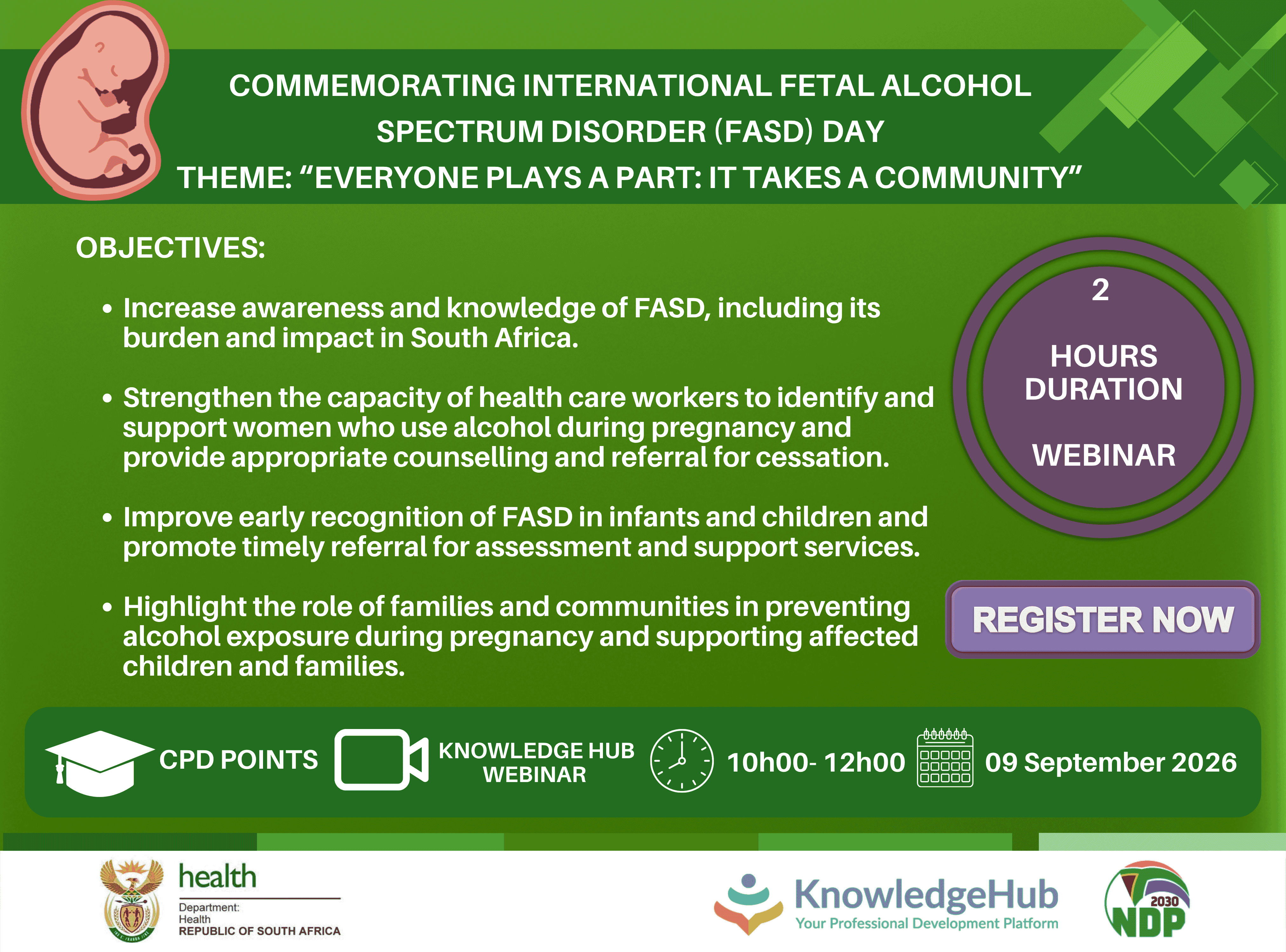
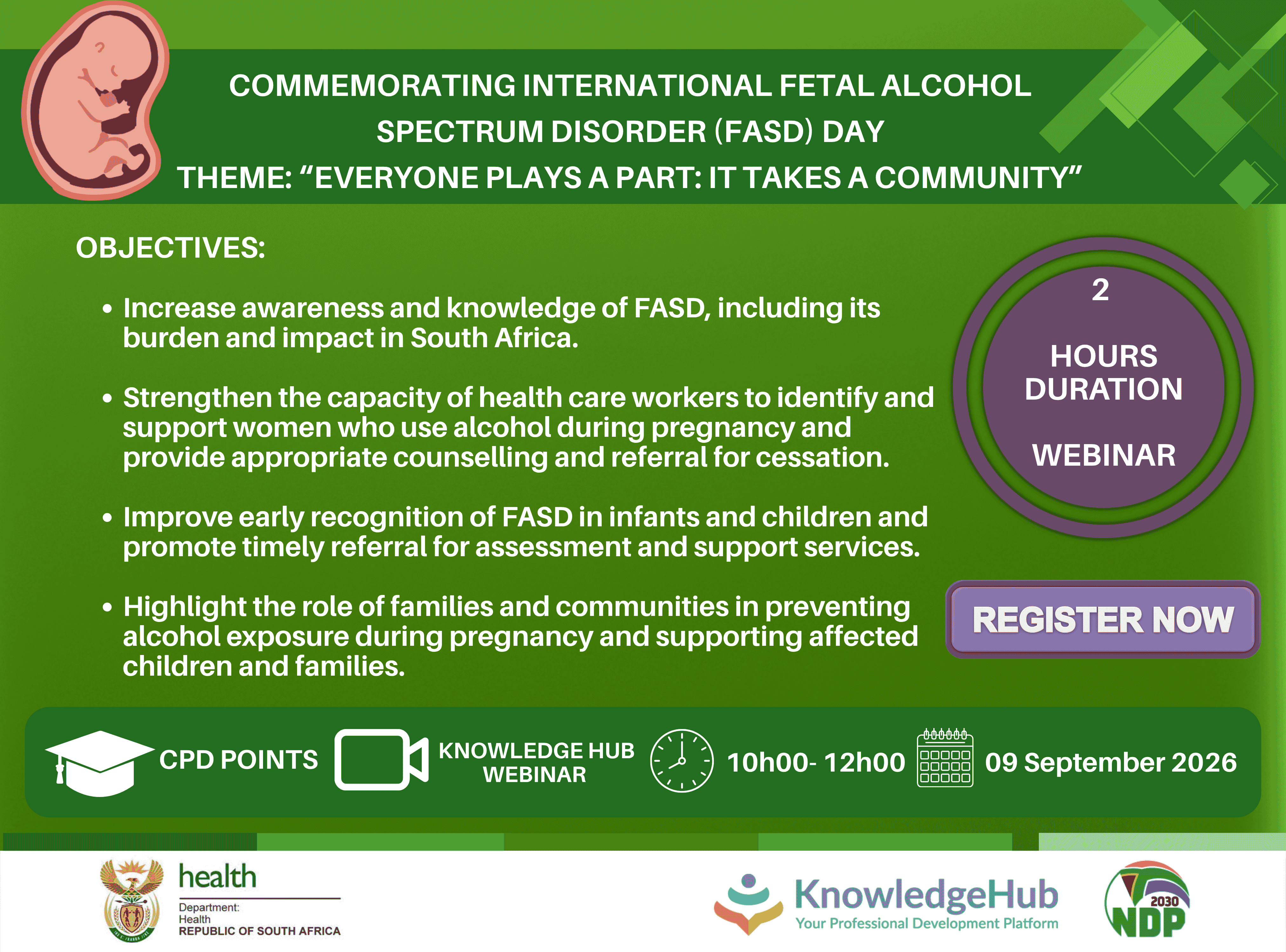
International FASD Day
Objectives:
1. Increase awareness and understanding of FASD, including its burden, impact and lived experiences in South Africa.
2. Strengthen the capacity of healthcare workers to prevent alcohol-exposed pregnancies through prevention, counselling and support strategies.
3. Improve the early identification, referral and management of individuals affected by FASD, while promoting collaboration between healthcare workers, families and communities.
Questions/key issues to be covered:
What are the most effective strategies that healthcare workers can use to prevent alcohol-exposed pregnancies and reduce the risk of FASD?
What are the common signs and indicators of FASD that healthcare workers should look for to support early identification and referral?
What barriers prevent pregnant women from accessing support to stop or reduce alcohol use during pregnancy, and how can healthcare services address these barriers?
How can healthcare workers, families, schools, social services and communities collaborate to improve support and outcomes for individuals living with FASD?
What practical actions can healthcare facilities implement to strengthen the identification, referral and management of individuals affected by FASD within existing health services?
Video:
Speakers:
Ms Sebotse Ngake
Director: Child, Youth & School Health
Ms Vuyiswa Lebese
Assistant director: Human Genetics
Ms Kashifa Ancer
Project Lead – Rethink Your Drink
Dr Leana Olivier
Chief Executive Office
Ms Motshabi Nkoane
Social Work Policy Manager
Ms Vivien Lourens
Resourses
until
09 September 2026 - 12:00 pm